Guest Blogger: Jacob Rubin

March 17, 2015
Click to purchase

Click to purchase

Win a copy of Jacob Rubin’s caffeinated and wildly comic debut novel, which was recently selected a Barnes & Noble Discover Great New Writers pick for spring 2015 and named a one of Huffington Post’s 2015 Books We Can’t Wait to Read.

In the same vein as George Saunders and Sam Lipsyte, THE POSER chronicles the hijinks and crises of Giovanni Bernini, the World’s Greatest Impressionist—a man whose bizarre compulsion and ability to imitate anyone he meets catapults him from small-town obscurity to widespread fame. As he describes it, “No one disguise is perfect. There is in every person, no matter how graceful, a seam, a thread curling out of them. . . .  When pulled by the right hands, it will unravel the person entire.”

Honed by his theatrical mother at a young age, his talent eventually takes him from his hometown to the nightclubs of the City and eventually the sound stages of Fantasma Falls, the glamorous, west coast city similar to Hollywood. As Giovanni’s fame grows, he encounters a cast of provocative characters—including an exuberant manager, a mysterious chanteuse, an enigmatic psychoanalyst, and a deaf obsessive compulsive—and becomes increasingly trapped inside many personas. When his bizarre talent comes to define him, Giovanni is forced to assume the one identity he has never been able to master: his own.

At its heart, the novel speaks to the power of performance, impersonation, acting, and what it means to find and understand the essence of someone, and of yourself. I think author Sam Lipsyte nails it when he says Rubin “is a great hope for comic fiction in the 21st century.” Though THE POSER is his debut, it certainly announces the arrival of a new and unmistakable voice in American fiction.

Check out the Book Trailer

Q&A with Jacob Rubin, author of THE POSER

Giovanni Bernini, The Poser’s protagonist, is known as the World’s Greatest Impressionist. He’s born with the uncanny ability to imitate anyone he meets instantaneously. Throughout the literary spectrum, plenty of stories have been written about performers or performing, but not impressionists specifically. How did you conjure up such an interesting character?

The Poser began, oddly enough, in the trash. Years ago I was working on a not very good short story about a man who wakes up in a woman’s apartment after a one-night stand. Remembering little of the night before, he begins to root around in her garbage for clues. One of the items he finds was, to my surprise, a black-and-white photo of a famed impressionist, a man who could famously imitate anyone he met. As I soon discovered, I was much more interested in this unexpected performer than I was in the guy who discovered him. I scrapped the story right then and wrote another one, very quickly, about this character Giovanni Bernini. After many years, it became The Poser.

You have experience as a performer—both as a juggler for hire and as the lead rapper of the hip-hop group Witness Protection Program, opening for groups like Jurassic Five and Blackalicious, to name a few. How has your background as a performer influenced the creation of Giovanni Bernini?

I can’t seem to get away from performance, in life or in writing. Personae, masks, fraudulence, disguise—all have fascinated me for as long as I can remember. I think a lot about that Picasso line: that art is a “lie that tells the truth.” It seems to me this paradox can obtain in life, too. Like, I once read an article in the Times about a survivor of 9/11, a woman who had been in the south tower when the planes hit. After the tragedy, she organized these legendary support groups. They were these deeply cathartic events, arranged with great thought and care. Survivors and relatives of victims depended on her entirely, so strong was her empathy. Only later did it come out that this woman hadn’t been in the towers at all—she made the whole thing up. I find such behavior deeply disturbing, of course, but fascinating, too. The lie, for this woman at least, clearly felt like an emotional truth.

I did stand-up comedy for a little while, and I think the status of the stand-up comedian reflects a similar paradox: instead of a lie that tells the truth, maybe a stand-up states a truth so serious it has to be packaged as a joke. The stage offers a kind of loophole, a free zone in which what would otherwise be punishably inappropriate can be aired with impunity, even to applause. It’s what performance offers in general, I think: this magical, cordoned-off space where people can lie, hurl abuse, decompensate, and the crowd hoorahs! In The Poser, I wanted to explore a character who finds that his previously outrageous behavior is celebrated simply because it’s put on the stage.

A man with a million personas, Giovanni seemingly can be anyone except himself and at one point in the story undergoes psychoanalysis. Coming from a family of psychiatrists yourself, you must have some insight into analysis and some rather interesting stories, to boot. Will you talk briefly about growing up among psychoanalysts and how that may have shaped Giovanni as a character and the story as a whole?

My grandfather, Theodore Isaac Rubin, was a very famous psychiatrist in the 60s, 70s, and 80s. He appeared regularly on the Phil Donoghue show and wrote many bestselling novels and self-help books, one of which was turned into an Oscar-nominated movie, David and Lisa. Largely because of his influence, my father, aunt, and uncle all went on to become shrinks. Suffice it to say, there is no dearth of introspection at our family get-togethers. (Somewhat notoriously, I informed a classmate of mine in the third grade that he was “projecting”; I am still living this down.) And yet I also wanted to show how beneficial therapy can be. I think portrayals of analysis in books and movies are often pretty lazy, framing it as this ridiculous or masturbatory exercise. I wanted to show that there is true empathy in it – a kind of warm detachment – that can really help people.

The Poser is told from Giovanni’s perspective, at a point in his life where he’s looking back at everything that’s befallen him. What compelled you to use first-person confession as the mode for telling the story?

The enjoinder to “show don’t tell” is important for every young writer to hear, and yet so many of my favorite books wholly disregard it. Notes from the Underground, for instance, or Walker Percy’s The Moviegoer, the novels of Robertson Davies and Stanley Elkin. Everyone knows novels can’t compete with movies or video games for sheer sensory onslaught, but books, for my money, capture better than any other media the interiority of experience, the “music of someone’s intelligence,” as Richard Ford once put it. My favorite books promise just this kind of intimate—and for that reason, often scandalous—experience. Like, Lolita or Denis Johnson’s Jesus’s Son. You open those books, and you’re encountering this presence, this personality talking about something it shouldn’t have done in a voice unlike any you’ve ever heard. My favorite books, probably for that reason, feel like a secret, and you feel slightly cheated when you find out someone else read it. You’re like, “Hands off. She told that to me and no one else.”

Thematically, I thought the first-person narrative was necessary for The Poser as it’s about a man struggling to find himself, which he does, in the end, by telling the story. I also liked the tension of having someone act a certain way, as a performer or fraud, while narrating his often discordant internal experience. He says one thing, but thinks another. This is something I think fiction can do particularly well.

Giovanni’s world is noir-ish, vaudevillian, even a bit surreal. The story is set in an imaginary country that somewhat resembles America of the 1950s and 60s. What was your thought process in setting the story in a parallel, fable-like world?  Did you do any research to flesh out its wonderful detail?

I knew I was taking a risk in setting the book in an imaginary place, a parallel America of the 50s and 60s, and yet it felt necessary for the kind of book I was hoping to write. The Poser, as I see it, is about Giovanni’s attempt to become a real person; it felt right that the landscape, too, might strain to be real, flickering between the evoked and the shadowy. I did do research about the corresponding time in America. Stuff about clothes, some slang, etc. I used as models for the noir prose style novels by favorites like Jim Thompson and Raymond Chandler.

I can’t seem to escape the surreal. In visual art, it’s always been my favorite: Giacometti’s sculptures, for instance, or the paintings of Paul Klee. I think I’ve always aspired to whatever the prose equivalent of such a way of seeing would be. For me, it is rare that when meeting a person I note what color nail polish she’s wearing or which kind of ankle boot (this can be very embarrassing, mind you, for someone meant to be observant). Encountering a person can be a pretty damn surreal experience, much more like meeting a Giacometti or a Klee. I think the same is true of places. Just walking around and seeing people yammering on their cellphones or driving around in these motorized chrome bubbles—we live in a sci-fi movie! My agent, Jin Auh, once relayed a line the author George Garrett had about Fellini’s movies. He called them “science fiction set in the past.” I loved that. I think that’s what I’m trying to write.

Bestselling author Sam Lipsyte praised you as “a great hope for comic fiction in the 21st century.” Did you set out to write a humorous book? Were there any books or authors—comedic or otherwise—who inspired you while writing The Poser?

Sam Lipsyte has made me laugh so many times, so I was on cloud nine when I found out he enjoyed the book. I certainly hope the novel’s funny. My old teacher Barry Hannah used to say that books should offer “deep entertainment”; the unkillable ham in me can’t seem to let go of the second word. All of my favorite contemporary writers make me laugh: Jennifer Egan, Jonathan Lethem, Sam Lipsyte, Barry. Even very dark, supposedly depressing, classics are secretly knee-slappers. I’m thinking of writers like Knut Hamsun, Thomas Bernhard, Samuel Beckett, and Herman Melville. I read Paul Auster’s introduction to Hunger, in which Auster talks about how dark and miserable the book is (all of which is true, of course), but I also thought, it’s hilarious! The truly tragic is the funniest stuff there is! The fact that we live on a spinning ball in an endless void, or that we possess a seemingly infinite consciousness but will all die. It’s just so absurd. I think laugher is the sound of someone accepting their powerlessness and through that acceptance briefly somehow transcending it. And it shouldn’t ever be explained. And I now ruined it forever.

Besides working as a novelist, a magician, and a rapper, you also write screenplays. In fact, Times Square, a script you co-wrote with Taylor Materne, was recently optioned by Focus Features. In your opinion, what’s the biggest difference between writing a novel and a script, and do you prefer writing one form over the other?

I’ve found the two to be very different. In film, structure is king, so you really have to work out the entire plot as much as you can before setting off to write. It helps a lot to work with someone else to figure out what needs to happen when.  Of course, you often end up changing nearly everything anyway, but it’s almost more like assembling a watch or engine, some device that has to meet company-mandated specs. Fiction writing, for me, is a much more unwieldy, inefficient, foolhardy, and reliably meaningful experience. That said, I’ve always enjoyed writing dialogue, and the script stuff is a fun opportunity to pen snappy exchanges. In movie writing, you get to put down things like, “NO WAY OUT. The green creature on his heels, he GRABS the duffel bag and – screw it – LEAPS OFF the roof over the sea wall to the CHURNING WATERS of the GULF of MEXICO.”

The Poser is your debut novel. Is there a second in the works? If so, could you talk a bit about it? If not, would you mind divulging what other creative projects you’re currently working on?

There is a lengthy word file in my laptop that I hesitate to call a second novel, but perhaps it will be one day! It is too early to talk about it, but I hope it will be funny.

To win your own copy, please send an email to contest@gmail.com with “WIN POSER” as the subject.

You must include your snail mail address in your email.

All entries must be received by March 31, 2015. Two (2) names will be drawn from all qualified entries and notified via email. This contest is open to all adults over 18 years of age in the United States only. Your book will be sent by the publisher, Viking Press.

One entry per email address. Subscribers to the monthly newsletter earn an extra entry into every contest. Follow this blog to earn another entry into every contest. Winners may win only one time per year (365 days) for contests with prizes of more than one book. Your email address will not be shared or sold to anyone.

3/15 Stacy Alesi, AKA the BookBitch

THE POSER by Jacob Rubin. Viking (March 17, 2015). ISBN 978-0670016761. 256p.


JOSHUA: A Brooklyn Tale by Andrew Kane

March 16, 2015

Click to purchase

This is one of those books that I picked up because my library patrons kept raving about it and the reserve list is quite long. It also had the added attraction of being set in Brooklyn, my birthplace and my son’s current home. When there is that much interest in a book, I like to take a look at it, and I’m very glad I did.
At its heart, it is a coming of age story but it is also a history of the Crown Heights section of Brooklyn, starting in the late 1950s but with some additional historic information going back to the 1800s.

There are three main characters, four if you count Crown Heights and I certainly do. Joshua Eubanks is a young black boy whose mother is a maid for the Sims, a wealthy Jewish family on Long Island. Mr. Sims owns some apartments in Brooklyn, where he moves his maid/mistress and their son, but Joshua doesn’t know about his father. He does hear a lot about Paul Sims, his half-brother, and while they don’t know about their relationship they do know about one another.

Joshua befriends the only other black child in the building, Jerome, and as they approach adolescence, he falls in love with Jerome’s sister, Celeste. Unbeknownst to Joshua, she is having serious problems at home that have long reaching repercussions.

As Paul Sims approaches his bar mitzvah age, he is tutored by Rabbi Weissman, a Hasidic rabbi in Crown Heights. Paul falls in love with the rabbi’s daughter Rachel, but it is not meant to be. Paul’s family left their religious life behind when they Americanized their name, and are appalled that he is pursuing a more orthodox lifestyle.

Rachel makes up the last of the triumvirate. The rabbi’s daughter wants to become a doctor, but that is just not done in the Hasidic community. Women are expected to marry and produce lots of children, and not much more than that. She befriends Joshua, and their relationship has considerable influence on both their lives.

Crown Heights is the last main character, and also comes of age in this story. The community changes from Italian and Irish to African American but the Hasidim are the constant throughout, despite bigotry going in every direction and eventual race riots.

This a completely engrossing story, with well defined characters that the reader can’t help but care about. The tumultuous times add a lot of drama and action, making this a fast paced story as well. What I really liked is that the author showed both the good and the bad in all these racial and religious groups. There was no black and white, only the more realistic shades of gray.

There is a lot for book groups to discuss here, and I would highly recommend it for book discussion. I really enjoyed it, and will be thanking my patrons for recommending it.

1/15 Stacy Alesi, AKA the BookBitch

JOSHUA: A Brooklyn Tale by Andrew Kane. Berwick Court Publishing (February 26, 2015). ISBN 978-0990951544. 480p.


OLD EARTH by Gary Grossman

March 15, 2015

OLD EARTH

There is some agreement that mankind, homo sapiens, rather than ape like creatures, walked the earth less than 100,000 years ago, although recently bone fragments have been found dating about 100.000 years ago traced to Cro Magnon rather than Neanderthal men.

Grossman brings us a fascinating and plausible book postulating a highly evolved civilization existing about 200,000 years ago. He begins with a story about a discovery made by Galileo Galilei in 1601, that if revealed, was felt could possibly destroy religions, bring down governments and lead to worldwide turmoil.

A society of very powerful men was formed that for 400 years closely guarded the secret to prevent the vast problems foreseen by Galileo from becoming public. Quinn McCauley and Katrina Alpert, both paleontologists and well respected in their field leads an expedition to caves in Montana to explore possibilities for new discoveries. What emerges from their exploration are discoveries which are so startling in nature that they lead the pair to other sites around the world. These discoveries might be the answer to why Galileo turned his interests to studying the stars,and why he was convicted of heresy by the Inquisition.

Old Earth touches upon arguments between science and religion in developing the story and provides what is a fascinating exploration for an alternative theory of the history of our planet. The term mesmerizing is quite applicable to the book as well as the concept of thought provoking.

3/15 Paul Lane

OLD EARTH by Gary Grossman. Diversion Publishing (March 10, 2015).  ISBN: 978-1626816343. 374p.


LACY EYE by Jessica Treadway

March 14, 2015
Click to purchase

Click to purchase

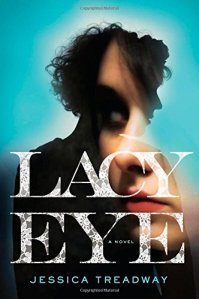
Three years after the attack that left her widowed and permanently disfigured, Hanna still has no memory of the actual event. Then the man she’s sure is responsible is granted a retrial and without her testimony there is a chance that he could walk free.
Rud Petty, their daughter Dawn’s boyfriend, had come to visit for the Thanksgiving holiday but while everyone else was out, the house was apparently broken into. Rud claimed innocence saying he must have slept through the whole thing, but it was clear the police believed he was responsible. And so Rud and Dawn left.

Hours later someone entered the home, disarmed the alarm system, and beat Hanna and her husband with a croquet mallet. Initially Dawn was considered a suspect along with Rud, but Hanna has always been certain that Rud acted alone. A mother knows this kind of thing. And yet, in spite of that, there are many who still believe Dawn played a part in the crime. Now Dawn is back and everyone but Hanna wonders what her real motivation in returning might be.

Lacy Eye is a scary premise – not only the fact that a potential murderer could walk free, but that he could walk free because his only surviving victim is mentally incapable of remembering the actual crime. And then there’s the prospect that someone near and dear could have some role in such a horrendous attack. The reader isn’t sure because Hanna isn’t sure. And Hanna is pretty unwavering in her conviction that Dawn didn’t do anything wrong. But Treadway does a fabulous job playing on that niggling bit of doubt in both Hanna’s mind as well as the reader’s.

3/15 Becky LeJeune

LACY EYE by Jessica Treadway. Grand Central Publishing; First Edition edition (March 10, 2015). ISBN: 978-1455554072. 352p.


THE TERRORIST’S HOLIDAY by Andrew Neiderman

March 13, 2015
Click to purchase

Click to purchase

After a meeting of the Jewish Defense League in New York, one of their members is murdered by two Islamic terrorists. NYPD Lt. Barry Wintraub is called upon to investigate the crime.

While investigating the murder, Lt. Wintraub comes up with evidence  that the group the two terrorists belong to is planning to blow up the dining room of a huge hotel in the Catskill mountains. Their reasons for doing so are the speech planned there by an Israeli military hero and a huge gathering and dinner honoring Chaim Eban, the Israeli general.

The speech and the dinner will take place during the Passover celebration with a large amount of wealthy Jews who are expecting to make donations for Israel during General Eban’s visit.

Mr Neiderman’s novel is a very interesting deviation from most books about terrorist’s plots. Both sides are well fleshed out. The Islamic group is portrayed as doing their best to aid their country and advance the cause they are fighting for. The Americans include a member of the Israeli Mossad and Wintraub’s wife and daughter.

Wintraub’s supervisor does not believe that there is enough evidence to substantiate the planned attack on the hotel. Barry is convinced enough to take a vacation and go with his family to stay there.

Neiderman brings in a large group of characters and does an excellent job of fleshing them out. Beside Wintraub’s family, a member of the Israeli Mossad,the owner of the hotel and his son and others working on the case the Islamic terrorists are also made into thinking beings. Neiderman goes into the terrorist’s minds and develops them into people who feel that for many reasons they are fighting for their country. There is a love between one of the terrorists and his girl friend. The girl is not aware of the totality of the plot and would be appalled if made aware of the devastation planned.

The plot is not complicated, but the reader is treated to a well written book and an insight into people that are caught up in it on both sides. Very well done.

3/15 Paul Lane

THE TERRORIST’S HOLIDAY by Andrew Neiderman. Open Road Media Mystery & Thriller (March 10, 2015).  ISBN: 978-1497693951.


ASHES TO DUST by Yrsa Sigurdardóttir

March 12, 2015
Click to purchase

Click to purchase

A Thora Gudmundsdottir Thriller

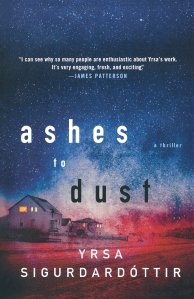
Thora is used to odd cases but her latest seems innocent enough at the start. Markús and his family were residents on Heimaey Island when the volcano erupted in 1973. Their house, along with many others, was buried under layers of ash and abandoned in the aftermath. Now, a group has begun excavating those houses and Markús has tried everything to stop his from being dug up.

Thora is unable to halt the excavation, but she is able to get Markús permission to be the first to enter the house’s basement. He swears, though, that he knew absolutely nothing about the three murdered men and the disembodied head that he found when he entered under Thora’s watchful eye. Now Thora’s job has gone from a simple intervention to a full-blown murder investigation. If she can’t prove that Markús not only had no part in what was hidden in his family’s basement but that he also had no previous knowledge of the apparent crime, he’ll go away for murder. And when the only witness who could prove Markús’s innocence is also found dead, Thora begins to worry that her task could be an impossible one.

This third in the Thora Gudmundsdóttir series begins with one of the most bizarre murders I’ve ever read. And it does set the tone for the rest of the book. Once again Sigurdardóttir weaves fascinating Icelandic history into the story – the eruption on Heimaey Island and the Cod War (yes, Cod War).

I do love the setting and Thora, but there are some little inconsistencies throughout the story that I generally have to err on the side of being possibly lost in translation. It was pretty maddening, though, when the characters kept returning to what seemed like very apparent clues without ever unraveling them. Regardless, I have to say I’m a solid fan of Sigurdardóttir and her work. Each book proves to be more weird and twisted than the one before.

3/15 Becky LeJeune

ASHES TO DUST by Yrsa Sigurdardóttir. Minotaur Books; Reprint edition (March 27, 2012). ISBN: 978-0312641740. 368p.


WORLD GONE BY by Dennis Lehane

March 11, 2015
Click to purchase

Click to purchase

Joe Coughlin Series (Book 2)

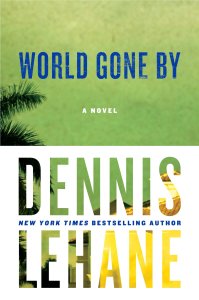
World Gone By is a continuation of Live By Night, which is perhaps the only flaw in a fascinating novel by Lehane. The book brings the characters created in the first book ten years into the future during the time of the Second World War, but without the information of the first novel there is a loss of continuity that the reader will miss.

Joe Coughlin, who had built an empire in Tampa, Florida for the Boston crime family he worked for, sees his work destroyed and his beloved wife killed in the first book, and is now the consigliere to the Bartolo crime family traveling back and forth for them between his home base in Tampa to Cuba. Joe works with and meets the mob families of Meyer Lansky, Lucky Luciano, connections with naval intelligence as well as the mob financed Cuban dictator Batista.

Lehane describes the rise of the mobs during World War Two, the murders, public official corruption and the intercine battles between the mob families. A gun battle on Ash Wednesday on the streets of Ybor City, Tampa is described in exacting detail bringing to life the violence and the complete disregard of law and order of the mobs.

The ending serves up a picture of ultimate payment by many of those that have lived a life without regard for the rights of others. It is another superb read served up by a master of his craft. Very well done.

3/15 Paul Lane

WORLD GONE BY by Dennis Lehane. William Morrow (March 10, 2015).  ISBN: 978-0060004903. 320p.


ASYLUM by Jeannette de Beauvoir

March 10, 2015
asylum

Click to purchase

There is a serial killer loose in Montréal, and the mayor asks Martine LeDuc, his director of PR, to act as liaison with the police department. Four women have been killed, their bodies left posed obscenely on park benches.
When the police charge a homeless man with the murders, Martine is afraid they are grasping at straws and the real killer is still out there. Luckily, renegade police detective Julian Fletcher is assigned the case, and they both go rogue.

Martine uncovers a link between the four women; all were involved with the Duplessis orphans, a decades old scandal. Orphanages found they could get more money from the government if the orphans were mentally ill, so the children were sent to asylums where many of them received lobotomies, electroshock treatments and hallucinogens and other drugs.

The story alternates between the present day investigation and one of the orphans telling their story, which really brings the tragedy intimately to life. Why the Duplessis orphans are involved after so many years is at the crux of this complex and heartbreaking mystery.

Copyright ©2015 Booklist, a division of the American Library Association.

3/15 Stacy Alesi, AKA the BookBitch

ASYLUM by Jeannette de Beauvoir. Minotaur Books; First Edition edition (March 10, 2015). ISBN 978-1250045393. 320p.


LIFE OR DEATH by Michael Robotham

March 8, 2015
Click to purchase

Click to purchase

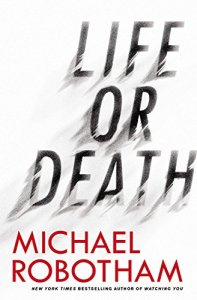
What would cause a man to escape from prison one day before he is to be released? A perplexing question seeing that if caught escaping he faces another 20-25 years behind bars.

Audie Palmer does just that. After 10 years in jail, subject to constant physical and mental harassment, and without telling anyone Audie escapes. He was imprisoned after being caught at a holdup of an armored car carrying seven million dollars in which four people were killed. He pleaded guilty to participation in the crime and a plea bargain sent him away for the 10 years. During the robbery he was shot in the head by police arriving at the scene but survived after months in the hospital.

Michael Robotham, in a mesmerizing novel, answers the questions posed and treats his readers to an excellent read. The seven million dollars stolen from the armored car never reappeared and Audie is suspected of knowing where it is. Moreover, the cash is old bills, unmarked and destined for destruction by the authorities as a normal activity to keep the money supply clean. This means that it is easily spendable and untraceable. The armored car company has a contract to collect these bills from several banks at set periods and transport them to the site where they will be burned.

Robotham fleshes out the characters involved in his book quite well. Audie is a complex individual with a very high I.Q. who thinks things out and does not act rashly. We meet the authorities chasing him and learn to understand their motives in what is happening. This is definitely a book to finish in one sitting in order to satisfy the interest in what is really happening. Easily a five star novel and one that, if the reader has not read a book by Michael Robotham yet, will make sure that his future writings are anticipated and obtained.

3/15 Paul Lane

LIFE OR DEATH by Michael Robotham. Mulholland Books (March 10, 2015).  ISBN: 978-0316252058. 432p.


Guest Bloggers: David & Veronica James

March 6, 2015

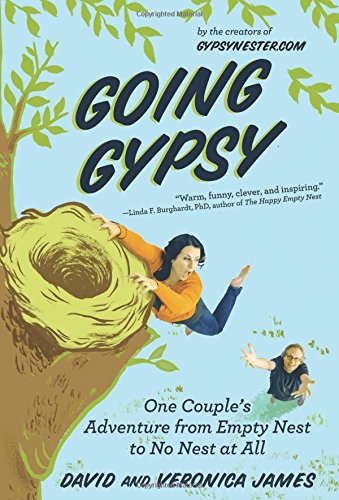
GoingGypsyGOING GYPSY: One Couple’s Adventure from Empty Nest to No Nest at All

Almost every couple faces a “now what?” moment as their last kid moves out of the house. There’s a big empty nest looming over this new and uncertain stage in their lives.

David and Veronica James chose to look at this next phase of life as a beginning instead of an ending. Rather than staying put and facing the constant reminders of empty bedrooms and backseats, a plan began to develop to sell the nest and hit the highway. But could a homebody helicopter mom learn to let go of her heartstrings and house keys all at once?

Filled with a sense of adventure and humor, GOING GYPSY is the story of a life after raising kids that is a celebration of new experiences. Pulling the rip cord on the daily grind, David and Veronica throw caution to the wind, quit their jobs, sell their house, put on their vagabond shoes, and go gypsy in a beat-up old RV found on eBay.

On a journey of over ten thousand miles along the back roads of America (and a hysterical, error-infused side trip into Italy), they conquer old fears, see new sights, reestablish bonds with family and friends, and transform their relationships with their three grown children from parent-child to adult-to-adult. Most importantly, they rediscover in themselves the fun-loving youngsters who fell in love three decades prior.

For more about the book: http://www.goinggypsybook.com/


Q&A with David & Veronica James

Authors of GOING GYPSY: One Couple’s Adventure from Empty Nest to No Nest at All

Most people become empty nesters when their kids leave home, but you left home too. How did that come about? 

David: We were living in the Virgin Islands and were a bit separated from all of our family and friends in the US. Once our youngest went off to college in the states, like his sisters before him, there was nothing keeping us in the Caribbean. So we decided to sell the house and take what we called a “victory lap,” celebrating a job well done—getting our kids raised and successfully out on their own.

Veronica: One of the reasons I had to resort to drastic measures was that I worked at the kids’ school. I was the quintessential “helicopter mom,” hovering over everything my kids did. The idea of going back to the school without the kids there was heartbreaking. So we whittled our belongings down to sixteen boxes and took off in a beat-up old RV we bought on eBay.

What was the process like from when you decided to take off to when you started your adventure? 

David: That’s what Going Gypsy is all about. We cover the year when our son left for college and we hit the road. We did not have this big plan in our heads at the start to live a gypsy lifestyle. It organically grew as we went along. Initially, we got the motor home as a way to take some time to visit with family and friends and see the country without going broke. Once we were out on the road a while, we realized how much we liked it and wanted to figure out how we could keep going. It’s been over six years now.

Veronica: A big thing that jolted us into thinking about a new approach to our lives was when we Googled “empty nest” and a big ad for an Alzheimer’s patch popped up. We thought, “holy cr-moley!” We have a good third of our lives left and that’s too long a time to be sitting around doing nothing. We see our book as a kick in the butt to get folks going and hopefully think outside the box.

How did you dispense with a lifetime’s worth of belongings? 

Veronica: The stress of a big move is huge no matter what the circumstances. We gave away or sold a lot of stuff, keeping only the things we knew we couldn’t live without (like photo albums and family heirlooms). Those we managed to fit into sixteen boxes that we put in storage. Now I find I’m more organized the less I have with me. If I have too many things and too much space to spread out in, I get really scattered and disorganized. 

How did you adjust to having “no nest at all?” 

David: We replaced our nest with one on wheels. The RV became our new home. It’s remarkable how homey it became and how quickly. It’s obviously very condensed, and we do travel light, but when you think about what you really need, we have the basics—a bed, a bathroom, a kitchen, and a table to sit at to eat and write.

Veronica: And the view out the window is different every day, which is fantastic!

How did your kids react to you leaving home? 

Veronica: Our son was horrified at first. I remember him saying, “you’re going to live in your car?!” But I think they’re happy for us. My guess is that they are also happy that Mom has things to do besides constantly bugging them about who they are dating or when they might make us grandparents. 

David: I imagine what they’re thinking is a mixture of relief and what the heck are they doing? But a big plus in this process has been developing a new relationship with our children as adults. We wanted to make an adult-to-adult connection and not be helicopter parents any longer. 

Don’t you miss seeing your kids regularly? 

David: We see the kids more than we would have if we’d stayed in St. Croix because we can route ourselves through wherever they are on our way from one adventure to the next.

Veronica: Our daughters live in Manhattan so they are easy to see often. Our son is in Alaska but he is a pilot and has the flying privileges that come with that, so it is usually easier for him to meet up with us.

How do you handle holidays?

David: Our oldest daughter took over the hostess role fairly quickly, as soon as we didn’t have the house any longer. She’s not one to miss out on the holiday treats and I guess she knew that it’s nearly impossible to shove a turkey into a motor home oven!

Veronica: She has done a remarkable job. New York City is an amazing place to spend the holidays. It’s very festive. So everyone is happy.

Was making this leap more exciting or scary? 

David: I am a musician so I always traveled a lot and I love it. It was natural for me to explore. For Veronica it was more of a drastic change.

Veronica: The hardest part was the initial decision to make the leap. I was a homebody—I didn’t think I’d be able to do it. But I’m proactive, and a planner, so it was good for me to be able to throw myself into the planning phase. I did have to do quite a bit of fear conquering. I guess I just transferred the fear—now I’m more scared to stop moving than I was to start in the first place!

How many places have you visited? 

David: We started in the RV by exploring the US, and then branched out to Mexico and Canada, following the weather like geese. As time went on, we broadened our horizons and added some traveling by air and sea. Now I think we’ve been to over 40 countries on five continents. Later this year we’re heading to Africa, making six out of seven, then our final continent will be Antarctica. We’ll get there!

Veronica: David has also been to all 50 states but I’ve only been to 48, so I need to cover my last two—Alaska and Hawaii. We’re very competitive so I can’t stand him being ahead of me.

What have been the highlights so far? 

Veronica: There are so many amazing high points. But I think the Galapagos Islands were up there at the top. I love animals; I’m like a little kid around them. The islands have so many unique species, and they are completely unafraid of humans, so if you love animals put the Galapagos at the top of your bucket list.

David: I answer this question different each time it’s asked because I have so many favorites. Walking along the top of the Great Wall of China was a real highlight. But I could easily name dozens more.

What have been the low points? 

Veronica: Yikes. Well, I locked myself inside a hotel room in Italy once. But a big one came when we had a blowout over our traveling styles. We had discussed the empty nest and all that it entailed, but forgot discuss to how we liked to travel. It ended up coming to a head in one of the most beautiful places in the world, Yellowstone National Park, in the middle of a herd of buffalo.

David: I have a go-go-go mindset. I always want to be moving forward. Veronica likes to really get a feel for a place and connect to it. In the end, I learned to adapt more to her style because it is a better way to see the world. 

Veronica: I call him a wham-bam-thank-you-ma’am traveler.

Have you inspired others to travel? 

Veronica: I hope so. My favorite part of this journey so far has been hearing from folks who chose places because we said how much we loved them. But there are so many wonderful things people in our life phase can do if they aren’t interested in travel, you don’t have to be as crazy as we are to start going gypsy. Do that thing that inspires you, something that you’ve always wanted to explore. Write that book, volunteer in your community, go back to school. And don’t forget to reconnect with your partner, do new things together, and find that pre-kid couple who fell in love all those years ago. We are not self-help writers. We haven’t written a how-to guide. We just aspire to be the same kind of kick in the butt for our readers that we found when we first saw that ad for the Alzheimer’s patch.

David: We try to seek out the unexpected, and discover overlooked gems in our travels. Sometimes they are found in famous, bucket-list type destinations; often they are hiding well off the beaten path. Either way we enjoy relaying stories from out of the ordinary. Hopefully that inspires some people to venture down the road less traveled too.

How have you pushed yourselves? 

Veronica: I made a decision to fear-conquer my butt off. As a mom I developed so many fears and it turned into a vicious cycle. I purposefully inserted myself into situations to overcome these fears. Just to name a few, I’ve paraglided off of the seacliffs in Lima, Peru, shot the rapids in Montana, and ziplined over a 300-foot waterfall in Newfoundland—I even went to roller derby camp; it took three days in bed to recover from that little escapade!

David: Veronica was all gung-ho about jumping out of an airplane in Australia. I see no need to abandon a functioning aircraft unless it is on fire. But once she threw down the gauntlet I accepted the challenge. Halfway up our attitudes had done a complete 180—she was looking pretty puny, scared to death, and I was excited at the prospect of freefalling from ten thousand feet.

Have you eaten any strange foods? 

David: Tons. We write about that a lot on our blog. I’m not sure if they were the strangest, but the worst by far was silkworms in China. For one thing, the smell made it nearly impossible to eat them. Oh, and the fact that they are bugs.

Veronica: A little clarification here, I ate silkworms, David spit his out. I won that one.

David: Let me just go on the record here: while I admit to spitting out the vile worm, I did eat a bug in Mexico, a cricket to be exact, and it was about a million times better than the silkworms.

Veronica: Yes, he did finally lose his bug virginity.

What’s next for the Gypsy Nesters? 

Veronica: The more we travel the more we want to see; we’ve turned into very greedy travelers! We’d love to get to New Zealand. And we haven’t been to Scotland—we both have roots there—so we feel a huge pull to visit. I could name several dozen more… but you really don’t want me to pull out the whole list, do you?

David: When we started out we had a saying: the plan is no plans. We like to leave life open to reveal itself to us so we usually don’t know where we will be too far in advance. We have a river cruise coming up through Holland and Belgium, and we are going to Africa this summer, but beyond that we will see where the wind takes us. In the meantime, we are working on a second book that will cover our adventures after that first year of taking our initial leap into the life of Going Gypsy.

About the Authors, by the authors:
David James was born in Wichita, Kansas, and grew up on the prairie and in the mountains of Colorado. He made his way in the music business as a performer, recording artist, songwriter, and radio personality in Nashville, Tennessee, and St. Croix, US Virgin Islands. After parenting and sending three kids out into the big wide world, he currently lives with his bride of thirty years, Veronica, in a state of perpetual motion. The couple writes about their travels since becoming empty nesters on their popular website, GypsyNester.com.

Veronica James was born and raised in Southern California and was like, totally, a Valley Girl. Against any sane person’s better judgment, she ran off with a musician at age eighteen. After procreating, she became Earth Mama, then Helicopter Mom, hovering over every detail of her children’s lives. Veronica has held approximately thirty-three different jobs including writer. She is never bored.