CAPTURED by Neil Cross

March 22, 2015
Click to purchase

Click to purchase

Kenny has just learned that he only has a few weeks left to live. Before he dies, he vows to track down the people he feels he owes the most to and somehow make amends. The list is short: Mary, his ex wife; Thomas Kintry, a boy Kenny witnessed almost being kidnapped; Mr. Jeganathan, the convenience store owner who saved Kintry (Kenny was unable to identify the kidnapper in interviews with the police, something he’s always regretted); and Callie Barton, the only schoolmate who showed him kindness in his worst years of childhood.

Mary is easy, they’ve remained the best of friends but Kenny doesn’t want to tell her he’s about to die. Even Kintry and Jeganathan are fairly quick to track down. But Callie… Callie is a tough one. It seems Callie has been missing for quite some time and her husband is the prime suspect.

Cross, the creator of BBC’s Luther, has a very clipped and short style. His prose is quick and tight, but there’s very little in the way of setting or character development. Instead, much of the effort is in unexpected twists and violence. And in Captured he does excel at both.

All in all, this isn’t one that will likely blow you away with its clever plotting but it is one that reads quick and easy and packs a wallop in terms of action.

3/15 Becky LeJeune

CAPTURED by Neil Cross. Open Road Media Mystery & Thriller (January 27, 2015). ISBN: 978-1497692749. 268p.


WHAT A RECKLESS ROGUE NEEDS by Vicky Dreiling

March 21, 2015

Click to purchase

The Sinful Scoundrels (Book 2)

This is my second Vicky Dreiling book. Unfortunately, I didn’t remember I had read her before until I got to the end of this one and the “preview” of the next book in the series, What a Devilish Duke Desires. After reading the preview, I realized I had read that book and ended up just skimming most of it. I won’t review a book I haven’t read in its entirety, so I never reviewed it. I did read this book, although I’m pretty sure I nodded off now and again.

The premise is a fairly common one; Colin Brockhurst, Earl of Ravenshire, a rakehell, assumes his family home, where his mother is buried, will someday be his. But he receives a letter from his father informing him that the property is to be sold. He rushes home and his father tells him he can have the property if he marries within 6 weeks.

Lady Angeline grew up as Colin’s neighbor but his drunken appearance at her debut made them enemies. Lady Angeline has a problem; she broke off her engagement to the scurrilous Brentmoor, who subsequently spread lies about her, severely damaging her reputation. The only way to salvage it is to marry quickly, and to someone with a title.

I usually love this storyline but not so much here. You know from the get go they will end up together, and that’s fine. But what isn’t fine is the repetition – the thoughts, the dialogue, the dog peeing in the water closet. There is more than one way to express a thought or emotion but not in this book. Some of the actions didn’t make sense either – she’s a virgin with a sullied reputation yet doesn’t hesitate to jump into bed?

I was too invested in these characters to give it up but I really can’t recommend this book.

3/15 Stacy Alesi, AKA the BookBitch

WHAT A RECKLESS ROGUE NEEDS by Vicky Dreiling. Forever (March 25, 2014). ISBN 978-0062334657. 384p.


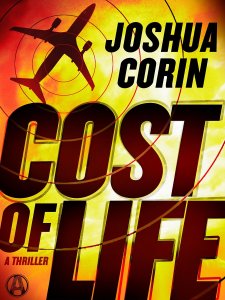
COST OF LIFE by Joshua Corin

March 20, 2015
Click to purchase Kindle only

Click to purchase

Larry Walder, veteran airline pilot, is fast asleep on the morning of July 4th.  If events move as they should he will awaken normally and ready himself to fly a plane filled with vacationers to Cozumel, Mexico. But events do not move as planned. He and his wife and child are rudely awakened when three men break into their house, take his family hostage, and tell Larry that he will fly the plane as planned, but to an airfield of their choosing.

Corin takes his readers on a giddy ride into terror with a plot that could occur in today’s world of extremist attacks with no aversion to murder. Captain Walder is forced into a car and driven to the airport to take command of his flight. On the way a police officer stopping the car for a minor infraction is shot to death by the terrorists. And that is just the first of many killings at the hands of the people kidnapping him and telling him that if he doesn’t do as told his wife and child will be murdered.

Why the take over and rerouting of the plane is the centerpiece of Corin’s engrossing novel. The terrorists have planned their actions with great care, and look like they have thought of every possible counter action that could thwart their interests. To call the book “an all nighter” does not do it justice. The reader will be caught up in details that are carefully plotted by Joshua Corin and will find it almost impossible to put the book down before finishing it.

Well done and certainly presenting the author as a master of plot and character and one to follow in the future.

3/15 Paul Lane

COST OF LIFE by Joshua Corin. Alibi (March 17, 2015).  ASIN: B00N6PEWCS. Print Length: 294 pages


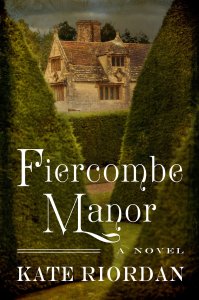
FIERCOMBE MANOR by Kate Riordan

March 19, 2015

Click to purchase

While Alice’s mother is pressing her to find a man and settle down, she doesn’t know that her young daughter has indeed found someone. But that someone is married and Alice becomes pregnant after just one night together.

It’s 1933 and to avoid the inevitable scandal, Alice’s mother reaches out to her childhood friend, a maid at Fiercombe Manor. Lord Stanton and his wife live abroad and after the story Alice’s mother spins – a tragic tale a young husband struck down in an accident – they offer up their home as a place of rest and respite for the duration of Alice’s pregnancy.

Fiercombe Manor is an ominous place and Alice immediately begins to feel weighed down by the secrets of its past. But as she tries to learn more, the few remaining servants become very secretive, especially when Alice asks them about the previous Lady Stanton, a woman whose fate seems to be a mystery even to the locals.

Kate Riordan spins this tale with two narrators and two timelines – Alice in 1933 as she waits out her term and Elizabeth in 1898 who is expecting her second child. Strangely, in Alice’s timeline no one really talks about Elizabeth. Alice learns that Elizabeth’s husband died, leaving his brother to inherit both the estate and mounting debts. She also learns that Elizabeth’s home, built by the deceased Lord Stanton, and its contents were all auctioned off just ten years after being built. All that remains of that home – Stanton House – is an overgrown foundation, the garden wall, and a glasshouse Alice has been forbidden from entering.

As Alice finds more and more clues about Elizabeth, Elizabeth herself shares pieces of her story. We meet her in alternating chapters as well as diary entries that Alice discovers hidden on the estate. Both women are very well drawn and their stories are both captivating and suspense laden. Fiercombe Manor is a great atmospheric read and a nice blend of mystery and drama.

(Published as The Girl in the Photograph in the UK.)

3/15 Becky LeJeune

FIERCOMBE MANOR by Kate Riordan. Harper (February 17, 2015). ISBN: 978-0062332943. 416p.


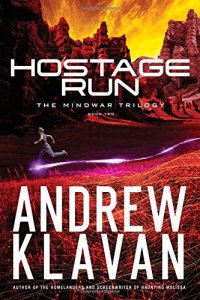
HOSTAGE RUN by Andrew Klavan

March 18, 2015
Click to purchase

Click to purchase

Mindwar Trilogy (Book 2)

Part of a trilogy by Klavan about a high tech attack on America. A terrorist has created a mind world in order to carry out his planned cyber attack on the U.S. Opposed to them is a secret American government organization working to thwart the planned attack.

Rick Dial was a star quarterback when his career was cut short due to injuries suffered in an auto accident. Unable to walk his gaming instincts were called to the attention of the government agency who then recruited him. Rick had already been trained and sent into the mind world as was described in a previous novel.

Information is gathered about another planned attack from mind world and Rick is the only one that is available to go back in and thwart it. The terrorists, as a means of stopping Rick kidnap his best friend Molly and threaten to kill her if he does not stop his actions in the mind world. The plight Molly is in and her attempts to escape are delineated along side of Rick’s actions to prevent the attack on the U.S.

The novel is, of course, science fiction, but is highly imaginative and logical based on the facts presented. It is very well done as an adventure story and keeps the reader glued to the book. The story is planned to be continued in the next book in the series with the ending of this crafted to lead logically into the next.

3/15 Paul Lane

HOSTAGE RUN by Andrew Klavan. Thomas Nelson (March 17, 2015).  ISBN: 978-1401688950. 352p.


Guest Blogger: Jacob Rubin

March 17, 2015
Click to purchase

Click to purchase

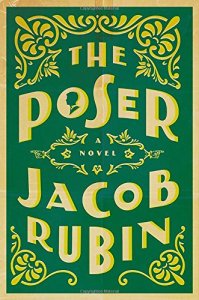
Win a copy of Jacob Rubin’s caffeinated and wildly comic debut novel, which was recently selected a Barnes & Noble Discover Great New Writers pick for spring 2015 and named a one of Huffington Post’s 2015 Books We Can’t Wait to Read.

In the same vein as George Saunders and Sam Lipsyte, THE POSER chronicles the hijinks and crises of Giovanni Bernini, the World’s Greatest Impressionist—a man whose bizarre compulsion and ability to imitate anyone he meets catapults him from small-town obscurity to widespread fame. As he describes it, “No one disguise is perfect. There is in every person, no matter how graceful, a seam, a thread curling out of them. . . .  When pulled by the right hands, it will unravel the person entire.”

Honed by his theatrical mother at a young age, his talent eventually takes him from his hometown to the nightclubs of the City and eventually the sound stages of Fantasma Falls, the glamorous, west coast city similar to Hollywood. As Giovanni’s fame grows, he encounters a cast of provocative characters—including an exuberant manager, a mysterious chanteuse, an enigmatic psychoanalyst, and a deaf obsessive compulsive—and becomes increasingly trapped inside many personas. When his bizarre talent comes to define him, Giovanni is forced to assume the one identity he has never been able to master: his own.

At its heart, the novel speaks to the power of performance, impersonation, acting, and what it means to find and understand the essence of someone, and of yourself. I think author Sam Lipsyte nails it when he says Rubin “is a great hope for comic fiction in the 21st century.” Though THE POSER is his debut, it certainly announces the arrival of a new and unmistakable voice in American fiction.

Check out the Book Trailer

Q&A with Jacob Rubin, author of THE POSER

Giovanni Bernini, The Poser’s protagonist, is known as the World’s Greatest Impressionist. He’s born with the uncanny ability to imitate anyone he meets instantaneously. Throughout the literary spectrum, plenty of stories have been written about performers or performing, but not impressionists specifically. How did you conjure up such an interesting character?

The Poser began, oddly enough, in the trash. Years ago I was working on a not very good short story about a man who wakes up in a woman’s apartment after a one-night stand. Remembering little of the night before, he begins to root around in her garbage for clues. One of the items he finds was, to my surprise, a black-and-white photo of a famed impressionist, a man who could famously imitate anyone he met. As I soon discovered, I was much more interested in this unexpected performer than I was in the guy who discovered him. I scrapped the story right then and wrote another one, very quickly, about this character Giovanni Bernini. After many years, it became The Poser.

You have experience as a performer—both as a juggler for hire and as the lead rapper of the hip-hop group Witness Protection Program, opening for groups like Jurassic Five and Blackalicious, to name a few. How has your background as a performer influenced the creation of Giovanni Bernini?

I can’t seem to get away from performance, in life or in writing. Personae, masks, fraudulence, disguise—all have fascinated me for as long as I can remember. I think a lot about that Picasso line: that art is a “lie that tells the truth.” It seems to me this paradox can obtain in life, too. Like, I once read an article in the Times about a survivor of 9/11, a woman who had been in the south tower when the planes hit. After the tragedy, she organized these legendary support groups. They were these deeply cathartic events, arranged with great thought and care. Survivors and relatives of victims depended on her entirely, so strong was her empathy. Only later did it come out that this woman hadn’t been in the towers at all—she made the whole thing up. I find such behavior deeply disturbing, of course, but fascinating, too. The lie, for this woman at least, clearly felt like an emotional truth.

I did stand-up comedy for a little while, and I think the status of the stand-up comedian reflects a similar paradox: instead of a lie that tells the truth, maybe a stand-up states a truth so serious it has to be packaged as a joke. The stage offers a kind of loophole, a free zone in which what would otherwise be punishably inappropriate can be aired with impunity, even to applause. It’s what performance offers in general, I think: this magical, cordoned-off space where people can lie, hurl abuse, decompensate, and the crowd hoorahs! In The Poser, I wanted to explore a character who finds that his previously outrageous behavior is celebrated simply because it’s put on the stage.

A man with a million personas, Giovanni seemingly can be anyone except himself and at one point in the story undergoes psychoanalysis. Coming from a family of psychiatrists yourself, you must have some insight into analysis and some rather interesting stories, to boot. Will you talk briefly about growing up among psychoanalysts and how that may have shaped Giovanni as a character and the story as a whole?

My grandfather, Theodore Isaac Rubin, was a very famous psychiatrist in the 60s, 70s, and 80s. He appeared regularly on the Phil Donoghue show and wrote many bestselling novels and self-help books, one of which was turned into an Oscar-nominated movie, David and Lisa. Largely because of his influence, my father, aunt, and uncle all went on to become shrinks. Suffice it to say, there is no dearth of introspection at our family get-togethers. (Somewhat notoriously, I informed a classmate of mine in the third grade that he was “projecting”; I am still living this down.) And yet I also wanted to show how beneficial therapy can be. I think portrayals of analysis in books and movies are often pretty lazy, framing it as this ridiculous or masturbatory exercise. I wanted to show that there is true empathy in it – a kind of warm detachment – that can really help people.

The Poser is told from Giovanni’s perspective, at a point in his life where he’s looking back at everything that’s befallen him. What compelled you to use first-person confession as the mode for telling the story?

The enjoinder to “show don’t tell” is important for every young writer to hear, and yet so many of my favorite books wholly disregard it. Notes from the Underground, for instance, or Walker Percy’s The Moviegoer, the novels of Robertson Davies and Stanley Elkin. Everyone knows novels can’t compete with movies or video games for sheer sensory onslaught, but books, for my money, capture better than any other media the interiority of experience, the “music of someone’s intelligence,” as Richard Ford once put it. My favorite books promise just this kind of intimate—and for that reason, often scandalous—experience. Like, Lolita or Denis Johnson’s Jesus’s Son. You open those books, and you’re encountering this presence, this personality talking about something it shouldn’t have done in a voice unlike any you’ve ever heard. My favorite books, probably for that reason, feel like a secret, and you feel slightly cheated when you find out someone else read it. You’re like, “Hands off. She told that to me and no one else.”

Thematically, I thought the first-person narrative was necessary for The Poser as it’s about a man struggling to find himself, which he does, in the end, by telling the story. I also liked the tension of having someone act a certain way, as a performer or fraud, while narrating his often discordant internal experience. He says one thing, but thinks another. This is something I think fiction can do particularly well.

Giovanni’s world is noir-ish, vaudevillian, even a bit surreal. The story is set in an imaginary country that somewhat resembles America of the 1950s and 60s. What was your thought process in setting the story in a parallel, fable-like world?  Did you do any research to flesh out its wonderful detail?

I knew I was taking a risk in setting the book in an imaginary place, a parallel America of the 50s and 60s, and yet it felt necessary for the kind of book I was hoping to write. The Poser, as I see it, is about Giovanni’s attempt to become a real person; it felt right that the landscape, too, might strain to be real, flickering between the evoked and the shadowy. I did do research about the corresponding time in America. Stuff about clothes, some slang, etc. I used as models for the noir prose style novels by favorites like Jim Thompson and Raymond Chandler.

I can’t seem to escape the surreal. In visual art, it’s always been my favorite: Giacometti’s sculptures, for instance, or the paintings of Paul Klee. I think I’ve always aspired to whatever the prose equivalent of such a way of seeing would be. For me, it is rare that when meeting a person I note what color nail polish she’s wearing or which kind of ankle boot (this can be very embarrassing, mind you, for someone meant to be observant). Encountering a person can be a pretty damn surreal experience, much more like meeting a Giacometti or a Klee. I think the same is true of places. Just walking around and seeing people yammering on their cellphones or driving around in these motorized chrome bubbles—we live in a sci-fi movie! My agent, Jin Auh, once relayed a line the author George Garrett had about Fellini’s movies. He called them “science fiction set in the past.” I loved that. I think that’s what I’m trying to write.

Bestselling author Sam Lipsyte praised you as “a great hope for comic fiction in the 21st century.” Did you set out to write a humorous book? Were there any books or authors—comedic or otherwise—who inspired you while writing The Poser?

Sam Lipsyte has made me laugh so many times, so I was on cloud nine when I found out he enjoyed the book. I certainly hope the novel’s funny. My old teacher Barry Hannah used to say that books should offer “deep entertainment”; the unkillable ham in me can’t seem to let go of the second word. All of my favorite contemporary writers make me laugh: Jennifer Egan, Jonathan Lethem, Sam Lipsyte, Barry. Even very dark, supposedly depressing, classics are secretly knee-slappers. I’m thinking of writers like Knut Hamsun, Thomas Bernhard, Samuel Beckett, and Herman Melville. I read Paul Auster’s introduction to Hunger, in which Auster talks about how dark and miserable the book is (all of which is true, of course), but I also thought, it’s hilarious! The truly tragic is the funniest stuff there is! The fact that we live on a spinning ball in an endless void, or that we possess a seemingly infinite consciousness but will all die. It’s just so absurd. I think laugher is the sound of someone accepting their powerlessness and through that acceptance briefly somehow transcending it. And it shouldn’t ever be explained. And I now ruined it forever.

Besides working as a novelist, a magician, and a rapper, you also write screenplays. In fact, Times Square, a script you co-wrote with Taylor Materne, was recently optioned by Focus Features. In your opinion, what’s the biggest difference between writing a novel and a script, and do you prefer writing one form over the other?

I’ve found the two to be very different. In film, structure is king, so you really have to work out the entire plot as much as you can before setting off to write. It helps a lot to work with someone else to figure out what needs to happen when.  Of course, you often end up changing nearly everything anyway, but it’s almost more like assembling a watch or engine, some device that has to meet company-mandated specs. Fiction writing, for me, is a much more unwieldy, inefficient, foolhardy, and reliably meaningful experience. That said, I’ve always enjoyed writing dialogue, and the script stuff is a fun opportunity to pen snappy exchanges. In movie writing, you get to put down things like, “NO WAY OUT. The green creature on his heels, he GRABS the duffel bag and – screw it – LEAPS OFF the roof over the sea wall to the CHURNING WATERS of the GULF of MEXICO.”

The Poser is your debut novel. Is there a second in the works? If so, could you talk a bit about it? If not, would you mind divulging what other creative projects you’re currently working on?

There is a lengthy word file in my laptop that I hesitate to call a second novel, but perhaps it will be one day! It is too early to talk about it, but I hope it will be funny.

To win your own copy, please send an email to contest@gmail.com with “WIN POSER” as the subject.

You must include your snail mail address in your email.

All entries must be received by March 31, 2015. Two (2) names will be drawn from all qualified entries and notified via email. This contest is open to all adults over 18 years of age in the United States only. Your book will be sent by the publisher, Viking Press.

One entry per email address. Subscribers to the monthly newsletter earn an extra entry into every contest. Follow this blog to earn another entry into every contest. Winners may win only one time per year (365 days) for contests with prizes of more than one book. Your email address will not be shared or sold to anyone.

3/15 Stacy Alesi, AKA the BookBitch

THE POSER by Jacob Rubin. Viking (March 17, 2015). ISBN 978-0670016761. 256p.


JOSHUA: A Brooklyn Tale by Andrew Kane

March 16, 2015

Click to purchase

This is one of those books that I picked up because my library patrons kept raving about it and the reserve list is quite long. It also had the added attraction of being set in Brooklyn, my birthplace and my son’s current home. When there is that much interest in a book, I like to take a look at it, and I’m very glad I did.
At its heart, it is a coming of age story but it is also a history of the Crown Heights section of Brooklyn, starting in the late 1950s but with some additional historic information going back to the 1800s.

There are three main characters, four if you count Crown Heights and I certainly do. Joshua Eubanks is a young black boy whose mother is a maid for the Sims, a wealthy Jewish family on Long Island. Mr. Sims owns some apartments in Brooklyn, where he moves his maid/mistress and their son, but Joshua doesn’t know about his father. He does hear a lot about Paul Sims, his half-brother, and while they don’t know about their relationship they do know about one another.

Joshua befriends the only other black child in the building, Jerome, and as they approach adolescence, he falls in love with Jerome’s sister, Celeste. Unbeknownst to Joshua, she is having serious problems at home that have long reaching repercussions.

As Paul Sims approaches his bar mitzvah age, he is tutored by Rabbi Weissman, a Hasidic rabbi in Crown Heights. Paul falls in love with the rabbi’s daughter Rachel, but it is not meant to be. Paul’s family left their religious life behind when they Americanized their name, and are appalled that he is pursuing a more orthodox lifestyle.

Rachel makes up the last of the triumvirate. The rabbi’s daughter wants to become a doctor, but that is just not done in the Hasidic community. Women are expected to marry and produce lots of children, and not much more than that. She befriends Joshua, and their relationship has considerable influence on both their lives.

Crown Heights is the last main character, and also comes of age in this story. The community changes from Italian and Irish to African American but the Hasidim are the constant throughout, despite bigotry going in every direction and eventual race riots.

This a completely engrossing story, with well defined characters that the reader can’t help but care about. The tumultuous times add a lot of drama and action, making this a fast paced story as well. What I really liked is that the author showed both the good and the bad in all these racial and religious groups. There was no black and white, only the more realistic shades of gray.

There is a lot for book groups to discuss here, and I would highly recommend it for book discussion. I really enjoyed it, and will be thanking my patrons for recommending it.

1/15 Stacy Alesi, AKA the BookBitch

JOSHUA: A Brooklyn Tale by Andrew Kane. Berwick Court Publishing (February 26, 2015). ISBN 978-0990951544. 480p.


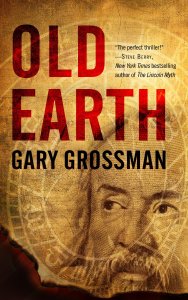
OLD EARTH by Gary Grossman

March 15, 2015

OLD EARTH

There is some agreement that mankind, homo sapiens, rather than ape like creatures, walked the earth less than 100,000 years ago, although recently bone fragments have been found dating about 100.000 years ago traced to Cro Magnon rather than Neanderthal men.

Grossman brings us a fascinating and plausible book postulating a highly evolved civilization existing about 200,000 years ago. He begins with a story about a discovery made by Galileo Galilei in 1601, that if revealed, was felt could possibly destroy religions, bring down governments and lead to worldwide turmoil.

A society of very powerful men was formed that for 400 years closely guarded the secret to prevent the vast problems foreseen by Galileo from becoming public. Quinn McCauley and Katrina Alpert, both paleontologists and well respected in their field leads an expedition to caves in Montana to explore possibilities for new discoveries. What emerges from their exploration are discoveries which are so startling in nature that they lead the pair to other sites around the world. These discoveries might be the answer to why Galileo turned his interests to studying the stars,and why he was convicted of heresy by the Inquisition.

Old Earth touches upon arguments between science and religion in developing the story and provides what is a fascinating exploration for an alternative theory of the history of our planet. The term mesmerizing is quite applicable to the book as well as the concept of thought provoking.

3/15 Paul Lane

OLD EARTH by Gary Grossman. Diversion Publishing (March 10, 2015).  ISBN: 978-1626816343. 374p.


LACY EYE by Jessica Treadway

March 14, 2015
Click to purchase

Click to purchase

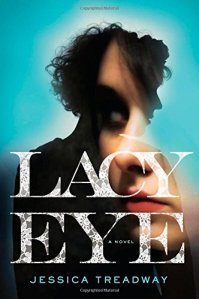
Three years after the attack that left her widowed and permanently disfigured, Hanna still has no memory of the actual event. Then the man she’s sure is responsible is granted a retrial and without her testimony there is a chance that he could walk free.

Rud Petty, their daughter Dawn’s boyfriend, had come to visit for the Thanksgiving holiday but while everyone else was out, the house was apparently broken into. Rud claimed innocence saying he must have slept through the whole thing, but it was clear the police believed he was responsible. And so Rud and Dawn left.

Hours later someone entered the home, disarmed the alarm system, and beat Hanna and her husband with a croquet mallet. Initially Dawn was considered a suspect along with Rud, but Hanna has always been certain that Rud acted alone. A mother knows this kind of thing. And yet, in spite of that, there are many who still believe Dawn played a part in the crime. Now Dawn is back and everyone but Hanna wonders what her real motivation in returning might be.

Lacy Eye is a scary premise – not only the fact that a potential murderer could walk free, but that he could walk free because his only surviving victim is mentally incapable of remembering the actual crime. And then there’s the prospect that someone near and dear could have some role in such a horrendous attack. The reader isn’t sure because Hanna isn’t sure. And Hanna is pretty unwavering in her conviction that Dawn didn’t do anything wrong. But Treadway does a fabulous job playing on that niggling bit of doubt in both Hanna’s mind as well as the reader’s.

3/15 Becky LeJeune

LACY EYE by Jessica Treadway. Grand Central Publishing; First Edition edition (March 10, 2015). ISBN: 978-1455554072. 352p.


THE TERRORIST’S HOLIDAY by Andrew Neiderman

March 13, 2015
Click to purchase

Click to purchase

After a meeting of the Jewish Defense League in New York, one of their members is murdered by two Islamic terrorists. NYPD Lt. Barry Wintraub is called upon to investigate the crime.

While investigating the murder, Lt. Wintraub comes up with evidence  that the group the two terrorists belong to is planning to blow up the dining room of a huge hotel in the Catskill mountains. Their reasons for doing so are the speech planned there by an Israeli military hero and a huge gathering and dinner honoring Chaim Eban, the Israeli general.

The speech and the dinner will take place during the Passover celebration with a large amount of wealthy Jews who are expecting to make donations for Israel during General Eban’s visit.

Mr Neiderman’s novel is a very interesting deviation from most books about terrorist’s plots. Both sides are well fleshed out. The Islamic group is portrayed as doing their best to aid their country and advance the cause they are fighting for. The Americans include a member of the Israeli Mossad and Wintraub’s wife and daughter.

Wintraub’s supervisor does not believe that there is enough evidence to substantiate the planned attack on the hotel. Barry is convinced enough to take a vacation and go with his family to stay there.

Neiderman brings in a large group of characters and does an excellent job of fleshing them out. Beside Wintraub’s family, a member of the Israeli Mossad,the owner of the hotel and his son and others working on the case the Islamic terrorists are also made into thinking beings. Neiderman goes into the terrorist’s minds and develops them into people who feel that for many reasons they are fighting for their country. There is a love between one of the terrorists and his girl friend. The girl is not aware of the totality of the plot and would be appalled if made aware of the devastation planned.

The plot is not complicated, but the reader is treated to a well written book and an insight into people that are caught up in it on both sides. Very well done.

3/15 Paul Lane

THE TERRORIST’S HOLIDAY by Andrew Neiderman. Open Road Media Mystery & Thriller (March 10, 2015).  ISBN: 978-1497693951.