LOSING FAITH by Adam Mitzner

April 22, 2015
Click to purchase

Click to purchase

A thrill a minute legal novel written by a practicing attorney. Events involved in a high profile trial are brought to life by Mitzner allowing the reader to understand that the outcome is not a cut and dried guilty or not guilty situation but a verdict brought about by manipulations on both sides.

Aaron Littman, a 51 year old highly successful lawyer, and the chairman of a large and very prestigious wall street law firm is approached to talk with Nikolai Garkov. Garkov is currently awaiting trial on charges of terrorism for manipulating the financial strings behind recent treasonous acts. He offers Aaron 100,000.00 dollars just to take the meeting. Nikolai is to be tried under the gavel of Judge Faith Nichols and knows that Aaron had an affair with her while acting as defense in a previous case. He tells Aaron that if he doesn’t take his case the affair will be made very public.

Events move swiftly, and the machinations of both the prosecuting attorney in the Garkov case and Aaron and his associates are presented very clearly. Clouding the events is the murder of Judge Nichols and the blame placed on Littman. The majority of the book is a masterpiece of insight into the legal world. The climax becomes somewhat contrived but does not spoil a great piece of legal fiction.

It is clear that Mitzner will continue writing, in all likelihood in a field headed by John Grisham. His characters are very well sketched out and become alive in his hands. An old axiom about methods that should be used by authors is to write about areas that they know about. This is a given in Mitzner’s novel and should continue as he goes forward in the literary aspect of his career.

4/15 Paul Lane

LOSING FAITH by Adam Mitzner. Gallery Books (April 14, 2015). ISBN 978-1476764245. 368p.


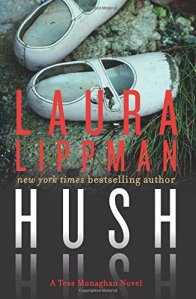
HUSH, HUSH by Laura Lippman

April 20, 2015
Click to purchase

Click to purchase

Tess Monaghan Novel (Book 12)

When Tess’s friend and old boss Tyner Gray hires her as a security consultant for his client, Tess can’t refuse. Not even when said client is Melisandre Dawes, the woman who left her two-month-old baby to die in a hot car while she sat and waited nearby.

It’s been more than ten years since the trial. More than ten years since Melisandre was judged not guilty by reason of insanity. But even her verdict and the time that’s passed have not erased the emotional response Baltimoreans had to her case. And though Melisandre left Baltimore in the wake of that tragic event, her return – supposedly to reconcile with her other two daughters, on film no less – has garnered a heated response from the locals.

That’s where Tess and her new partner, Sandy, come in. Initially they’re meant only to ensure that Melisandre’s new condo is safe as it can be. Then Melisandre finds herself the prime suspect in yet another murder investigation and the PI duo are tasked with proving the woman’s innocence. That’s easier said than done, especially when Tess is convinced Melisandre Dawes can’t be trusted.

This is the twelfth book in Lippman’s Tess Monaghan series. Tess is a favorite amongst mystery/thriller fans, but she’s been on break since the 2008 serial “The Girl in the Green Raincoat” (released in print in 2011), so her return comes with great anticipation. Fans can relax, though, as Lippman and Monaghan are in top form.

One thing has changed for the PI, though, and that’s the new role of mother in addition to her long list of accomplishments. Tess’s toddler daughter, Carla Scout, is a charming addition to the series and Tess’s own fears and concerns associated with being a parent make her even more relatable than before.

4/15 Becky Lejeune

HUSH, HUSH by Laura Lippman. William Morrow (February 24, 2015). ISBN 978-0062083425. 320p.


YOU CAN TRUST ME by Sophie McKenzie

April 16, 2015

Click to purchase

Livy and Will have some problems in their marriage; Will had an affair and lucky Livy gets to meet the ex-mistress at Will’s holiday work party. She’s stressing about it and ignores her best friend Julia’s texts that night.

Livy and Julia have been friends for 18 years, since Livy’s sister Kara was murdered walking home from a college party. They have plans for lunch the next day but when Livy gets there, she finds Julia dead on the sofa. The police rule it a suicide but Livy isn’t buying it.

Then Livy meets Julia’s secret boyfriend, and they team up to try to figure out what really happened. They delve into Julia’s life, and Livy is shocked to learn that Julia was obsessed with Kara’s unresolved murder and had never given up trying to find her killer.

Interspersed throughout the book are memoir type chapters written by the murderer so we can see how he evolves into a serial killer. Almost every person in Julia’s life becomes a suspect at one point or another, but the ending is a bit of a stretch in this suburban UK nightmare.

Copyright ©2015 Booklist, a division of the American Library Association.

4/15 Stacy Alesi, AKA the BookBitch

YOU CAN TRUST ME by Sophie McKenzie. St. Martin’s Press (April 14, 2015). ISBN 978-1250033994. 304p.


BORDERLINE by Liza Marklund

April 15, 2015
Click to purchase

Click to purchase

The Annika Bengtzon Series #9

In the ninth book of this Scandinavian series, reporter Annika Bengtzon gets a tip about a body found behind the local school and she arrives with the police. A woman has been stabbed to death, the fourth such murder in Stockholm.

The police don’t think the murders are related, but Annika does and starts investigating. Her investigation gets sidelined when her on again, off again husband Thomas gets kidnapped. He’s volunteered as part of an EU delegation in Nairobi, mostly because of the hot young British delegate, and they all go missing, their driver shot and killed.

Thomas’s boss is with Annika to handle the exorbitant ransom demands, and they get more involved than they probably should. The point of view switches between Annika, her investigation into the serial killings and the effects of the kidnapping on her and the children, with Thomas and the other kidnap victims, the deplorable conditions in which they are kept, and their constant fear of execution.

Highly suspenseful and sure to appeal to Scandinavian thriller fans of Steig Larssen, Jussi Adler-Olsen and Camilla Läckberg.

Copyright ©2015 Booklist, a division of the American Library Association.

4/15 Stacy Alesi, AKA the BookBitch

BORDERLINE by Liza Marklund.  Atria/Emily Bestler Books (April 14, 2015).  ISBN 978-1476778297. 384p.


EVERY FIFTEEN MINUTES by Lisa Scottoline

April 14, 2015
Click to purchase

Click to purchase

Dr. Eric Parrish is Chief of the psychiatric unit at a top rated hospital outside Philadelphia. His wife has filed for divorce and he is trying to remain the caring and involved dad he’s always been to their seven year old daughter. He is called to consult on a patient, an elderly woman dying of cancer, but quickly realizes it’s her caretaker, her 17 year-old grandson Max, who really needs the consult.

Max is suffering from a severe case of OCD, complete with rituals every fifteen minutes, plus depression issues exacerbated by his alcoholic mother and terminally ill grandmother. Max agrees to treatment, and a few sessions in he loses his grandmother and admits to having fantasies of killing a young woman – who ends up dead. Then he disappears.

Eric is extremely empathetic, an excellent quality in a psychiatrist, but becomes way too involved in searching for his missing patient and putting himself in harm’s way. By invoking doctor-patient privilege, he incurs the wrath of the police department and becomes a person of interest himself, getting suspended from his job and giving his wife ammunition in the child custody battle.

Occasional chapters from the killer’s viewpoint seem to lead the reader towards an obvious conclusion, but Scottoline has plenty of tricks up her sleeve, making this story twist and turn with one surprise after another. Every Fifteen Minutes is a standalone departure from her usual, should please her readers but also earn her some new fans.

Copyright ©2015 Booklist, a division of the American Library Association.

4/15 Stacy Alesi, AKA the BookBitch

EVERY FIFTEEN MINUTES by Lisa Scottoline.  St. Martin’s Press (April 14, 2015).  ISBN 978-1250010117. 448p.


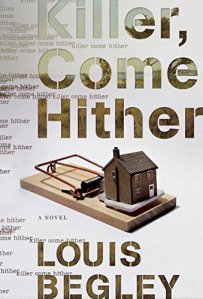
KILLER COME HITHER by Louis Begley

April 11, 2015
Click to purchase

Click to purchase

Jack Dana is a star student of history at Yale University with a probable future in the academic world when he changes course right after the events of 9/11. He joins the Marines as an infantry officer and receives training in the world of damaging and killing other human beings; a far cry from the staid world of academia. He serves in both Iraq and Afghanistan and is seriously wounded in the field.

While recuperating from the wound he begins writing a book about his military experiences. Jack is invited to move in with his uncle Harry, his surrogate father, in New York’s Manhattan borough. He completes the novel while there, and with help from Harry finds a publisher who buys the book. He writes another novel and succeeds in selling that also.

Jack decides that with the success of two books he is entitled to a vacation and goes to Brazil staying at a ranch there for three months. Ultimately bored with the quiet life he flies home but an e-mail arrives indicating that uncle Harry has committed suicide by hanging himself in a home that he owns in Sag Harbor on Long Island.

Jack starts to delve into the apparent suicide and begins unearthing indications that Harry had begun gathering data about an Abner Brown who is the most important client for the law firm Harry worked for. In the course of Jack’s investigation he meets Kerry Black, a young woman employed by Harry’s law firm, with whom he strikes up a serious romance. He also gets help in his investigations from a college friend of his who now works for the CIA and realizes that uncle Harry was murdered in order to silence him from revealing what he has learned about Abner Brown’s real activities.

Begley keeps you reading, and although this is not an all nighter since there is little suspense in the story, it still is a good novel. The ending is expected but definitely sets the scene for more Jack Dana books incorporating the background intelligence he has with the ability to do physical damage to his enemies.

4/15 Paul Lane

KILLER COME HITHER by Louis Begley. Nan A. Talese (April 7, 2015). ISBN 978-0385539142. 256p.


ONE MILE UNDER by Andrew Gross

April 9, 2015
Click to purchase

Click to purchase

Andrew Gross returns to his detective Ty Hauck to bring us a novel replete with twists and turns and set in what has become oil country, Aspen, Colorado, thanks to the new technique of fracking. The area is rich in resources, but in a drought situation during the time of Gross’ story.

Dani Haller, college educated, has become a guide for a Whitewater rafting business enjoying the life as opposed to working at a desk for some large company. Leading a tour down the rapids near Aspen she comes upon the dead body of a close friend.

Trey Watkins’s death is ruled an accident by the authorities called to the scene, but Dani in returning to the area finds evidence that that is not the case. She takes her suspicions to Wade Dunn, the local chief of police, who is coincidentally her step father having married her mother when her real father died. Wade insists that the case is closed and is an accident. But Dani talks to a balloon operator who insists that that is not the case and witnessed something while flying over the area where Trey was killed.

Before “Rooster”, the balloon operator, can talk to Dani, he is killed along with four passengers by a seemingly freak accident to his balloon. Bringing her further suspicions of foul play to Wade Dunn causes the chief of police to jail her, seemingly for her own protection.

Dani’s father, currently working on a project in South America, calls on Ty Hauck to help his daughter. Hauck is coincidentally related to her and leaves a long term vacation he is on to go and help Dani. The descriptions of Ty are perhaps the best part of Gross’ handling of the events. The detective is portrayed as a human being, not the hard nosed sleuth of other books. He has been wounded in a previous novel and still recuperating from it, is not omnipotent by any means, does not possess super human strength and works in a logical and plodding manner to get to the crux of the matter. He is a person that can be seen as normal, possessing average intelligence, but instilled with the desire to see things to their conclusion.

In the course of the novel, Andrew Gross provides the reader with a description of what fracking for oil entails. He also indicates that rumors that this process poisons the land are not true, and that properly handled can bring the United States independence of supplies from the OPEC countries and lower costs to consumers and industry as well. The ending leaves Hauck in a position to take on more work, and the probable lead in future books by Gross. Well done and certainly one to lead the reader awaiting further Ty Hauck books.

4/15 Paul Lane

ONE MILE UNDER by Andrew Gross. William Morrow (April 7, 2015). ISBN 978-0061655999. 400p.


COMPULSION by Allison Brennan

April 7, 2015

Click to purchase

Max Revere Novels, Book 2

Investigative reporter Maxine Revere returns in this terrific follow up to Notorious.

Serial killer Adam Bachman is on trial for five murders, but Max thinks there are more bodies to be uncovered. She specializes in missing persons cases that have gone cold, determined to bring closure to the families.

She’s suspicious that Bachman is responsible for the disappearance of a couple vacationing in New York City, but the D.A. doesn’t want to hear it, he just wants to get his conviction. Max scores a brief, pre-trial interview with the defendant and becomes convinced that he knows something about the missing couple. She also thinks he wasn’t working alone but can’t persuade the police to investigate further, so she investigates herself, along with her bodyguard, David, and her young intern, Riley.

They find enough evidence that one cop is willing to search further, with devastating consequences for all of them. The pacing is relentless and the suspense just keeps building until the satisfying ending. An excellent addition to the series.

Copyright ©2015 Booklist, a division of the American Library Association.

4/15 Stacy Alesi, AKA the BookBitch

COMPULSION by Allison Brennan. Minotaur Books (April 7, 2015). ISBN 978-1250035028. 384p.


THE PATRIOT THREAT by Steve Berry

March 31, 2015
Click to purchase

Click to purchase

I fell in love with Steve Berry with his first book, The Amber Room, and many books later the love affair continues. I am delighted to help kick off his Blog Tour for his latest Cotton Malone thriller, The Patriot Threat. Read on for a review and an excerpt (and don’t forget to rush over & enter the ITW March Bookshelf of Thrillers contest to win a signed copy of this book plus several others – 3/31 is the last day to enter!)

REVIEW

by Paul Lane

The mantra that the only sure things in life are death and taxes is well known to everyone. Death is certain and taxes are always with us as a means of funding the government’s expenditures. The income tax that is law in the United States was approved as the 16th amendment to the Constitution and ratified by the requisite number of states needed to pass it. The implementation in 1913 was to only affect a few individuals that were perceived as able to pay it.

But with such an instrument in hand, the tax bite grew like Topsy, and it was President Franklin Roosevelt that initiated withholding at the payer source in order to collect quickly. Berry uses his character, Cotton Malone, a former secret agent known quite well to many readers, to tell the story.

While retired and living in Copenhagen where he owns a book shop, he does answer his previous supervisor Stephanie Nelle’s request to go after a rogue member of North Korea’s ruling family who is searching for information which can be used to damage the United States. The item is a crumpled sheet of paper that was handed to Roosevelt in 1933 by Andrew Mellon, a multi millionaire who had been named Secretary of the Treasury by three successive presidents and had an ongoing dislike for FDR.

Berry obviously has a great deal of dislike for Roosevelt and his politics. He postulates that Mellon told him to his face that he was a failure since he would need a war to end the great depression, which continued unabated until WWII. He is also accused of using the Internal Revenue Service as a gestapo to punish those who opposed him.

Mellon is described as hurling a paper at Roosevelt while arguing in private. This paper is described as pointing out the 16th amendment was not legally passed with several states not processing the proposal correctly. If so, it opens the United States to lawsuits halting the income tax and putting in claims for past payments made to the government. Since the Income Tax provides about 90% of America’s funding such an event would cause the country to default on it’s debts as well as not having the ability to function.

The rogue brother of North Korea’s current ruling family, Kim Yong Jin, is seeking the “crumpled” paper as a means of doing damage to the U.S., causing it to default on its debts. As a consequence he feels that he would be able to displace the current leader and take power.

The Patriot Threat, similarly to other Cotton Malone books, is a fast and engrossing read as clues and information are gathered and made sense of. It also makes use of information that Berry and his wife have gathered that is a bit out of the mainstream, and learned through their research in areas that they pursue due to their love of history. The book makes reference to events in other books about Cotton Malone, but is, like the others, a satisfying stand alone to be enjoyed even without the information that may seem to be missing.

EXCERPT

ONE

Cotton Malone dove to the floor as bullets peppered the glass wall. Thankfully the transparent panel, which separated one space from another floor-to-ceiling, did not shatter. He risked a look into the expansive secretarial area and spotted flashes of light through the semi-darkness, each burst emitted from the end of a short-barreled  weapon. The glass between him and the assailant was obviously extra-resistant, and he silently thanked someone’s foresight.

His options were limited.

He knew little about the geography of the building’s eighth floor— after all, this was his first visit. He’d come expecting to covertly observe a massive financial transaction—$20 million U.S. being stuffed into two large sacks destined for North  Korea. Instead the exchange had turned into a bloodbath, four men dead in an office not far away, their killer—an Asian man with short, dark hair and dressed as a security guard—now homing in on him.

He needed to take cover.

At least he was armed, toting his Magellan Billet–issued Beretta and two spare magazines. The ability to travel with a gun was one advantage that came with again carrying a badge for the United States Justice Department. He’d agreed to the temporary assignment as a way to take his mind off things in Copenhagen, and to earn some money since nowadays spy work paid well.

Think.

He was outgunned, but not outsmarted.

Control whats around you and you control the outcome.

He darted left down the corridor, across gritty terrazzo, just as another volley finally obliterated the glass wall. He passed a nook with a restroom door on either side and kept going. Farther on a maid’s cart sat unattended. He caught sight of a propped-open  door to a nearby office and spied a uniformed woman cowering in the dark interior.

He whispered in Italian, “Crawl under the desk and stay quiet.” She did as he commanded.

This civilian could be a problem. Collateral damage was the term used for them in Magellan Billet reports. He hated the description. More accurately they were somebody’s father, mother, brother, sister. Innocents, caught in the crossfire.

It would be only a few moments before the Asian appeared.

He  noticed another  office door and rushed inside the dark space. The usual furniture lay scattered. A second doorway led to an adjacent room, light spilling in through its half-open door. A quick glance inside that other space confirmed that the second room opened back to the hall.

That would work.

His nostrils detected the odor of cleaning solution, an open metal canister holding several gallons resting a few feet away. He also spotted a pack of cigarettes and a lighter on the maid’s cart.

Control whats around you.

He grabbed both, then tipped over the metal container.

Clear fluid gurgled onto the hall floor, spreading across the tile in a river that flowed in the direction from which the Asian would come.

He waited.

Five seconds later his attacker, leading with the automatic rifle, peered around a corner, surely wondering where his prey might be.

Malone lingered another few seconds so as to be seen. The rifle appeared.

He darted into the office. Bullets peppered the maid’s cart in deafening bursts. He flicked the lighter and ignited the cigarette pack. Paper, cellophane, and tobacco began to burn. One. Two. He tossed the burn- ing bundle out the door and into the clear film that sheathed the hall floor.

A swoosh and the cleaning liquid caught fire.

Movement in the second room confirmed what he’d thought would happen. The Asian had taken refuge there from the burning floor. Before his enemy could fully appreciate his dilemma Malone  plunged through the doorway, tackling the man to the ground.

The rifle clattered away.

His right hand clamped onto the man’s throat. But his opponent was strong.

And nimble.

They rolled, twice, colliding with a desk.

He told himself to keep his grip. But the Asian pivoted off the floor and catapulted him feetfirst into the air. His body hinged across his opponent’s head. He was thrust aside and the Asian sprang to his feet. He readied himself for a fight, but the “guard” fled the room.

He found his gun and approached the door, heart pounding, lungs heaving. Remnants of the liquid still smoldered on the floor. The hall was clear and wet footprints led away. He followed them. At a corner, he stopped and glanced around, seeing no one. He advanced toward the elevators and studied the transom, noticing that the position-indicator displays for both cars were lit 8—this floor. He pressed the up button and jumped back ready to fire.

The doors opened.

The right car was empty. The left held a bloodied corpse, dressed only in his underwear. The real guard, he assumed. He stared at the contorted face, obscured by two gaping wounds. Surely part of the plan was not only to eliminate all of the participants, but to leave no witnesses behind. He glanced inside the car and spotted a destroyed control panel. He checked the other car and found that it had also been disabled. The only way out now was the stairs.

He entered the stairwell and listened. Someone was climbing the risers toward the roof. He vaulted up as fast as caution advised, keeping an eye ahead for trouble.

A door opened, then closed.

At the top he found an exit and heard the distinct churn of a helicopter turbine starting from the other side.

He cracked open the door.

A chopper faced away, tail boom and fin close, its cabin pointing out to the night. The rotors began to wind fast and the Asian quickly loaded on the two large sacks of cash, then jumped inside.

Blades spun faster and the skids lifted from the roof. He pushed open the door.

A chilly wind buffeted him.

Should he fire? No. Let it fly away? He’d been sent only to observe, but things had gone wrong, so now he needed to earn his keep. He stuffed the pistol into his back pocket, buttoned  it shut, and ran. One leap and he grabbed hold of the rising skid.

The chopper powered out into the dark sky.

What a strange sensation, flying unprotected through the night. He clung tightly to the metal skid with both hands, the chopper’s airspeed making it increasingly difficult to hang on.

He stared down.

They were headed east, away from the mainland, toward the water and the islands. The location where the murders had occurred was on the Italian shore, a few hundred yards inland, a nondescript office building near Marco Polo International Airport. The lagoon itself was en- closed by thin strips of lighted coast joined in a wide arc to the mainland, Venice lying at the center.

The chopper banked right and increased speed.

He wrapped his right arm around the skid for a better hold.

Ahead he spied Venice, its towers and spires lit to the night. Beyond on all sides was blackness, signaling open water. Farther east was Lido, which fronted the Adriatic. His mind ticked off what lay below. To the north, ground lights betrayed the presence of Murano, then Burano and, farther on, Torcello. The islands lay embedded in the lagoon like sparkling trinkets. He curled himself around the skid and for the first time stared up into the cabin.

The “guard” eyed him.

The chopper veered left, apparently to see if the unwanted passenger could be dislodged. His body flew out, then whipped back, but he held tight and stared up once more into icy eyes. He saw the Asian slide open the hatch with his left hand, the rifle in his right. In the instant before rounds rained down at the skids, he swung across the undercarriage to- ward the other skid and jerked himself over.

Bullets smacked the left skid, disappearing down through the dark. He was now safe on the right side, but his hands ached from gravity’s pull. The chopper again rocked back and forth, tapping his last bits of strength. He hooked his left leg onto the skid, hugging the metal. The brisk air dried his throat, making breathing difficult. He worked hard to build up saliva and relieve the parching.

He needed to do something and fast.

He studied the whirling rotors, blades beating the air, the staccato of the turbine deafening. On  the roof he’d hesitated, but now there ap- peared to be no choice. He held on tight with his legs and left arm, then reached back and unbuttoned  his pant pocket. He stuffed in his right hand and removed the Beretta.

Only one way left to force the chopper down.

He fired three shots into the screaming turbine just below the rotor’s hub.

The engine sputtered.

Flames poured out of the air intake and exhaust pipe. Airspeed diminished. The nose went up in an effort to stay airborne.

He glanced down.

They were still a thousand feet up but rapidly losing altitude in some- thing of a controlled descent.

He could see an island ahead of them. Scattered glows defined its rectangular shape just north of Venice. He knew the place. Isola di San Michele. Nothing  there but a couple of churches and a huge cemetery where the dead had been buried since the time of Napoleon.

More sputtering.

A sudden backfire.

Thick smoke billowed from the exhaust, the scent of sulfur and burning oil sickening. The pilot was apparently trying to stabilize the descent, the craft jerking up and down, its control planes working hard.

They overtook the island flying close to the dome of its main church.

At twenty feet off the ground success seemed at hand. The chopper leveled, then hovered. Its turbine smoothed. Below was a dark spot, but he wondered how many stone markers might be waiting. Hard to see any- thing in the darkness. The chopper’s occupants surely knew they still had company. So why land? Just head back up and ditch their passenger from the air.

He should have shot the turbine a few times more. Now he had no choice.

So he let go of the skid.

He seemed to fall for the longest time, though if memory served him right a free-falling object fell at the rate of thirty-two feet per second, per second. Twenty feet equaled less than one second. He hoped that the ground was soft and he avoided stone.

He pounded legs-first, his knees collapsing to absorb the shock, then rebounding, sending him rolling. His left thigh instantly ached. Some- how he managed to hold on to the gun. He came to a stop and looked back up. The pilot had regained full control. The helicopter pitched up and maneuvered closer. A swing to the right and his attacker now had a clear view below. He  could probably limp off, but  he saw no good ground cover. He was in the open, amid the graves. The Asian saw his predicament, hovering less than  a hundred  feet away, the downwash from the blades stirring up loose topsoil. The helicopter’s hatch slid open and his attacker one-handedly took aim with the automatic rifle.

Malone propped himself up and aimed the pistol using both hands. There couldn’t be more than four rounds left in the magazine.

Make em count.

So he aimed at the engine.

The Asian gestured to the pilot for a retreat.

But not before Malone fired. One, two, three, four shots.

Hard to tell which bullet actually did the trick, but the turbine exploded, a brilliant fireball lighting the sky, flaming chunks cascading to the ground in a searing shower fifty yards away. In the sudden light he spotted hundreds of grave markers in tightly packed rows. He hugged the earth and shielded his head as the explosions continued, a heaping mass of twisted metal, flesh, and burning fuel erupting before him.

He stared at the carnage.

A crackle of flames consumed the helicopter, its occupants, and $20 million U.S. in cash.

Somebody was going to be pissed.


THE PATRIOT THREAT by Steve Berry. Minotaur Books (March 31, 2015). ISBN 978-1250056238. 400p.


INSPECTOR OF THE DEAD by David Morrell

March 24, 2015
Click to purchase

Click to purchase

David Morrell takes us for a second visit to mid 19th century Victorian London following on the heels of his novel, Murder as a Fine Art. As in the first book, a great deal of research sets the scene in the London and England of that day.

England is immersed in a war against Russia taking place in the Crimea. Due to a cadre of officers that have paid for their commissions and are not competent to command men in battle, the war is going badly for Britain.

A series of reports from a newspaper correspondent have caused the government to fall and the political situation is chaotic. Thomas De Quincey, his daughter Emily and two detectives introduced in Murder as a Fine Art are in London during the political crisis involving the setbacks in the war.

De Quincey and Emily are actual individuals living at the time of the action of the book. De Quincey, known as “The Opium Eater” due to his addiction to laudanum, a pain killer based on opiates, has proven his ability to utilize logic and as much of a scientific method as was available at the time to solve crime. Morrell utilizes an actual plot to assassinate Queen Victoria to set up a scenario involving a criminal that begins to kill persons in the upper ends of society, moving from the lowest end of that segment up to what is deduced to be the Queen herself.

As in the first book, action in London involves descriptions of specific areas from the poorest to the wealthiest and the peoples that populated them. Morrell has the gift of being able to reproduce the information he found in his detailed research to bring the reader into the period and the action described. The identity of the murderer is arrived at via exhaustive investigation by De Quincey and his associates. We follow his logic throughout the book in moving from one criminal act to the next until the criminal is unmasked. The ending is a satisfactory sequence, and appears to set up at least another book involving the characters in the first two books. An absorbing read amid the realization of how well Morrell has described the era and the events, and the probable thoughts and conversations that might have actually taken place.

3/15 Paul Lane

INSPECTOR OF THE DEAD by David Morrell. Mulholland Books (March 24, 2015).  ISBN: 978-0316323932. 352p.