Guest Blogger: Gina Barreca

March 29, 2016
Click to purchase

Click to purchase

Questions and Thoughts for Loud, Smart Women in Turbulent Times

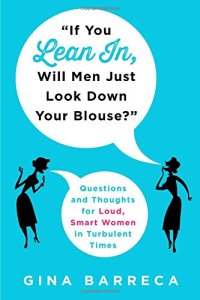
Gina Barreca is fed up with women who lean in, but don’t open their mouths. In her latest collection of essays, she turns her attention to subjects like bondage, which she notes now seems to come in fifty shades of grey and has been renamed Spanx. She muses on those lessons learned in Kindergarten that every woman must unlearn like not having to hold the hand of the person you’re waking next to (especially if he’s a bad boyfriend) or needing to have milk, cookies and a nap every day at 3:00 PM (which tends to sap one’s energy not to mention what it does to one’s waistline). She sounds off about all those things a woman hates to hear from a man like “Calm down” or “Next time, try buying shoes that fit”.

“‘If You Lean In, Will Men Just Look Down Your Blouse?'” is about getting loud, getting love, getting ahead and getting the first draw (or the last shot). Here are tips, lessons and bold confessions about bad boyfriends at any age, about friends we love and ones we can’t stand anymore, about waist size and wasted time, about panic, placebos, placentas and certain kinds of not-so adorable paternalism attached to certain kinds of politicians. The world is kept lively by loud women talking and “‘If You Lean In, Will Men Just Look Down Your Blouse?'” cheers and challenges those voices to come together and speak up. You think she’s kidding? Oh, boy, do you have another thing coming.

From the Author:

Why will men, including ones who don’t cook any other meal, cheerfully make breakfast?

Is it because if they make toast without burning it, it becomes “amazingly good toast”? Is it because when they add a “magic ingredient” (taco-sauce) to their eggs, they can then call them “my mean scrambled eggs” or refer to themselves in the third person as “The Omelet Master”?

You know that if a guy can explain — without looking at note from an electronic device — what it means to coddle an egg, he firmly believes he should have his own show on the Food Network.

Yes, of course I’m making sweeping gender-specific generalizations, but somebody’s got to do it.

Besides, I really believe this one is true. Breakfast is The Man Meal.

My husband is one of the tribe: He makes scrambled eggs so good I believe they were a factor in my decision to marry to him.

What made me hesitate briefly in that decision, however, was my husband’s attempt to push his breakfast luck by going all out one morning and heating corned beef hash in a microwave. He plopped the grey mass straight from the can onto a plate, and then hit “reheat.”

He looked smugly pleased with himself until he took the plate out of the microwave. The mess on it looked, and smelled, like offal. Instead of running for the hills — we have low hills near us anyway so it wouldn’t have done much good — I saw it as a teachable moment. I cooked the food properly, pointing out that hash can only be enjoyed when the edges are fried just enough to be crunchy. That’s how my husband makes it now, because his “famous hash” is everybody’s favorite.

Many men have a technique that they regard as their signature. They consider this to be an exact science as well a huge accomplishment, the kind of which is usually accompanied by the sounding of French horns. This is true even if his signature dish is a bowl of cereal. I once knew a man who boasted that he made a “killer” bowl of cereal. He used soy milk and put pieces of banana on top. I suspect the banana is what made it “killer.”

The pattern of men cooking breakfast on the weekends and getting a great deal of praise for it no doubt grew out of the McCall’s-sponsored traditional ideology that suggested mothers and wives were responsible for making every other meal. Husbands were expected to return home after a long day’s work and wives were expected, in exchange, to be waiting at the door with a cold martini (not one they’ve been drinking for an hour, either) with a perfect meal in the oven and with cheerful children — already in their pajamas, ready to fall asleep at the drop of Daddy’s hat.

Only on the weekends would the paterfamilias be able to exercise a measure of culinary creativity. One night he grilled and one morning he made breakfast.

He probably also encouraged everyone to gather ‘round and watch him make breakfast; for men, being in the kitchen is a kind of performance art, says my friend Kim-Marie, requiring an audience for the full effect.

Another pal, Daniela says her husband “stands at the stove the entire time, watching the food cook with his arms crossed over his chest till it’s time to flip something over or move it around while browning. That’s it, the entire time, he’s standing there with the timer going instead of multitasking while the food cooks by, let’s say, setting the table or making coffee.”

However it’s done, breakfast is worth doing.

Like love, breakfast is something people skip because they consider it more trouble than it’s worth. Some folks think breakfast, like love, will keep them in the house longer than they’d like and will turn them into sleepy and fat instead of somebody alert and lean. But that’s not how it works. Both are fundamental: Breakfast and love will nourish you even when you’re busy doing other things; when they’re healthy, they’ll make every day better.

And like love, breakfast is best when made at home.

Or at a really good diner.


To win your own copy, please send an email to contest@gmail.com with “WIN IF YOU LEAN IN” as the subject.

You must include your snail mail address in your email.

All entries must be received by April 15, 2016. Two (2) names will be drawn from all qualified entries and notified via email. This contest is open to all adults over 18 years of age in the United States or Canada. Your book will be sent by the publicist.

One entry per email address. Subscribers to the monthly newsletter earn an extra entry into every contest. Follow this blog to earn another entry into every contest. Winners may win only one time per year (365 days) for contests with prizes of more than one book. Your email address will not be shared or sold to anyone.


Guest Blogger: Michael Sears

February 3, 2016
Click to purchase

Click to purchase

I am delighted to welcome guest blogger Michael Sears!

I had the pleasure of meeting Michael when he was kind enough to participate in an author event at my library. He graciously offered up a few Advance Reader Copies to readers of this blog last month as well.

CONFESSIONS OF AN EDGARS JUDGE
by Michael Sears
Though bound to secrecy during the reading and judging process, I am now free to share all the dirt, all the gossip, back-room wheeling-dealing, the bribes, the pressures from the big houses, the venality of all involved in the vetting, reading, and judging of the famed Edgar Awards for the Mystery Writers of America.  Unfortunately, if I did tell you all that, this would be a very short essay.
            A good friend contacted me and asked if I would join her team of judges for the 2014 Best Debut Mystery Novel for the Edgar Awards.  It would mean reading over one hundred books in about nine months (No doubt an easy task for Oline Cogdil or Pam Stack, but a herculean task for a mere mortal,) rate them on a scale of 1 to 3, and engage in a polite debate as to the books that really stood out.  Well, I was busy as Bourdreau’s one-legged pig at the time, writing SAVING JASON and caring for an aunt in mid-stages of dementia (she knew me, knew her name, but was capable of missing her birthdate by months, and the birth year by decades) so of course I said yes.
            The books arrived in waves.  There might be nothing for a week and then four would arrive in three days.  As I already have a house full of books – and an unfulfilled promise to my wife of “one in-one out” – tension mounted.  When my son came to visit he found his, as yet un-renovated, bedroom stacked with books.  He has a dry and wicked sense of humor and flayed me with it repeatedly.
            Early on, the judges made a soft commitment to read fifty pages of any book submitted.  The authors deserved at least that much from us.  This had unforeseen consequences, as the incentive for a publisher to send only the best work produced that year is nonexistent.  From their perspective, the shotgun approach is much more sensible.  As an ex-trader and student of game theory, I understand the incentives and the result.  As a judge, I found myself on more than one occasion thinking, “Who in the world thought that this book was in the same league with ____. (Name your Edgar nominee.)?”  There was not much we could do about it.  Mystery Writers of America screened submissions only for the criteria stated in the rules.  The book must be a debut novel.  It must be written and published by an American author in the U.S.  And it must have been published within the calendar year.  A few that violated one or another of these rules managed to slip through, but one of us always managed to identify the problem and we set them aside. 
            One of the more tech-savvy of the judges created a spread sheet website where we could all post our rankings: 1 for not a contender; 2 for maybe; and 3 for contender.  We also had a 0 ranking for the odd book that slipped in that did not fit the genre.  Some of the 0 ranked books were very good, they just weren’t good mysteries.
            Some of us kept notes on the side as to why we have voted as we did.  It was the first line of what was to become an ongoing debate.  By the time we were in the final two months, I felt like I was a part of the greatest book club ever.  Imagine reading a ton of mysteries with a group of authors you admire.   You hear their reasons for supporting a book and their reasons for dropping another from contention.  We encouraged each other to go back and look again at certain books, to give them a second chance, as we all championed different authors.
            Past judges had told me that the nominees become apparent at some point.  The cream rises.  That is true.  But we agonized over a final list of nominees that was going to be either too short or too long.  There were books that missed the cut that every one of us thought were a great read and that we would enthusiastically recommend.  They just weren’t as good.
            And it is, for better or for worse, a subjective call.  No one insisted that we include both male and female authors, yet we did.  No one pressured us to include (or ignore) entries from independent publishers.  We had the freedom to simply cast our votes for those debut books that we found most deserving of a nomination.
            Would I do it again?  Most assuredly.  Not right away; I have to get some work done.  It might be fun to tackle another category. Best non-fiction?  Best Novel?  I don’t think I would do well with Best Television Script – to my wife’s chagrin, I manage to fall asleep halfway through every show we have watched together in the last ten years – or Best Short Story – I rarely read or write them.  But I would gladly return to the last few weeks of debating good books with great minds.  It was a gas.

About the book

The latest Jason Stafford novel from Michael Sears, author of the highly acclaimed Long Way Down and Black Fridays.                                                                                                        
Jason Stafford used to be a hot Wall Street trader, went too far, and paid for it in prison. Now a financial investigator, he’s been asked to look into rumors of a hostile takeover of his firm, but he has no idea it will turn his whole life upside down. Suddenly embroiled in a grand jury investigation of Mob-related activities on Wall Street, and threatened by some very serious men, he is thrust into witness protection with his young autistic son. And then his son disappears. Has he been kidnapped, or worse? With no choice but to act, Stafford has no choice but to come out of hiding and risk everything to save his son, his firm, his pregnant girlfriend—and himself.

About the Author

michael_sears

Sears was a Managing Director for two different Wall Street firms, where he worked in the bond market for twenty years and, earlier, in foreign exchange and derivatives. Prior to returning to Columbia University for his MBA, he was, for eight years, a professional actor appearing at the Shakespeare Theatre of Washington, Playwritght’s Theater of Washington, New Jersey Shakespeare Festival,The Comedy Stage Co., and, in the course of a single year, every soap opera shot in New York City.

He is married to the artist and poet, Barbara Segal and is the father of two handsome sons. Born in New York City, he lived for more than twenty years on Manhattan’s Upper West Side and still misses it every day.

Website: http://www.michaelsears.com/

Facebook: https://www.facebook.com/MichaelSearsAuthor/

Twitter: https://twitter.com/MSearsAuthor


Can you judge a book by its cover?

January 27, 2016

From today’s guest blogger, Notting Hill Press!

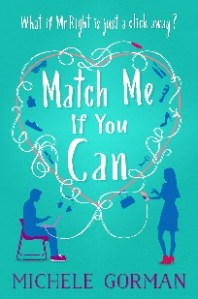
image001It’s interesting to see how the same book is marketed differently depending on where its fans are based. Michele Gorman’s Match Me If You Can is published by Avon (Harper Collins) in the UK and by Notting Hill Press in the US. Avon took the lead in designing the marketing package for Michele’s UK chick lit fans, with a pretty teal cover, fun font and firm focus on the online dating/romance storylines in the book.

Meet best friends Catherine, Rachel and Sarah. Yet to find Mr Right, they’ve been settling for Mr Right Now. But when Catherine, London’s finest matchmaker, gets the girls to join her dating site where they can rate and recommend their ex-boyfriends, they soon realise that anything could happen… There’s someone for everyone, right? These best friends are about to find out!image003

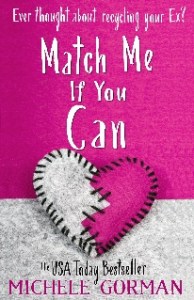
To complement the UK cover, we at Notting Hill Press designed the US cover using the same fonts and heart motif. But something started to bother us. Match Me If You Can is also about strong women. It’s funny, cheeky, poignant and realistic. The women join the dating website and recycle their exes but their lives – their friendship, families and careers – are at the heart of the book. And while both British and American fans are definitely romantics, American readers are also really partial to a feisty story about friends.

We had to admit it: our hot pink cover didn’t seem quite right for Michele’s US fans. So we had a rethink about it, and here’s the result!

Meet best friends, Catherine, Rachel and Sarah. They’re fun, smart and successful, and haven’t had a date worth booking a wax appointment for in ages.

image005Catherine runs London’s most successful matchmaking business with her silent partner and ex-husband, Richard, who’s just announced that he’s marrying his twenty-three year-old girlfriend. Catherine has bras that are older than Magda, and now she’s barging in on their business with her meddlesome demands and wedding plans.

Architect Rachel’s got problems of her own. At work she’s competing against her ex-boyfriend, James, to win their biggest project and the promotion that comes with it. So when she joins Catherine’s website, RecycLove.com, where everyone brings an ex to recycle for the chance of an upgrade, she knows just who she’s going to trade in.

Homebody baker, Sarah, is in a rut thanks to family demands over the last few years. Reluctantly she joins RecycLove.com, where she’s convinced that some minor adjustments will improve her chances. But as minor adjustments turn into a complete overhaul and dates start falling at her newly-pedicured feet, will her popularity be worth the sacrifices she’s making?

A warm, funny story of friendship, strong women and self-discovery. Match us if you can, guys, but if not then please step aside and we’ll get on with being fabulous.

We hope you love the new cover and blurb as much as we do!

Sincerely,

Notting Hill Press


Guest Author: Chris Bohjalian

December 28, 2015

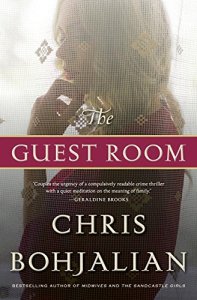
The Guest RoomDear readers,

I am delighted to offer you this gift – a short story by one of my favorite writers, Chris Bohjalian.

From the publisher:

As Chris Bohjalian writes in his preface to the following short story, “I often feel a postpartum sadness when I finish a novel—I know how much I’m going to miss the characters and I’m not quite ready to say a final farewell.” 

And so he wrote Nothing Very Bad Could Happen to You There so that he could spend more time with Alexandra, the young woman at the center of his forthcoming novel,The Guest Room.  Bohjalian’s first novel in nearly two years, The Guest Room is a page-turner for certain, but also emotionally rich, often shocking, and beautifully crafted.

Spend some time with Alexandra. Look over her shoulder as she stares wistfully into the windows at Tiffany’s. Feel free to share her story with your friends and followers. It’s our hope that you’ll be inspired to follow her into The Guest Room.


From the author:

I often feel a postpartum sadness when I finish a novel—I know how much I’m going to miss the
characters and I’m not quite ready to say a final farewell.

That was the case with The Guest Room. And so this month I wrote a short story about
Alexandra, the young woman at the center of the novel—at the center of the bachelor party that will
forever change the lives of suburbanites Kristin and Richard Chapman, and their nine-year-old
daughter, Melissa.

And while The Guest Room is a literary thriller about human trafficking and that one moment
you wish more than anything you could take back, this short story is a little softer. It’s set in
Manhattan in the days before The Guest Room begins. It’s called “Nothing Very Bad Could
Happen to You There.”

Writing “Nothing Very Bad Could Happen to You There” was a little gift to myself and so I am
sharing it with all of you to thank you for your faith in my work. Yes, it stands alone as a short
story. But perhaps you can view it as a prologue to the novel, as well.

Regardless, however, I hope you enjoy it—and meeting Alexandra.

Have a happy holiday season. May somehow our world find peace in 2016. — C.B.


Nothing Very Bad Could Happen to You There
By Chris Bohjalian

The young woman stared at the jewelry behind the glass window, a great waterfall of
diamond necklaces above a basin of ruby bangles and black and white pearls. She pressed
the side of her hand against her forehead like a visor against the midday sun. It was only her
third day here, and she was finding the new city—the new country—a little overwhelming.
The fellow beside her, a Russian at least twice her age who’d been in America at least as long
as she’d been alive, glanced once and shrugged.

“You’ll see better,” he said.

“Is it real?” she asked him.

“At Tiffany’s? Yes. All real. No fake here.”

She guessed this was possible in a place like Manhattan. Neither Moscow nor
Yerevan had stores with jewelry displays this ostentatious. They certainly didn’t have any
street as crowded as this section of Fifth Avenue. The building itself reminded her of the
stone monoliths—great imposing blocks of tufa stone—that once housed important
communist officials (and history) in Yerevan.

“Come on,” Kirill said, and he placed his hand on her elbow and started guiding her
through the crowd and into the lobby of the skyscraper just south of the store, a building she
had been told had both offices and apartments. “Next guy’s waiting upstairs. His name is
Sergei.” When they were inside, she pulled a compact from her clutch and checked her
makeup. It was fine. She almost couldn’t believe how much money Kirill had told her the
fellow upstairs was going to give her when they were through.

When she emerged from the apartment an hour later, she saw Kirill waiting for her at the
end of the twenty-seventh-floor corridor in almost the exact same spot where she had left
him. He was leaning against a wall near the elevator bank, thumbing through—she
presumed—either soccer scores or porn on his phone. They’d told her that if she behaved,
in a year they might allow her to have a phone of her own. She hadn’t had one since she was
fourteen, and that was almost six years ago now. If she had a phone with a camera, she
imagined taking a picture of Central Park from the living room. The apartment’s view had
felt a bit like the vista from an airplane.

Now she handed Kirill the money and he guided her into the elevator.

“We take the subway back, yes?” she asked.

He shook his head. “You shower?”

“Of course.”

“Then you do one more. I just got text. They say he want Alexandra. You know the
guy.”

She nodded. As he pocketed the bills, all hundreds and fifties, she wondered whether
it was enough for anything at the jewelry store downstairs. It had to be. It was just so much
money.

The next morning she awoke to the sound of sirens outside the small window in her small
bedroom. It was almost lunchtime, the sunlight casting a lemon haze in the room. She was
just sitting up when one of the other girls who had been brought here from Russia with her
came in and peered out onto the street. Sonja was wearing only the ratty T-shirt in which she
slept. She had worked last night through a bladder infection, and Alexandra was shocked
that she was so spry.

“Fire trucks,” Sonja said. “They’re at building down the block.”

“Is there any smoke?”

“No smoke.”

“Any police guys?”

Sonja left the window and sat down on the edge of the bed. “No.”

Alexandra rolled onto her side, relieved. They had told her what the police did to
girls like her when they were caught. There was a special prison called the Rikers Island. “I
saw the most beautiful jewelry store yesterday,” she said to Sonja. “Tiffany’s.”

“I saw catalog once. Everything was blue.”

“I saw it for real. It was on the Fifth Avenue.”

“You dragged Kirill into a jewelry store? How? My God, he must have been dying.”

“We didn’t go in. We just looked in the windows.”

The room had a narrow bed and a child’s pink dresser one of the girls had found
behind a rack of old clothes at a consignment store. Sonja pushed herself off the mattress
and picked up one of Alexandra’s necklaces. It was all costume jewelry. She held up the fake
pearls by one end like a worm. Alexandra almost never wore them. “Do you think men really
care if it’s pearl or paste? Did the black and whites?”

The black and whites were the men back in Russia who almost always wore black
suits and white shirts. They never wore neckties. They always had stubble—so much stubble
that sometimes Catherine or Inga, the women who ran the top-track girls such as Alexandra
or Sonja, would talk to them about not abrading the young girls’ skin. They seemed to
Alexandra to be rich, and sometimes they were old enough to be her grandfather, which
really didn’t mean they were all that old; Alexandra was a teenager then. She hadn’t yet
turned twenty. The black and whites were Russian and Georgian and Ukrainian. Very
international, it seemed to Alexandra. Many worked in “spirits.” Brandy and cognac and
vodka. None of them had any interest in her or in any of the girls as anything more than a
sex toy.

“It’s different here,” she reminded Sonja. “As Catherine said: Americans are more
sophisticated. They expect us to be arm candy. They expect us to watch more TV than just
Bachelor.”

Sonja looked a little feverish to Alexandra, but she pushed her bottle-blond hair back
behind her ears and raised a single eyebrow. “Arm candy? I think the last thing they think of
is arms.”

“You know what I mean.”

“So now you want jewelry? A sugar papa giving you real jewelry? Kirill and Catherine
would never let you keep it.”

“No. I just thought it was pretty. But I do want something nice.”

“In another life maybe you get something nice. In this one? Now you just get
dressed.”

“Have you taken your pill?”

“The antibiotic? Yes.” She smiled a little mordantly. “I am always happy to take
pills.”

The town house where the girls were kept was near Tompkins Square Park in the East
Village. They only left the town house with one of their handlers, and they knew their
handlers—even Catherine—always carried a gun.

And so it was in her second week in the city, on a day when it was raining and she
did not have to work until the evening, that Alexandra asked Catherine if she would take her
to Tiffany’s.

“What for?” asked Catherine. The woman was peculiarly ageless. Sometimes
Alexandra thought she was thirty-five, only fifteen years older than she was. Other times, she
speculated that Catherine might be flirting with fifty but simply knew makeup and face care
well from her own years as a high-end courtesan.

“I want to go inside. I want to see the jewelry.”

“Not today.”

“Maybe someday?”

“Maybe.”

She could tell that Catherine thought she was up to something. But she wasn’t. Why
would she try and escape here and now? The deal was two years in the city and she’d be free.
And she knew no one. She had no passport, no credit cards, no phone. All she had was these
older women and men who fed her, provided her with makeup and clothes, and pimped her
out.

“Can I ask you again in a week maybe?”

“Ask me again in a month.”

But only a week later she was back on the twenty-seventh floor of the residential and office
complex on Fifth Avenue on the same block as Tiffany’s. She was again with Sergei, the
Russian businessman she had met the day she had first peered curiously into the windows of
the jewelry store. Again it was lunchtime. When they were done and he had rolled off of her,
she climbed on top of his stomach and pressed her hands on his chest and looked down at
him. He was nearing sixty, but he was one of those Russian bears who still had the thick gray
hair of a commissar on his head and a barrel for a chest. The mattress gave a little beneath
her knees.

“Can I ask you something?” she began. She had won him over and clearly he liked
her, but she couldn’t risk his saying something negative to Kirill or Catherine. It had been a
long time since she had been disciplined, but a girl never forgot the ways they could punish
you without ever leaving a bruise on your skin or damaging the merchandise. (The worst for
her had always been the times they would hold her head beneath the water in the bathtub.

There was even a word for this, she would learn: noyade. It meant execution by drowning and
was first practiced during the French Revolution.)

“You can ask me anything,” Sergei said, and folded his hands behind his head. They
were speaking in Russian.

“I have never seen a wristwatch as handsome as yours. I love the phases of the
moon and the stopwatch. I love the diamonds around the edge.”

“It’s called a chronograph.” He hadn’t bothered to take it off. She could see the
leather strap and buckle on his wrist.

“Is it from America?”

“It’s from Switzerland. But I bought it here. Why? I can’t believe there is a man in
your life you want to buy a watch for. I can’t imagine Kirill allows for such things.”
She leaned into him. “No. You are the man in my life,” she said, which they both
knew was a lie, but it was the sort of thing she said playfully all the time.

“Then why?”

“Could you find such a watch at Tiffany’s?”

“Probably.”

“It reminds me of my father’s,” she said, which was another lie. This one, however,
she expected him to believe. “Yours is nicer—much nicer. My father died when I was a little
girl, but my mother kept his watch. Then, after she died, my grandmother kept it.”

“How old were you when your mother died?”

“Fourteen.”

She sensed he was about to ask another question reflexively, but stopped himself. He
must have realized that no good could come from knowing the answer to how and when she
started doing . . . this. But the idea that he almost had was a good sign, she decided. It meant
that she had judged this Russian bear correctly. Somewhere inside Sergei was a streak of
tenderness.

“So, do you want my watch? Is that what this is about? I promise you, it cost a lot
more than you, Little Girl.”

She laid her head on his chest. “Maybe I just want to go with you when you go
shopping for your next one. Maybe together we go to Tiffany’s.”

He wrapped his arms around her and hugged her almost tenderly. “It will be years
before I buy a new one. Years. But I will keep in mind that you want to be my consultant.”
Then he slid out from beneath her and went to the bathroom to clean up.

The girls were expected to read newspapers and fashion magazines, and Alexandra had
begun to rip from them the color ads for Tiffany’s. She was especially attracted to the ones
where young women and men in love were starting their lives together with engagement
rings or—in one case—picking out their china. Sonja told her that of all the things there
were to become obsessed with in New York City, it was a little crazy to become fixated on a
jewelry store.

“Have you seen the building?” Alexandra asked her. “Have you seen the windows?”

“No.”

And so that afternoon, before going to work, Alexandra convinced Catherine to
show Sonja a picture of Tiffany’s on her phone.

And then that night, when Kirill brought her to a man at the Plaza Hotel, she asked
the fellow if they could stroll outside past the fountain and the hansom cabs and enjoy the
night air for a moment. He refused. She had only wanted to glimpse the regal building with
its great cascades of emeralds and rubies in its windows—Would they still be there after
dark, or did they hide them away at night?—and it fascinated her that she was so close and
yet couldn’t see it. It was one more thing in a universe of one more things that she could
approach but never quite reach.

In the morning, Kirill threw open her door, allowing the way it slammed into the wall to
wake her up. He ripped the sheet off her and grabbed a great rope of her dark hair and
pulled her head back so fast and so far that she felt the muscles in her neck stretch and it
was impossible to swallow. With his other hand he pressed the tip of a long knife near what
she knew—because he had taught her—was the jugular.

“What do you think you’re doing?” he whispered into her ear.

“Nothing, Kirill, nothing. I promise,” she wheezed.

“You escape, where do you think you go?”

“I’m not. I won’t.”

“You can have it all in two years if you don’t screw it up. Don’t you embarrass me.
Don’t you embarrass Catherine.”

“What have I done?” She felt him press the blade of the knife into her skin. He
sliced ever so slightly—the keen pain of a shaving cut, but worse—drawing blood. Then he
let go of her hair and pushed her back down onto the mattress.

“Sergei called for you,” he said. “But he didn’t want you at his apartment for lunch.
He wanted you to meet him at that jewelry store.”

“He wants me to help him pick out a watch. That’s all.” She was crying and she
wanted nothing more than to press a tissue on her neck. She could feel the blood trickle
down her collarbone. She saw the first drops on the bed.

“No. We told him you’re sick. We made it clear he can’t have that.”

“But you said you want us to be real courtesans here. You said—”

“Enough!”

She went quiet.

“Enough,” he repeated, his voice more controlled. “We have girls who never see
light of day. We have girls who never leave their room and do ten, twenty men a day. You
want to be one of them?”

She shook her head.

“Yes, someday you will be ready to be real courtesan. Not yet. Now? Now you are a
stupid girl from a stupid country and you know nothing. Nothing. I don’t know what game
you think you’re playing, but it stops now. We clear?”

“Yes. I’m sorry.” She started to reach for her neck, but Kirill slapped at her hand so
hard that she banged it into the wooden bed frame and feared for a moment that one of
these men had once again broken one of her fingers.

That night Catherine dressed her in a beaded choker to cover the long, thin scab that had
formed at the front of her throat. No man would bother to unclasp it or ask her to take it
off; it actually looked pretty hot, Sonja had reassured her.

She noticed over the next four days that a lower caliber of man was brought to her
or she was taken only to clients in the garment district—men who worked far from the
jewelry store. She was, for the moment, forbidden from reading Bazaar and Vanity Fair and
Elle. One time when she returned with Kirill, she found that all the pictures she had ripped
from magazines were gone from her small room.

Catherine pulled her aside and told her that on the following Friday, she and Sonja were
going to be taken to a party in Westchester. It was a bachelor party, and it was going to be at
a rather elegant home. There would be a lot of wealthy men, and they would all be
American. She told Alexandra she should view this as an important test.

Beforehand, however, Catherine told her that Sergei had asked for her again, and this
time there should be no funny business: she shouldn’t hint about wanting his watch or
visiting that jewelry store. She promised she wouldn’t. She was going to be escorted to his
apartment that Thursday at lunch and spend the afternoon with him. For reasons Catherine
didn’t know, he had paid for three hours, and so Alexandra should expect there would be
other men there, too.

When she arrived, she was relieved to find that Sergei was alone. He greeted her in a white
terrycloth bathrobe. She expected him to immediately undress her, despite the amount of
time they had together. Instead, however, he led her by the hand to the couch in his living
room. For a moment she knelt on it so she could look behind her and down at the trees, still
rich with foliage, in Central Park. Then she turned around and he was seated on an ottoman,
facing her with the remote for his television in his hand. The screen was massive, and she
assumed he wanted to watch an adult film as foreplay. (She always felt a little insulted when
men did that. Was she not enough? But she had never complained, and she certainly wasn’t
about to today.)

“I leave for Moscow tomorrow and I won’t be back until after the holidays,” he told
her. He sounded grave.

“Is everything okay?”

“Everything is as fine as it can be. This country is trying to suffocate ours with
economic sanctions, but we’ll weather the storm.” She was pleased he was viewing her as
something of a confidante. This boded well. “It’s just . . . business.”

“I’ll miss you,” she said.

He smiled. “How’s your English? Good, right?”

“I think so.”

“You eaten?”

She shook her head.

“Perfect.” He stood and went to his kitchen. He returned with a silver tray with a
coffee service and pastries, and placed it on the coffee table.

“I think I got you into trouble the other day,” he said. “I’m sorry.”

“No, not at all. Why would you think that?”

He smiled a little mordantly. “I am old. Not senile.” He poured her a cup of coffee
and without asking put two sugar cubes in it. Then he handed her the cup and the saucer.
“You like movies, yes?” he asked.

“I do.”

“Today we watch one. Sit back.”

She did. She was going to be nothing if not obedient right now.

He pressed “play” and she heard strings and a piano and she thought a harmonica.
She watched an old yellow cab coast to a stop before a building—and there it was, the
jewelry store, the one twenty-seven stories below them and on the same block. And then a
young woman emerged from the cab in a black evening dress with a Styrofoam cup of coffee
and a Danish, and she went right up to one of those exquisite windows of jewelry. She was
all alone. The girl wasn’t her, obviously, but suddenly Alexandra felt a lump in her throat.
This could be her. Someday.

“Is that courtesan?” she asked, unable to hide the quaver in her voice. She
understood that even if the girl at the jewelry-store window was a courtesan, this wasn’t an
adult film.
He shrugged. “We’ll see.”

“Does she get inside?”

“Not right away.”

She thought about that: Not right away. But that also meant that eventually she did.
She would. Someday.

“She’s Audrey Hepburn,” he said. “Pretty girl. But you are prettier.”

She was about to ask something more, but he raised his hand, palm flat, to silence
her.

“No more questions,” Sergei said. He was smiling. “Sit back. Today? Today your
only job is be movie critic.”

Chris Bohjalian’s “The Guest Room” arrives wherever books are sold on January 5, 2016. You can order it here.

Copyright © 2016 by Chris Bohjalian.

Guest Author: Julie Buxbaum

December 7, 2015
Click to purchase

Click to purchase

Q & A with Julie Buxbaum

Your previous novels, After You and  The Opposite of Love were written for adults. Why did you transition to Young Adult?

Ironically, I transitioned into writing for young adults when I finally felt like a grown up, which I’ll admit happened a bit later than I care to admit. But one day I woke up and realized I was married, with two kids, a writing career and a mortgage, and so all of those big life questions I’d had for years—who was I going to be?–were fixed. I had grown into my future, if that makes sense, which is a terrifying thing to realize. And so of course, I desperately missed the magic of being a teenager, when everything is still an open question and unanswered. I figured it was finally time to revisit those years in fiction.

What is your favorite part of writing and the most difficult part?

I love those rare quiet moments when you nail that perfect sentence. It doesn’t happen often. There are whole days, weeks even, when I don’t love what I’ve put down on the page, but when I think I’ve gotten it right, there really is no better feeling in the world. The most difficult part for me is when I’m in-between projects. I always look forward to this time, since I use it as an opportunity to catch up on reading and movies and television—to basically refill my creative well—which sounds fun in theory. In practice, I always end up feeling unmoored when I’m not writing.

Did you find it difficult to find your “teenage” voice? Why or why not?

Surprisingly, not at all. It felt strangely natural for me. Clearly, I’m really just a sixteen year old trapped in a 38 year old’s body. I’m living Freaky Friday.

What was your favorite scene or character to write?

I loved writing the messages between SN and Jessie. They are fun and silly at first and slowly morph over time to show a real connection between these two strangers. I love how our words on paper (or I guess the screen) can really reveal who we are, even sometimes when we don’t want them to.

Why do you think so many adults are reading Young Adult literature now?

Honestly, I think it’s because some of the best, sharpest, cutting edge writing is coming out of the YA world these days. Why would anyone want to miss out?

What is your best advice for hopeful YA writers?

Read widely. Seriously, read everything you can get your hands on. And then sit your butt down and write. And then write some more. Let yourself be bad at it. Everyone is at first.

What do you like to do when you’re not writing?

I enjoy nothing more than a good Taylor Swift pajama dance party with my kids.

What are you working on now?

I just sent my editor a rough draft of my next YA novel. So really, I’m just sitting around waiting to hear what she thinks. It’s terrifying. And I’ll probably get carpel tunnel syndrome hitting refresh on my email. My iphone is like: “what part of ‘updated just now’ do you not understand?!?”


About the Book

What if the person you need the most is someone you’ve never met?

Julie Buxbaum mixes comedy and tragedy, love and loss, pain and elation, in her debut YA novel whose characters will come to feel like friends. Tell Me Three Things will appeal to fans of Rainbow Rowell, Jennifer Niven, and E. Lockhart.

Everything about Jessie is wrong. At least, that’s what it feels like during her first week of junior year at her new ultra-intimidating prep school in Los Angeles. Just when she’s thinking about hightailing it back to Chicago, she gets an email from a person calling themselves Somebody/Nobody (SN for short), offering to help her navigate the wilds of Wood Valley High School. Is it an elaborate hoax? Or can she rely on SN for some much-needed help?

The thing is, Jessie does need help. It’s been barely two years since her mother’s death, and because her father eloped with a woman he met online, Jessie has been forced to move across the country to live with her stepmonster and her pretentious teenage son.

In a leap of faith—or an act of complete desperation—Jessie begins to rely on SN, and SN quickly becomes her lifeline and closest ally. Jessie can’t help wanting to meet SN in person. But are some mysteries better left unsolved?


12/15 Stacy Alesi, AKA the BookBitch™

TELL ME THREE THINGS by Julie Buxbaum. Delacorte Press (April 5, 2016).  ISBN 978-0553535648. 336p.

Kindle

Audiobook


Guest Blogger: Laura Dave

June 8, 2015
Click to purchase

Click to purchase

I am delighted to welcome guest blogger Laura Dave. Her new novel, Eight Hundred Grapes, is the top Library Reads pick for June. Read on to see what Laura has to say, and to find out how you can win your own copy.

Bringing A Little Wine Country Home With You

In my new novel, EIGHT HUNDRED GRAPES, Georgia Ford finds out a devastating secret about her fiancé’s double life the week before their wedding. She flees to her family’s vineyard in Sonoma County seeking refuge.

One of the nicest compliments I’ve received about the novel is that it makes people wish they could hop a flight to Wine Country for a little refuge of their own.   But, if a weekend getaway isn’t in the immediate cards, I thought it would be fun to bring a little wine country to you.

Here’s what you’ll need for a great wine country evening in the comfort of your own home.

A Trio of Great Wine

Wine tasting is the name of the game in Napa Valley and Sonoma County. Usually a tasting involves small pours of several delicious wines. For your tasting, you want to make sure to drink the wines in the right order, starting with the lighter whites and moving into he heavier red, so you can appreciate all three.

To that end, I created a sample wine pairing for you that will elevate any wine country evening—and, most importantly, it will do so without breaking the bank. http://tinyurl.com/oc28g2u

Great food pairing

Wine is meant to be enjoyed with food. If you pair it well, the wine complements the exotic tastes of what you’re feasting on, and the food helps the wine open up on your palate.

For your wine country evening, it’s fun to prepare tapas—in order to give each wine you’re drinking it’s own course.

For the prosecco, you want to think crisp and spicy. A citrus salad with a warm vinaigrette would work beautifully as would roasted almonds with fresh herbs.

For the chardonnay (or whatever yummy white you have on hand), pair it with a fresh and quick shrimp cocktail, or a creamy garlic pasta.

For the zinfandel, you want to get creative with something heavier and richer, like a spicy burger. A charcuterie plate would also be a lovely (and painless) way to end your meal.

Dining Al Fresco

The other key your wine country eve is to enjoy it outside. Serve your wine and your treats on your front steps or in your backyard. Light some candles. And make sure to relax on the porch afterwards with your last glass of wine, a gorgeous sunset and your copy of EIGHT HUNDRED GRAPES—which will transport you the rest of the way to gorgeous Sonoma County.

 About the book

As any good book club knows, nothing pairs with a great read like a terrific glass of wine. This is especially true when the novel is set against the lush backdrop of California’s wine country. 

The breakout new novel from bestselling author Laura Dave is a heartbreaking, funny, and deeply evocative book about love, marriage, family, wine, and the treacherous terrain in which they all intersect.

The story opens on Georgia Ford, who is a week away from her wedding when she discovers that her perfect, British fiancée has been keeping a devastating secret. So she does what she has always done in times of trouble: she flees to her family’s Sonoma vineyard, hoping to find comfort and escape in the familiar routines of the grape harvest. When she arrives, she finds things are anything but routine.

Dave’s story moves seamlessly from the present to the Ford family past, revealing how Georgia’s formidable parents fell in love, founded The Last Straw Vineyard, raised their children and ultimately, drifted apart, arriving at a place where they would consider leaving behind their legacy—and each other. As Georgia attempts to fix her family’s problems, she realizes that all is not what it seems, and sometimes you have to let go of the way things are.

Eight Hundred Grapes is the perfect companion for one of those quiet summer afternoons spent reading on the porch with a glass (or two) of a bright, chilled white (Laura recommends a Sauvignon Blanc from Napa Valley’s Duckhorn Vineyards).

 About the author

Laura Dave is the author of the critically acclaimed novels The First Husband, The Divorlauradave2011ce Party, London Is The Best City In America, and the forthcoming Eight Hundred Grapes. Dave’s fiction and essays have been published in The New York Times, ESPN, Redbook, Glamour and Ladies Home Journal.


Dubbed “a wry observer of modern love” (USA Today), Dave has appeared on CBS’s The Early Show, Fox News Channel’s Fox & Friends and NPR’s All Things Considered. Cosmopolitan Magazine recently named her a “Fun and Fearless Phenom of the Year.”

Three of her novels have been optioned for the big screen with Dave adapting Eight Hundred Grapes for Fox2000.

Laura reveals the secret to the Ford family’s legendary lasagna

Joy in a Glass: A special wine pairing for Eight Hundred Grapes

Reading Group Guide

To win your own copy of EIGHT HUNDRED GRAPES by Laura Dave, please send an email to contest@gmail.com with “800 GRAPES” as the subject.

You must include your U.S. street address in your email.

All entries must be received by May 30, 2015. One (1) name will be drawn from all qualified entries and notified via email. This contest is open to all adults over 18 years of age in the United States only. Your prize will be sent by the publicist.

One entry per email address. Subscribers to the monthly newsletter earn an extra entry into every contest. Follow this blog to earn another entry into every contest. Winners may win only one time per year (365 days) for contests with prizes of more than one book. Your email address will not be shared or sold to anyone.

EIGHT HUNDRED GRAPES by Laura Dave. Simon & Schuster (June 2, 2015.) ISBN 978-1476789255. 272p.


Guest Blogger: Debbie Howells

June 5, 2015

Bones of You“An intriguing dark psychological thriller—truly brilliant!” –Lisa Jackson

A stunning, wonderfully assured psychological thriller that evokes Gillian Flynn and Alice Sebold, The Bones of You revolves around a young girl’s murder and one woman’s obsession with uncovering the secrets in an idyllic English village.

I have a gardener’s inherent belief in the natural order of things.  Soft‑petalled flowers that go to seed.  The resolute passage of the seasons.  Swallows that fly thousands of miles to follow the eternal summer.

Children who don’t die before their parents.

When Kate receives a phone call with news that Rosie Anderson is missing, she’s stunned and disturbed. Rosie is eighteen, the same age as Kate’s daughter, and a beautiful, quiet, and kind young woman. Though the locals are optimistic—girls like Rosie don’t get into real trouble—Kate’s sense of foreboding is confirmed when Rosie is found fatally beaten and stabbed.

Who would kill the perfect daughter, from the perfect family? Yet the more Kate entwines herself with the Andersons—graceful mother Jo, renowned journalist father Neal, watchful younger sister Delphine—the more she is convinced that not everything is as it seems. Anonymous notes arrive, urging Kate to unravel the tangled threads of Rosie’s life and death, though she has no idea where they will lead.

Weaving flashbacks from Rosie’s perspective into a tautly plotted narrative,The Bones of You is a gripping, haunting novel of sacrifices and lies, desperation and love.

Win this fabulous gift basket – Enter here between June 1 & July 1 or click on picture to enter

Bones of You giveaway basket


Guest Blogger: Judith Fertig

June 2, 2015

Click to purchase

Click to purchase

I am delighted to welcome debut novelist Judith Fertig. See what this cookbook author turned novelist has to say about flavors. Plus read on to find out how you can win your own copy of The Cake Therapist!

A Baker’s Dozen: 13 Flavors to Reveal Your Inner Self by Judith Fertig

There are wine tastings, coffee tastings, cheese samplings.

Why not a “what’s going on with me?” tasting?

When I was writing my debut novel The Cake Therapist, I had an “aha” moment early on. What if my pastry chef heroine could “read” people as flavors? Flavors that would lead to a feeling, the feeling that was the heart of their story?

Neely could suffuse her cakes, cupcakes, brownies, pastries, and cookies with special flavors that would gently help her bakery customers and wedding cake clients take charge with chocolate and coffee. Get in the mood with blood orange and raspberry.  Lessen their grief with a little spice. Or recognize their desire to come home, even if just in spirit, with pumpkin.

As Neely says in The Cake Therapist, “there was a flavor that explained you—even to yourself. A flavor whose truth you recognized when you tasted it. A flavor that answered the question you didn’t know you had.”

Like Neely, we can all use flavor as a prompt—or a hyperlink—to reveal our own emotional cores. The flavors that speak to us, or flavors that don’t, can be revealing.

Flavors can reinforce what we already know about ourselves. Bring to light longings that we’ve suppressed—why? Or reveal a flavor combination that fits us like a couture gown.

I know that when I’m stressed, I want things soft and simple. Uncomplicated oatmeal in the morning. Plain rice. Vanilla pudding. Mashed potato. When I crave sweet but almost flavorless white chocolate, I know I just want to fit in, not stand out.

When I want to feel stronger, I turn to chocolate (dark) or coffee (French roast) for support. After all, raw cacao and coffee beans have to go through fire in order to be great.

When I need to kick start my creativity, I crave an aromatic combination of orange, cardamom, and fresh mint.  I make Creativity Kickstarter sugar cookies to take to brainstorming meetings, and it seems these flavors help others, too. Refreshing herbs, brand-new-day orange, deep cardamom.

Maybe one of these dessert flavors will resonate with you, too.

13 Flavors to Reveal Your Inner Self

Does flavor have its own language? Yes: think of the sultriness of warm chocolate, the snarkiness of lemons, voluptuous vanilla, luxurious caramel.

All of us have certain emotional associations we make with the taste of a dessert, some stemming from the flavor compounds in the food itself and others from the context in which we eat it.

The flavor you crave can tell you something about what you’re yearning for.

Flavor             What You’re Yearning For 

Banana             An everyday adventure, a break in routine.

Blueberry        Blue-skied mornings. Wholesomeness. Simplicity.

Caramel          Luxury. Ease.

Chocolate        Risk-taking, mystery, a strong shoulder to lean on, wicked indulgence.

Coconut          Being whisked away to an exotic locale without the hassle.

Lemon             Greater clarity. Witty conversation.

Orange             A brand new day, a fresh start.

Pumpkin         A homecoming.

Raspberry       Sophistication. A sexy, little black dress and the life to go with one.

Spice               A return to the past. The comfort of nostalgia, or lingering emotion.

Strawberry      Youth. Summer.

Vanilla              Pillow-y comfort.

White Chocolate    A desire to get along with everyone, be unobtrusive.

ABOUT THE BOOK: THE CAKE THERAPIST

A fiction debut that will leave you wanting seconds, from an award-winning cookbook author.

Claire “Neely” O’Neil is a pastry chef of extraordinary talent. Every great chef can taste shimmering, elusive flavors that most of us miss, but Neely can “taste” feelings—cinnamon makes you remember; plum is pleased with itself; orange is a wake-up call. When flavor and feeling give Neely a glimpse of someone’s inner self, she can customize her creations to help that person celebrate love, overcome fear, even mourn a devastating loss.

Maybe that’s why she feels the need to go home to Millcreek Valley at a time when her life seems about to fall apart. The bakery she opens in her hometown is perfect, intimate, just what she’s always dreamed of—and yet, as she meets her new customers, Neely has a sense of secrets, some dark, some perhaps with tempting possibilities. A recurring flavor of alarming intensity signals to her perfect palate a long-ago story that must be told.

Neely has always been able to help everyone else. Getting to the end of this story may be just what she needs to help herself.

ABOUT THE AUTHOR

Judith Fertig is an award-winning cookbook author whose food and lifestyle writing has appeared in more than a dozen publications, including Bon Appétit, Saveur, and the New York Times. Judith attended Ecole de Cuisine La Varenne in Paris and the Graduate Summer Workshop at the University of Iowa Writers’ Workshop. She teaches cooking classes across the country and lives in Kansas City. The Cake Therapist is her first novel.

To win your own copy of THE CAKE THERAPIST by Judith Fertig, please send an email to contest@gmail.com with “CAKE THERAPIST” as the subject.

You must include your U.S. street address in your email.

All entries must be received by June 20, 2015. One (1) name will be drawn from all qualified entries and notified via email. This contest is open to all adults over 18 years of age in the United States only. Your prize will be sent by the publicist.

One entry per email address. Subscribers to the monthly newsletter earn an extra entry into every contest. Follow this blog to earn another entry into every contest. Winners may win only one time per year (365 days) for contests with prizes of more than one book. Your email address will not be shared or sold to anyone.

THE CAKE THERAPIST by Judith Fertig. Berkley (June 2, 2015).  ISBN: 978-0425277324. 304p.


Guest Blogger: Mary Kay Andrews

May 19, 2015
Click to purchase

Click to purchase

I am delighted to welcome one of my favorite people, New York Times bestselling author Mary Kay Andrews! Mary Kay is the queen of the summer read and her newest, Beach Town, is terrific. Read on to find out how you can win a copy.

MY KIND OF BEACH TOWN

By Mary Kay Andrews

Having grown up in Florida and being a life-long Southerner, I spend a lot of time thinking—and writing, about the beach—especially during Atlanta’s interminably rainy, chilly winters. And for the past few winters, I’ve actually run away from home to write at the beach.

In my new novel, BEACH TOWN, movie location scout Greer Hennessy is hired to find the perfect “old school” beach town for a Hollywood blockbuster. The town Greer discovers, Cypress Key, is pretty close to my own idea of heaven. Here, as follows, are my specific requirements for the perfect beach town.

  1. The beach. It should have an easily accessible public beach. I realize there are rocky beaches, pebbly beaches, even cliffside beaches. But as an East Coast girl—specifically a Gulf Coast girl, I like a smooth, soft, sandy white beach.
  2. No shoes, no shirt, no problem sums up my philosophy of the perfect beach town dress code. On Tybee Island, where we have a vacation home, there is no place on the island (as far as I know) where you can’t go in shorts and sandals. Many is the time I have been in the IGA, our island grocery store, and spotted customers decked out in pajamas and bare feet. Nobody looks twice. (Except maybe me.)
  3. Clean, free public bathrooms with showers. Anybody who’s had to beg a beachside shop or restaurant owner for access to their bathrooms, or had to change a stinky diaper in a gas-station parking lot will agree with this.
  4. Oh yeah. A grocery store. It’s no fun to have to drive all the way back to the mainland for provisions. A grocery store with an in-house deli, like our aforementioned IGA or Shaner’s Land and Sea Market on Pass-a-Grille beach in my hometown of St. Petersburg is best. One quick trip should yield sandwiches, fried chicken, ‘tater salad, fresh fruit and cold drinks for a beachside picnic.
  5. Friendly locals.
  6. A dive bar. The beer should be cold and the welcome should be warm. The bartender should know the locals. The waiters should recognize the trouble-makers. There should be a black-and-white television showing late-inning ballgames or grainy old movies. A pool table is optional, but I really must insist upon a jukebox.
  7. A beachside seafood joint with an outdoor patio to watch sunsets. The Hurricane on Pass-A-Grille comes to mind, as does A.J’s Dockside on Tybee Island. The food should come in those little plastic baskets lined with waxed paper, and the drinks should be tall and frosty.
  8. Bicycle paths!
  9. A great breakfast joint, like The Donut Hole on the South Walton Beaches in the Florida panhandle, or Duck Donuts on North Carolina’s Outer Banks.
  10. A cheesy souvenir shop that sells airbrushed T-shirts with obnoxious/suggestive/corny sayings, plus bags of imported-from-the-Philippines seashells, cheap plastic beach toys in neon colors and crappy beach towels that shrink to the size of a band-aid after one washing. They should also have a selection of great beach reads . . . including BEACH TOWN, by Mary Kay Andrews.

About the book

Greer Hennessy needs palm trees.

As a movie location scout, picture-perfect is the name of the game. But her last project literally went up in flames, and her career is on the verge of flaming out. Greer has been given one more chance, if she can find the perfect undiscovered beach hideaway for a big-budget movie. She zeroes in on a sleepy Florida panhandle town called Cypress Key. There’s one motel, a marina, a long stretch of pristine beach and an old fishing pier with a community casino-which will be perfect for the film’s explosive climax.

There’s just one problem. Eben Thibadeaux, the town mayor, completely objects to Greer’s plan. A lifelong resident of Cypress Key, Eben wants the town to be revitalized, not commercialized. After a toxic paper plant closed, the bay has only recently been reborn, and Eb has no intention of letting anybody screw with his town again. But Greer has a way of making things happen, regardless of obstacles. And Greer and Eb are way too attracted to each other for either of them to see reason.

Between an ambitious director and his entourage-including a spoiled “It Boy” lead actor-who parachute into town, a conniving local ex-socialite, and a cast of local fangirls and opportunists who catch the movie bug, nothing is going to be the same in Cypress Key. Now Greer is forced to make some hard choices: about the people and the town she’s come to care about, and about her own life. True love is only for the movies, right? Can Greer find a way to be the heroine in her own life story? Told with inimitable heart and humor, Mary Kay Andrews’ Beach Town is the perfect summer destination.

About the author:

mary kay andrewsMary Kay Andrews is the New York Times bestselling author of the just published Beach Town, Summer Rental, The Fixer-Upper, Deep Dish, Hissy Fit, Savannah Breeze, Savannah Blues, more. A die-hard junker, serial remodeler and self-described decorator in denial, she divides her time between a restored 1920s Craftsman bungalow in Atlanta, and her Tybee Island cottage. For information about renting The Breeze Inn, visit Mermaid Cottages.

Website: http://marykayandrews.com/

Facebook: https://www.facebook.com/marykayandrewsauthor

Twitter: https://twitter.com/mkayandrews

Pinterest: https://www.pinterest.com/mkayandrews/

To win your own copy of BEACH TOWN by Mary Kay Andrews, please send an email to contest@gmail.com with “BEACH TOWN” as the subject.

You must include your U.S. street address in your email.

All entries must be received by May 30, 2015. One (1) name will be drawn from all qualified entries and notified via email. This contest is open to all adults over 18 years of age in the United States only. Your prize will be sent by the publicist.

One entry per email address. Subscribers to the monthly newsletter earn an extra entry into every contest. Follow this blog to earn another entry into every contest. Winners may win only one time per year (365 days) for contests with prizes of more than one book. Your email address will not be shared or sold to anyone.

5/15 Stacy Alesi, AKA the BookBitch


Guest Blogger: John A. Connell

May 7, 2015
Click to purchase

Click to purchase

I am delighted to welcome guest blogger John A. Connell!

I had the pleasure of meeting John when he was kind enough to participate in his first author event at my library. He was a wonderful addition to the Palm Beach Peril panel, and he graciously offered up a signed copy of his novel for May’s ITW/BookBitch thriller giveaway.

Here are some thoughts on his new novel…

Some might argue that a story taking place in post-World War II Germany should be labeled as contemporary, not historical. Certainly there are people with us today who lived through those turbulent years, and WWII continues to live vibrantly in the collective consciousness. I am, however, comfortable with the label, despite being a proud member of the post-war baby-boom years. I’ve always been drawn to novels that pull you into historical setting, making you feel as if you were there, peering into a window of another time and place, and walking in the characters’ shoes along the paving stones of the past.

I blame a history teacher in high school for this passion. He conducted lessons, not by simply reciting dates and facts, but by portraying history through the eyes of those who lived it. He explained moments in history by way of the people, what their lives were like, how they thought, how the world around them impacted their decisions—good and bad. Historical events became more immediate and understandable. I could relive the lives of those who made it, as if history were like a vast, timeless play. The truth of Shakespeare’s line, “All the world’s a stage, and all the men and women merely players,” hit me like a bolt. I was hooked. Anything, books and film, that allowed me to peer into this magical looking glass of the past, I devoured, especially stories involving the common man and woman caught up in tumultuous events of their time and called upon to do extraordinary things.

I’ve always been a Sherlock Holmes fan, but I first connected crime fiction and historicals as a storyteller after discovering Ellis Peters’ (really Edith Pargeter) series of the monk detective, Brother Cadfeal, and Umberto Eco’s The Name of the Rose. I thought, how cool was it to have a detective in the Middle Ages? These were followed by too many to name here, but suffice it to say, it was inevitable that I would combine my passion for history with crime fiction.  Three out of the four books I wrote before Ruins of War are historical crime novels (may they rest in peace on my hard drive). Actually, Mason Collins was a villain in one of those earlier works, but I found him so compelling that I decided to write a new novel and make him my hero. In that original book, Mason’s backstory extended back to crimes he’d committed in post WWII Germany. When I started researching that time period, I was astonished. I had assumed that, while sometimes messy, it was relatively peaceful. I couldn’t have been further from the truth. It was volatile, tragic, chaotic, even deadly…

The Germans called the time just after the war Die Stunde Null, ‘The Zero Hour.’ Germany had been bombed back to the Middle Ages. Death by famine, disease and murder had replaced the bullets and bombs. Over 10 million people brought into Germany as slaves, along with the tens of thousands of POW and concentration camp survivors, were all suddenly freed and making the trek home or wandering the countryside. Then came the millions of ethnic Germans expelled from Poland and the former Czechoslovakia, streaming into Germany with nothing but what they could carry on their backs. The conquering armies, the Americans, British, French and Russians, wielded ultimate power over a desperate population, and a typical soldier could barter for almost anything with a single pack of cigarettes. The black market thrived, and gangs of deserted allied soldiers, former POWs and corrupt DPs roamed the countryside. Talk about fertile ground for a crime thriller!

How could I resist?

About the book

Winter 1945. Seven months after the Nazi defeat, Munich is in ruins. Mason Collins—a former Chicago homicide detective, U.S. soldier, and prisoner of war—is now a U.S. Army criminal investigator in the American Zone of Occupation. It’s his job to enforce the law in a place where order has been obliterated. And his job just became much more dangerous.

A killer is stalking the devastated city—one who has knowledge of human anatomy, enacts mysterious rituals with his prey, and seems to pick victims at random. Relying on his wits and instincts, Mason must venture places where his own life is put at risk: from interrogation rooms with unrepentant Nazi war criminals to penetrating the U.S. Army’s own black market.

What Mason doesn’t know is that the killer he’s chasing is stalking him, too.

About the Author

john_a_connell__writer_hi_res_1John was born in Atlanta, Ga., then spent his childhood in the suburbs of Columbus, Ohio, NYC, and D.C. before moving back to Atlanta at the age of 13. While at Georgia State University his fascination with human thought drove him to study Psychology, and when that didn’t satisfy his curiosity about the human spirit, he turned to Anthropology, graduating with a bachelor’s degree in Anthropology and a minor in Psychology. During that time and after graduation he was a keyboardist and singer in rock and jazz bands, while simultaneously dabbling in writing short stories. To work his way through college and beyond, he stumbled upon some rather unique jobs: stock boy in a brassiere factory, courier for the Georgia State Health Department delivering gonorrhea and syphilis cultures from OB-GYN offices, a repairer of newspaper vending machines, a stint as an apprentice machinist, and a printing press operator.

John’s love of storytelling is what compelled him to switch to a career in film, even though he knew nothing about film and no one in the business. He “logically” chose camerawork (not knowing anything about film cameras either) as a way into the business. He started in the film business in Atlanta and then moved to Los Angeles and worked his way up the ranks in the camera department to become a camera operator for both movies and TV. He also worked as an assistant aerial cinematographer using helicopters that took him all over the world.

He kept at the writing, frequently expressing his deep desire to fulfill that dream. And then someone finally said, “shut-up, sit down and write.” And so he did. Between film projects or during lighting setups, he studied the craft of writing and produced mostly action/adventure screenplays. He then toyed with the idea of making two of his screenplays into YA novels. That’s when he discovered the rich potential for storytelling that novels provide, and with it his true passion.

During this time he met and married a French woman in Los Angeles. While he was working on a hit TV show as a camera operator, his wife was offered an excellent opportunity in Paris, France. They jumped at the chance, though they’d just bought their dream house two months earlier, and John had the French language proficiency of a two-year-old! He’d always wanted to live in Europe, particularly Paris, and it provided him the opportunity to devote full time to writing. He still takes occasional film jobs in the US. He now speaks French moderately well, though hardly a day goes by when his wife doesn’t roll on the floor with laughter at his attempts.

Currently, his wife and he live in Versailles, France, trying suburban living for a while, but they miss the energy of Paris and plan to move back there next year.

Website: http://johnaconnell.com/

Facebook: https://www.facebook.com/johnconnellauthor1

Twitter: https://twitter.com/johnaconnell