1,000 FOODS TO EAT BEFORE YOU DIE by Mimi Sheraton

April 10, 2015
Click to purchase

Click to purchase

A Food Lover’s Life List

So let me get the food metaphors out of the way by saying this book is yummy – do not read on an empty stomach!

I remember when Mimi Sheraton was the restaurant critic for the New York Times, back in the 1970’s (yes, I am that old!) She is a James Beard award winning journalist and has written about food for more magazines that I can name. Oh, and she’s also written several cookbooks. So what I’m saying is Mimi Sheraton is uniquely qualified to write this book. And it was a joy reading it.

So what’s in this book? Lots. Laura Kiniry of Smithsonian Magazine said it succinctly; “1,000 must-try dishes, restaurants, markets, cultural feasts, and even some relatively universal foods (such as bananas, olive oil, and whipped cream) that transcend regional categorization.” Sit down with this book, a pen and paper (or tablet or computer) and start making your own food bucket list.

Sure, it won’t be easy to get to some of these things. I think all the Chinese dishes are meant to be eaten in the various provinces of China, German food in Germany, and so forth but with many dishes, there are recommended restaurants in major cities like New York as well.

The book is organized more or less geographically, so if you’re an expert on French and Italian, skip over to the chapters on Belgian & Dutch or Scandinavian food or even Jewish food, for example. Lots of recipes are included if you want to try making some magic yourself. And if the recipe isn’t provided, there are usually notes on particular recipes that work. For instance, Candied Citrus Peel, not the dreck you find stuffed in fruitcakes but handmade candied citrus is explained, but then the notes suggest recipes from Chocolates and Confections by Peter Greweling, The Joy of Cooking (2006), The Fannie Farmer Cookbook (13th edition,) and Mimi’s own My Mother’s Kitchen.

The foods range from the simple – Sour Cream, Cape Cod Potato Chips, Oreos! to the sublime – the “great cheeses of Spain”, caviar, truffles. The research is meticulous. I’ve been eating Gefilte Fish my whole life and never knew its history, or even how it’s made. Even though a recipe isn’t provided, the basic steps are, as well as where to buy it – Barney Greengrass in NY, Kenny & Ziggy’s New York Delicatessen in Houston, and where to “dine-in” or mail order it, and finally referrals to recipes in The New York Times Jewish Cookbook, Joan Nathan’s Jewish Holiday Cookbook, and so forth.

This book is to be savored and is a real treat. (Sorry, thought I got the food metaphors out of the way earlier, guess not!) Buy it for your favorite foodie and they will thank you.

4/15 Stacy Alesi, AKA the BookBitch

1,000 FOODS TO EAT BEFORE YOU DIE by Mimi Sheraton. Pinnacle (March 31, 2015). ISBN: 978-0786034239. 352p.


ONE MILE UNDER by Andrew Gross

April 9, 2015
Click to purchase

Click to purchase

Andrew Gross returns to his detective Ty Hauck to bring us a novel replete with twists and turns and set in what has become oil country, Aspen, Colorado, thanks to the new technique of fracking. The area is rich in resources, but in a drought situation during the time of Gross’ story.

Dani Haller, college educated, has become a guide for a Whitewater rafting business enjoying the life as opposed to working at a desk for some large company. Leading a tour down the rapids near Aspen she comes upon the dead body of a close friend.

Trey Watkins’s death is ruled an accident by the authorities called to the scene, but Dani in returning to the area finds evidence that that is not the case. She takes her suspicions to Wade Dunn, the local chief of police, who is coincidentally her step father having married her mother when her real father died. Wade insists that the case is closed and is an accident. But Dani talks to a balloon operator who insists that that is not the case and witnessed something while flying over the area where Trey was killed.

Before “Rooster”, the balloon operator, can talk to Dani, he is killed along with four passengers by a seemingly freak accident to his balloon. Bringing her further suspicions of foul play to Wade Dunn causes the chief of police to jail her, seemingly for her own protection.

Dani’s father, currently working on a project in South America, calls on Ty Hauck to help his daughter. Hauck is coincidentally related to her and leaves a long term vacation he is on to go and help Dani. The descriptions of Ty are perhaps the best part of Gross’ handling of the events. The detective is portrayed as a human being, not the hard nosed sleuth of other books. He has been wounded in a previous novel and still recuperating from it, is not omnipotent by any means, does not possess super human strength and works in a logical and plodding manner to get to the crux of the matter. He is a person that can be seen as normal, possessing average intelligence, but instilled with the desire to see things to their conclusion.

In the course of the novel, Andrew Gross provides the reader with a description of what fracking for oil entails. He also indicates that rumors that this process poisons the land are not true, and that properly handled can bring the United States independence of supplies from the OPEC countries and lower costs to consumers and industry as well. The ending leaves Hauck in a position to take on more work, and the probable lead in future books by Gross. Well done and certainly one to lead the reader awaiting further Ty Hauck books.

4/15 Paul Lane

ONE MILE UNDER by Andrew Gross. William Morrow (April 7, 2015). ISBN 978-0061655999. 400p.


THE NIGHT, THE DAY by Andrew Kane

April 8, 2015
Click to purchase

Click to purchase

This is the third novel from author Andrew Kane, and it is another Jewish themed book. This time it is what I think of as a contemporary Holocaust story, which seems to be something of a trend with Kristin Hannah’s terrific The Nightingale, Susan Wigg’s The Beekeepers Ball, Once We Were Brothers by Ron Balson, Moving Day by Jonathan Stone and others.

Jacques Benoît is a wealthy hotel tycoon so when he attempts suicide, his wife just can’t understand it. The hospital refers him to Dr. Marty Rosen, a renowned psychologist, for continued therapy. Rosen does not find his new patient entirely forthcoming or even truthful, but continues to work with him.

Rosen has a lot going on in his own life. He has been widowed for a couple of years, and is picked up in his favorite bar by a stunning woman with a British accent. He falls hard for her, but when he visits her home he is struck with an uneasy feeling. As a psychologist, he tends to listen to his gut feelings but he can’t quite put his finger on what is wrong.

Some of the other subplots deal with the Vichy government in France during WWII, and the modern day Mossad, but the crux of the story is slowly revealed as Kane weaves a complex and interesting tale with a rather shocking ending.

4/15 Stacy Alesi, AKA the BookBitch

The Night, the Day by Andrew Kane. Berwick Court Publishing (March 31, 2015). ISBN 978-0990951520. 338p.


COMPULSION by Allison Brennan

April 7, 2015

Click to purchase

Max Revere Novels, Book 2

Investigative reporter Maxine Revere returns in this terrific follow up to Notorious.

Serial killer Adam Bachman is on trial for five murders, but Max thinks there are more bodies to be uncovered. She specializes in missing persons cases that have gone cold, determined to bring closure to the families.

She’s suspicious that Bachman is responsible for the disappearance of a couple vacationing in New York City, but the D.A. doesn’t want to hear it, he just wants to get his conviction. Max scores a brief, pre-trial interview with the defendant and becomes convinced that he knows something about the missing couple. She also thinks he wasn’t working alone but can’t persuade the police to investigate further, so she investigates herself, along with her bodyguard, David, and her young intern, Riley.

They find enough evidence that one cop is willing to search further, with devastating consequences for all of them. The pacing is relentless and the suspense just keeps building until the satisfying ending. An excellent addition to the series.

Copyright ©2015 Booklist, a division of the American Library Association.

4/15 Stacy Alesi, AKA the BookBitch

COMPULSION by Allison Brennan. Minotaur Books (April 7, 2015). ISBN 978-1250035028. 384p.


THE DOLL COLLECTION edited by Ellen Datlow

April 4, 2015
Click to purchase

Click to purchase

Seventeen Brand-New Tales of Dolls

What if a doll had the power to hold a piece of your soul? What if it could heal you or hold the evils and pains of the world? These ideas are just a few that are explored in Datlow’s latest cultivated collection of shorts.

Interestingly, Datlow noted in a recent interview (at the Once and Future Podcast, see below) that her one stipulation for the collection was basically no Chuckie dolls and the result is an odd an chilling blend: from serial killers to not so imaginary friends and even a panel of dolls who’ll hold you accountable for all your misdeeds against them, writers like Joyce Carol Oates, Carrie Vaughn, and Richard Kadrey have penned some of the creepiest doll stories ever in The Doll Collection.

Some of the standouts for me included Jeffrey Ford’s “Word Doll,” a wonderful and atmospheric folk tale sort of story; “Homemade Monsters” by John Langan, wherein a boy’s creation could be the explanation behind an odd childhood event; and  Seanan McGuire’s “There is No Place for Sorrow in the Kingdom of the Cold,” which ties to Pandora and her box of evils.

Whether you’re an avid collector or an anxious avoider, this anthology has something for everyone.

Table of Contents:
Skin and Bone by Tim Lebbon
Heroes and Villains by Stephen Gallagher
The Doll-Master by Joyce Carol Oates
Gaze by Gemma Files
In Case of Zebras by Pat Cadigan
There Is No Place For Sorrow in the Kingdom of the Cold by Seanan McGuire
Goodness and Kindness by Carrie Vaughn
Daniel’s Theory About Dolls by Stephen Graham Jones
After and Back Before by Miranda Siemienowicz
Doctor Faustus by Mary Robinette Kowal
Doll Court by Richard Bowes
Visit Lovely Cornwall on the Western Railway Line by Genevieve Valentine
Ambitious Boys Like You by Richard Kadrey
Miss Sibyl-Cassandra by Lucy Sussex
The Permanent Collection by Veronica Schanoes
Homemade Monsters by John Langan
Word Doll by Jeffrey Ford

Check out the podcast!

4/15 Becky LeJeune

THE DOLL COLLECTION edited by Ellen Datlow. Tor Books (March 10, 2015). ISBN: 978-0765376800. 352p.


THE CEMETERY BOYS by Heather Brewer

April 2, 2015
Click to purchase

Click to purchase

Stephen and his father have moved to Spencer, Michigan as a last resort. See, about a year ago, Stephen’s mother started losing it. Now she’s in an institution. In that time, Stephen’s dad lost his job and, unable to find a new one, ran out of savings. So now, they’ve come to Spencer to stay with Stephen’s crotchety grandmother until his dad can get things back together.

Spencer is a weird town. The local factory closed shop and jobs are scarce; folks say they’re having “bad times.” And in Spencer, bad times are attributed to an urban legend that’s been part of the town’s history for over a century. The Winged Ones, giant beings that wreak havoc on Spencer, are at the heart of every bad thing that happens here. Or so they say. And when Stephen discovers that his new – and only – friends in Spencer have an odd fascination with The Winged Ones, he’ll have to decide not only whether to believe, but whether it’s worth the life of those most important to him.

Brewer’s latest could have been great. She touches on some really interesting things, a lot of which are truly scary: mental health, mythical beings, fear of being an outsider… Sadly she only really touches on them and as a result nothing goes into very much depth in this tale.

Stephen reads much younger than a seventeen-year-old for the most part and his family are little more than placeholders – his mom is a story (her psychosis would have been great if it had been further explained), his dad is wishy-washy and their interaction is minimal, and his grandmother – who must have SOME story – gets about three scenes total to be grumpy and cook meals.

The town’s history also suffers. The pieces the reader is presented with are limited to newspaper headlines at best – the town founder murdered his daughter?., – the stories are supposed to set context for, and support, the myth of The Winged Ones but there’s so very little there.

I wanted so much more out of The Cemetery Boys but ultimately it just didn’t live up to its own potential.

4/15 Becky LeJeune

THE CEMETERY BOYS by Heather Brewer. HarperTeen (March 31, 2015). ISBN: 978-0062307880. 288p.


THE PATRIOT THREAT by Steve Berry

March 31, 2015
Click to purchase

Click to purchase

I fell in love with Steve Berry with his first book, The Amber Room, and many books later the love affair continues. I am delighted to help kick off his Blog Tour for his latest Cotton Malone thriller, The Patriot Threat. Read on for a review and an excerpt (and don’t forget to rush over & enter the ITW March Bookshelf of Thrillers contest to win a signed copy of this book plus several others – 3/31 is the last day to enter!)

REVIEW

by Paul Lane

The mantra that the only sure things in life are death and taxes is well known to everyone. Death is certain and taxes are always with us as a means of funding the government’s expenditures. The income tax that is law in the United States was approved as the 16th amendment to the Constitution and ratified by the requisite number of states needed to pass it. The implementation in 1913 was to only affect a few individuals that were perceived as able to pay it.

But with such an instrument in hand, the tax bite grew like Topsy, and it was President Franklin Roosevelt that initiated withholding at the payer source in order to collect quickly. Berry uses his character, Cotton Malone, a former secret agent known quite well to many readers, to tell the story.

While retired and living in Copenhagen where he owns a book shop, he does answer his previous supervisor Stephanie Nelle’s request to go after a rogue member of North Korea’s ruling family who is searching for information which can be used to damage the United States. The item is a crumpled sheet of paper that was handed to Roosevelt in 1933 by Andrew Mellon, a multi millionaire who had been named Secretary of the Treasury by three successive presidents and had an ongoing dislike for FDR.

Berry obviously has a great deal of dislike for Roosevelt and his politics. He postulates that Mellon told him to his face that he was a failure since he would need a war to end the great depression, which continued unabated until WWII. He is also accused of using the Internal Revenue Service as a gestapo to punish those who opposed him.

Mellon is described as hurling a paper at Roosevelt while arguing in private. This paper is described as pointing out the 16th amendment was not legally passed with several states not processing the proposal correctly. If so, it opens the United States to lawsuits halting the income tax and putting in claims for past payments made to the government. Since the Income Tax provides about 90% of America’s funding such an event would cause the country to default on it’s debts as well as not having the ability to function.

The rogue brother of North Korea’s current ruling family, Kim Yong Jin, is seeking the “crumpled” paper as a means of doing damage to the U.S., causing it to default on its debts. As a consequence he feels that he would be able to displace the current leader and take power.

The Patriot Threat, similarly to other Cotton Malone books, is a fast and engrossing read as clues and information are gathered and made sense of. It also makes use of information that Berry and his wife have gathered that is a bit out of the mainstream, and learned through their research in areas that they pursue due to their love of history. The book makes reference to events in other books about Cotton Malone, but is, like the others, a satisfying stand alone to be enjoyed even without the information that may seem to be missing.

EXCERPT

ONE

Cotton Malone dove to the floor as bullets peppered the glass wall. Thankfully the transparent panel, which separated one space from another floor-to-ceiling, did not shatter. He risked a look into the expansive secretarial area and spotted flashes of light through the semi-darkness, each burst emitted from the end of a short-barreled  weapon. The glass between him and the assailant was obviously extra-resistant, and he silently thanked someone’s foresight.

His options were limited.

He knew little about the geography of the building’s eighth floor— after all, this was his first visit. He’d come expecting to covertly observe a massive financial transaction—$20 million U.S. being stuffed into two large sacks destined for North  Korea. Instead the exchange had turned into a bloodbath, four men dead in an office not far away, their killer—an Asian man with short, dark hair and dressed as a security guard—now homing in on him.

He needed to take cover.

At least he was armed, toting his Magellan Billet–issued Beretta and two spare magazines. The ability to travel with a gun was one advantage that came with again carrying a badge for the United States Justice Department. He’d agreed to the temporary assignment as a way to take his mind off things in Copenhagen, and to earn some money since nowadays spy work paid well.

Think.

He was outgunned, but not outsmarted.

Control whats around you and you control the outcome.

He darted left down the corridor, across gritty terrazzo, just as another volley finally obliterated the glass wall. He passed a nook with a restroom door on either side and kept going. Farther on a maid’s cart sat unattended. He caught sight of a propped-open  door to a nearby office and spied a uniformed woman cowering in the dark interior.

He whispered in Italian, “Crawl under the desk and stay quiet.” She did as he commanded.

This civilian could be a problem. Collateral damage was the term used for them in Magellan Billet reports. He hated the description. More accurately they were somebody’s father, mother, brother, sister. Innocents, caught in the crossfire.

It would be only a few moments before the Asian appeared.

He  noticed another  office door and rushed inside the dark space. The usual furniture lay scattered. A second doorway led to an adjacent room, light spilling in through its half-open door. A quick glance inside that other space confirmed that the second room opened back to the hall.

That would work.

His nostrils detected the odor of cleaning solution, an open metal canister holding several gallons resting a few feet away. He also spotted a pack of cigarettes and a lighter on the maid’s cart.

Control whats around you.

He grabbed both, then tipped over the metal container.

Clear fluid gurgled onto the hall floor, spreading across the tile in a river that flowed in the direction from which the Asian would come.

He waited.

Five seconds later his attacker, leading with the automatic rifle, peered around a corner, surely wondering where his prey might be.

Malone lingered another few seconds so as to be seen. The rifle appeared.

He darted into the office. Bullets peppered the maid’s cart in deafening bursts. He flicked the lighter and ignited the cigarette pack. Paper, cellophane, and tobacco began to burn. One. Two. He tossed the burn- ing bundle out the door and into the clear film that sheathed the hall floor.

A swoosh and the cleaning liquid caught fire.

Movement in the second room confirmed what he’d thought would happen. The Asian had taken refuge there from the burning floor. Before his enemy could fully appreciate his dilemma Malone  plunged through the doorway, tackling the man to the ground.

The rifle clattered away.

His right hand clamped onto the man’s throat. But his opponent was strong.

And nimble.

They rolled, twice, colliding with a desk.

He told himself to keep his grip. But the Asian pivoted off the floor and catapulted him feetfirst into the air. His body hinged across his opponent’s head. He was thrust aside and the Asian sprang to his feet. He readied himself for a fight, but the “guard” fled the room.

He found his gun and approached the door, heart pounding, lungs heaving. Remnants of the liquid still smoldered on the floor. The hall was clear and wet footprints led away. He followed them. At a corner, he stopped and glanced around, seeing no one. He advanced toward the elevators and studied the transom, noticing that the position-indicator displays for both cars were lit 8—this floor. He pressed the up button and jumped back ready to fire.

The doors opened.

The right car was empty. The left held a bloodied corpse, dressed only in his underwear. The real guard, he assumed. He stared at the contorted face, obscured by two gaping wounds. Surely part of the plan was not only to eliminate all of the participants, but to leave no witnesses behind. He glanced inside the car and spotted a destroyed control panel. He checked the other car and found that it had also been disabled. The only way out now was the stairs.

He entered the stairwell and listened. Someone was climbing the risers toward the roof. He vaulted up as fast as caution advised, keeping an eye ahead for trouble.

A door opened, then closed.

At the top he found an exit and heard the distinct churn of a helicopter turbine starting from the other side.

He cracked open the door.

A chopper faced away, tail boom and fin close, its cabin pointing out to the night. The rotors began to wind fast and the Asian quickly loaded on the two large sacks of cash, then jumped inside.

Blades spun faster and the skids lifted from the roof. He pushed open the door.

A chilly wind buffeted him.

Should he fire? No. Let it fly away? He’d been sent only to observe, but things had gone wrong, so now he needed to earn his keep. He stuffed the pistol into his back pocket, buttoned  it shut, and ran. One leap and he grabbed hold of the rising skid.

The chopper powered out into the dark sky.

What a strange sensation, flying unprotected through the night. He clung tightly to the metal skid with both hands, the chopper’s airspeed making it increasingly difficult to hang on.

He stared down.

They were headed east, away from the mainland, toward the water and the islands. The location where the murders had occurred was on the Italian shore, a few hundred yards inland, a nondescript office building near Marco Polo International Airport. The lagoon itself was en- closed by thin strips of lighted coast joined in a wide arc to the mainland, Venice lying at the center.

The chopper banked right and increased speed.

He wrapped his right arm around the skid for a better hold.

Ahead he spied Venice, its towers and spires lit to the night. Beyond on all sides was blackness, signaling open water. Farther east was Lido, which fronted the Adriatic. His mind ticked off what lay below. To the north, ground lights betrayed the presence of Murano, then Burano and, farther on, Torcello. The islands lay embedded in the lagoon like sparkling trinkets. He curled himself around the skid and for the first time stared up into the cabin.

The “guard” eyed him.

The chopper veered left, apparently to see if the unwanted passenger could be dislodged. His body flew out, then whipped back, but he held tight and stared up once more into icy eyes. He saw the Asian slide open the hatch with his left hand, the rifle in his right. In the instant before rounds rained down at the skids, he swung across the undercarriage to- ward the other skid and jerked himself over.

Bullets smacked the left skid, disappearing down through the dark. He was now safe on the right side, but his hands ached from gravity’s pull. The chopper again rocked back and forth, tapping his last bits of strength. He hooked his left leg onto the skid, hugging the metal. The brisk air dried his throat, making breathing difficult. He worked hard to build up saliva and relieve the parching.

He needed to do something and fast.

He studied the whirling rotors, blades beating the air, the staccato of the turbine deafening. On  the roof he’d hesitated, but now there ap- peared to be no choice. He held on tight with his legs and left arm, then reached back and unbuttoned  his pant pocket. He stuffed in his right hand and removed the Beretta.

Only one way left to force the chopper down.

He fired three shots into the screaming turbine just below the rotor’s hub.

The engine sputtered.

Flames poured out of the air intake and exhaust pipe. Airspeed diminished. The nose went up in an effort to stay airborne.

He glanced down.

They were still a thousand feet up but rapidly losing altitude in some- thing of a controlled descent.

He could see an island ahead of them. Scattered glows defined its rectangular shape just north of Venice. He knew the place. Isola di San Michele. Nothing  there but a couple of churches and a huge cemetery where the dead had been buried since the time of Napoleon.

More sputtering.

A sudden backfire.

Thick smoke billowed from the exhaust, the scent of sulfur and burning oil sickening. The pilot was apparently trying to stabilize the descent, the craft jerking up and down, its control planes working hard.

They overtook the island flying close to the dome of its main church.

At twenty feet off the ground success seemed at hand. The chopper leveled, then hovered. Its turbine smoothed. Below was a dark spot, but he wondered how many stone markers might be waiting. Hard to see any- thing in the darkness. The chopper’s occupants surely knew they still had company. So why land? Just head back up and ditch their passenger from the air.

He should have shot the turbine a few times more. Now he had no choice.

So he let go of the skid.

He seemed to fall for the longest time, though if memory served him right a free-falling object fell at the rate of thirty-two feet per second, per second. Twenty feet equaled less than one second. He hoped that the ground was soft and he avoided stone.

He pounded legs-first, his knees collapsing to absorb the shock, then rebounding, sending him rolling. His left thigh instantly ached. Some- how he managed to hold on to the gun. He came to a stop and looked back up. The pilot had regained full control. The helicopter pitched up and maneuvered closer. A swing to the right and his attacker now had a clear view below. He  could probably limp off, but  he saw no good ground cover. He was in the open, amid the graves. The Asian saw his predicament, hovering less than  a hundred  feet away, the downwash from the blades stirring up loose topsoil. The helicopter’s hatch slid open and his attacker one-handedly took aim with the automatic rifle.

Malone propped himself up and aimed the pistol using both hands. There couldn’t be more than four rounds left in the magazine.

Make em count.

So he aimed at the engine.

The Asian gestured to the pilot for a retreat.

But not before Malone fired. One, two, three, four shots.

Hard to tell which bullet actually did the trick, but the turbine exploded, a brilliant fireball lighting the sky, flaming chunks cascading to the ground in a searing shower fifty yards away. In the sudden light he spotted hundreds of grave markers in tightly packed rows. He hugged the earth and shielded his head as the explosions continued, a heaping mass of twisted metal, flesh, and burning fuel erupting before him.

He stared at the carnage.

A crackle of flames consumed the helicopter, its occupants, and $20 million U.S. in cash.

Somebody was going to be pissed.


THE PATRIOT THREAT by Steve Berry. Minotaur Books (March 31, 2015). ISBN 978-1250056238. 400p.


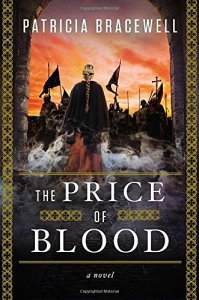
THE PRICE OF BLOOD by Patricia Bracewell

March 28, 2015
Click to purchase

Click to purchase

By the spring of 1006, Emma has succeeded in providing King Æthelred with a son. In spite of already fathering six legitimate sons, the king announces him heir to the throne, making his elder children view Emma as more of an enemy than she was before. All of them except Athelstan, that is. As the two try to fight their feelings for one another, Æthelred suffers a devastating loss that he views as further punishment for his participation in the death of his brother. His paranoia increases and he begins to imagine plots against him even by those closest to him. And when it’s revealed that his own Ealdorman in the north is indeed planning to forge an alliance with the Danes, Æthelred’s behavior becomes increasingly erratic. Fearing for the safety of her children Emma must begin to take steps to protect herself, all the while knowing that if her husband catches any whiff of her plans she could find herself accused of treason against the king.

Things certainly haven’t improved for Emma since the end of Shadow on the Crown. In spite of her efforts, Æthelred’s affection for her hasn’t grown a bit and the ghosts that haunt him have him firmly in their grasp. So much so that the entire kingdom is in danger.

Amazingly, Emma’s story still isn’t finished. This second installment in Bracewell’s trilogy takes readers up to 1012. At this stage, Emma is still on the first of her marriages, or the first crowning of this “twice crowned queen.”

3/15 Becky LeJeune

THE PRICE OF BLOOD by Patricia Bracewell. Viking (February 5, 2015). ISBN: 978-0525427278. 448p.


SHADOW ON THE CROWN by Patricia Bracewell

March 26, 2015
Click to purchase

Click to purchase

At just fifteen years of age, Emma, the sister of Richard II, duke of Normandy, is sent to England to marry King Æthelred. The alliance is purely for political purposes – both nations want support against the ever-growing threat of the Danes and both Richard and Æthelred believe Emma is the key. Though this is a marriage she is greatly against, Emma has been raised for this purpose and vows to be a good wife. Unfortunately, Æthelred is interested in little other than fathering heirs. Young Emma finds herself alone in a cold marriage, increasingly aware that her husband has no regard for her skills or her support. And when she begins to fall for one of Æthelred’s sons, things become much worse for the new queen.
Emma, the “twice crowned queen” is a fascinating historical character and one that few know much about. Patricia Bracewell aims to change this in her proposed trilogy on the eleventh century monarch. She succeeds in breathing life into this little-known ruler, giving her a depth of emotion that the historical record could never provide. And while the author’s imaginings are in part fictionalized (her relationship with Athelstan, for example), Bracewell does a wonderful job representing the history of the time and using what resources there are to introduce Emma to fans of historical fiction.

3/15 Becky LeJeune

SHADOW ON THE CROWN by Patricia Bracewell. Penguin Books (December 31, 2013). ISBN: 978-0143124351. 432p.


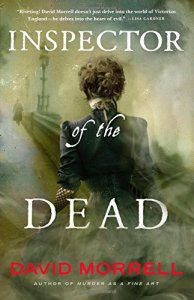
INSPECTOR OF THE DEAD by David Morrell

March 24, 2015
Click to purchase

Click to purchase

David Morrell takes us for a second visit to mid 19th century Victorian London following on the heels of his novel, Murder as a Fine Art. As in the first book, a great deal of research sets the scene in the London and England of that day.

England is immersed in a war against Russia taking place in the Crimea. Due to a cadre of officers that have paid for their commissions and are not competent to command men in battle, the war is going badly for Britain.

A series of reports from a newspaper correspondent have caused the government to fall and the political situation is chaotic. Thomas De Quincey, his daughter Emily and two detectives introduced in Murder as a Fine Art are in London during the political crisis involving the setbacks in the war.

De Quincey and Emily are actual individuals living at the time of the action of the book. De Quincey, known as “The Opium Eater” due to his addiction to laudanum, a pain killer based on opiates, has proven his ability to utilize logic and as much of a scientific method as was available at the time to solve crime. Morrell utilizes an actual plot to assassinate Queen Victoria to set up a scenario involving a criminal that begins to kill persons in the upper ends of society, moving from the lowest end of that segment up to what is deduced to be the Queen herself.

As in the first book, action in London involves descriptions of specific areas from the poorest to the wealthiest and the peoples that populated them. Morrell has the gift of being able to reproduce the information he found in his detailed research to bring the reader into the period and the action described. The identity of the murderer is arrived at via exhaustive investigation by De Quincey and his associates. We follow his logic throughout the book in moving from one criminal act to the next until the criminal is unmasked. The ending is a satisfactory sequence, and appears to set up at least another book involving the characters in the first two books. An absorbing read amid the realization of how well Morrell has described the era and the events, and the probable thoughts and conversations that might have actually taken place.

3/15 Paul Lane

INSPECTOR OF THE DEAD by David Morrell. Mulholland Books (March 24, 2015).  ISBN: 978-0316323932. 352p.