Guest Blogger: Jennifer Scott

May 6, 2014

Click to purchase

I am delighted to welcome my guest blogger today, Jennifer Scott, as her new book arrives in stores. And read through to the end to find out how you can win your own copy!

My Big, Fat, Fake Book Club

by Jennifer Scott

I don’t belong to a book club. Seems that I should. After all, I love books. I love talking about books. I love people who love talking about books. I’m a sure fit.

I’ve only been invited to officially join one book club, and at the time it didn’t work with my schedule. Evenings, kids, sports, school events, blah blah blah, the usual.

Every so often, however, I fantasize about creating my very own book club. My book club would be fabulous. We’d meet over potlucks, just like Jean’s book club does in The Accidental Book Club. I’d bust out my best recipes, and maybe even try some new ones to fit a challenging theme. Perhaps jiaozi and steamed buns for Amy Tan’s The Valley of Amazement, or a hearty beef stew and a stout beer for Kent Haruf’s Benediction.

In my big, fat, fake book club, we would turn out all the lights and discuss Marisha Pessl’s Night Film by creepy candlelight. Maybe the braver among us would fire up a scary movie afterward. The next month we would all write confessional letters to Richard Gere, to celebrate our reading of Matthew Quick’s The Good Luck of Right Now.

Perhaps we would wear formals to discuss Prom Nights from Hell. After that, we’d tackle some provocative nonfiction—perhaps The Death Class by Erika Hayasaki—and have weighty discussions surrounded by “brain food”—blueberry crumble, smoked salmon, guacamole.

And, of course, my game-for-anything fake book club would read The Accidental Book Club. We’d all bring regular dishes that we’d “gourmeted up” with capers and fancy cheese and other foody things, drink tons of wine, and talk about motherhood, expectations, and friendship.

Alas, I will probably never start a book club. Evenings, kids, sports, school events, blah blah blah, the usual. I will never get to throw a reality TV-themed party to discuss A.S. King’s Reality Boy.

But boy did I love inventing a book club in The Accidental Book Club.

I had such a good time trying out new dishes through Jean, being taken away on sexy fictional romps through Loretta, getting politically fired up through Mitzi, and thinking deeply through shy, sensitive Janet. I loved picturing the set table, the books lovingly laid out with the water glasses. I loved imagining the scent of the wine as it was being poured, the view of the woods through the dining room window.

I especially loved the camaraderie of the women—the way they had each other’s backs, the way they understood one another, the way they looked out for each other and spoke their minds. I loved that the book club itself, just like the books they were there to read, went so much deeper than just words on a page.
The Accidental Book Club may be the only book club I ever belong to. But I don’t mind, because they were a pretty fun group to hang out with. *grabs book* Now, where’s the food?

About the book:

In THE ACCIDENTAL BOOK CLUB, we meet Jean Vison, a widow who never expected to live without her husband, much less start a book club. A spontaneous idea leads to a monthly meeting of six very different but colorful women, each with their own life stories and unique interpretations of the book selections, whose meetings are not complete without lots of wine, gourmet food, and laughter. Through these women Jean rediscovers the joy in life, and begins to see that there is a chance for happiness after losing her late husband. But soon Jean’s family is in trouble again, and her teenage granddaughter Bailey comes to live with her, turning Jean’s newfound peace upside down. In turning to the book club for support, Jean and Bailey discover that family is what you make of it—even the family you choose. Sometimes the most unexpected circumstances lead to the most powerful connections and friendships.

If you’d like to win a copy of THE ACCIDENTAL BOOK CLUB

Send an email to contest@gmail.com with “ACCIDENTAL BOOK CLUB” as the subject. You must include your snail mail address in your email.

All entries must be received by May 20, 2014. One (1) name will be drawn from all qualified entries and notified via email. This contest is open to all adults over 18 years of age in the United States only. One entry per email address. Subscribers to the monthly newsletter earn an extra entry into every contest. Follow this blog to earn another entry into every contest. Winners may win only one time per year (365 days) for contests with prizes of more than one book. Your email address will not be shared or sold to anyone.


Guest Author: Lisa Scottoline

April 8, 2014

I am delighted to offer this Q&A with Lisa Scottoline as her new book arrives in stores. And read through to the end to find out how you can win your own copy!

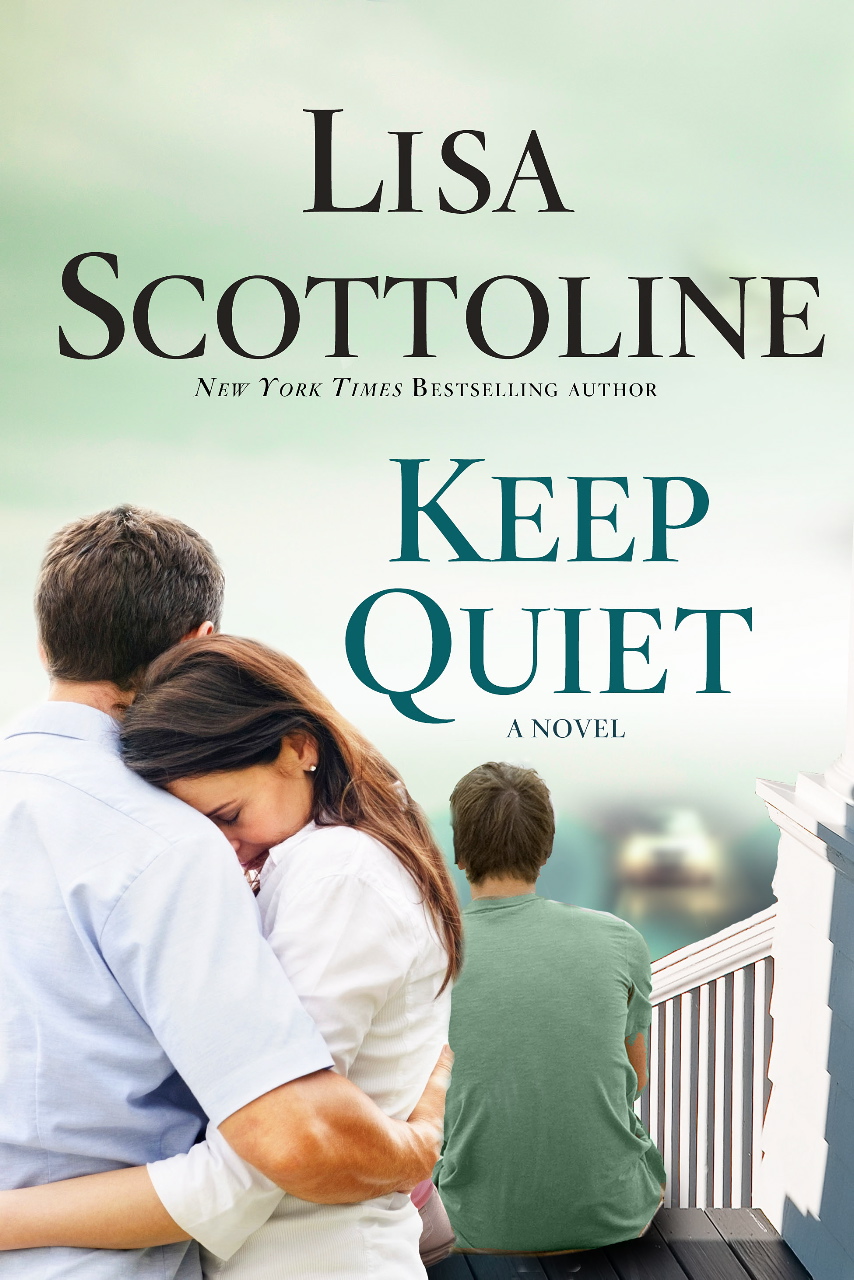
About KEEP QUIET–

Jake Whitmore has been trying to mend an ongoing rift with his sixteen year old son, Ryan.  Just as they’re enjoying a rare bonding moment, when he’s not competing with the multitude of distractions that vie for Ryan’s attention, disaster strikes.  A tragic car accident with Ryan at the wheel threatens to derail not only Ryan’s chances at college, but his entire future.  Jake makes a split-second decision that saves his son from formal punishment, but plunges them both into a world of guilt, lies, and secrecy.

Making matters even worse, Jake’s wife Pam is up for a federal judgeship, with all the attendant background checks and interviews with the FBI.  Ryan is devastated by the accident, and Jake fears he may not hold up under the scrutiny.  Just when Jake thinks he has everything under control, Scottoline throws yet another curve ball their way, pushing them towards their limits.

Powerful and gut-wrenching, KEEP QUIET is the tale of the unraveling—and the ultimate redemption—of a family.

keep quiet

1. Where did the idea for Keep Quiet come from?

The idea for this novel was a classic what-if, which occurred to me as I was driving down a street similar to the one in the book, which is near my house. Every time I round the curve of this particular street, which has a dangerous blind curve, I think, what if somebody was here and I hit them? What if my kid were driving and my kid hit them? What would I do? What should I do? What I love about this novel is that it concerns a decision that a parent could make at any time, which raises a predicament that they never would have anticipated.

2. There is a big theme of choices throughout the book, why did you feel it was important to choose to take on such an moral topic of right & wrong?

I love to write about choices, because I feel that every day life contains so many of them, which turned out to be no-win. This novel’s a perfect example of that, because Jake has to make an emergency decision and he is damned if he doing damned if he doesn’t. The choice he makes can be looked at in so many ways, from a moral, legal, or ethical point of view, and that’s what makes this book and so many of my standalones perfect for book clubs, because those are the choices and topics that engender the most discussion and there are no right answers.

3. Which character do you relate to the most in this book? Why?

I relate to all of the characters, and I think every novelist has to be able to channel each of the characters to make their position believable. That is particularly true in this novel, because Jake’s position is diametrically opposed to his wife’s position. The son has a different perspective, as well. This novel is really the anatomy of a decision and its aftereffects, in addition to being a family story and a crime thriller.

4. Were there aspects of the story that were inspired by real news stories or personal stories?

Except for the experience above, no. I never base any of my novels on news stories were actual facts, because I think that is so derivative, and like to be original.

5. Do you have any special rituals or traditions when you begin writing a new novel?

I have tons of rituals most of which unfortunately concern food, which is why am on a perpetual diet areas I’m always nibbling on something while I write, when there is something supposedly good for me like pistachios and almonds, where the stuff I really love, like M&Ms. I must have Dunkin’ Donuts coffee every day, extra large, and I keep the TV on all day in my office, so I have a steady stream of Hoda & Kathy Lee, the View, the Chew, Dr. Oz, Queen Latifah, and my favorite of all time, Dr. Phil.

As far as writing rituals per se, I write 2000 words a day, and I think this is really important to stick to. I like it because it gives me a goal every day, but the best thing about it is that also gives me a limit. When I hit 2000 words I get to stop working, ride a pony, or walk the dogs. Writers, like everybody else, need a way to turn work off and for some reason, I need help to give myself permission to do that, so the word count really works. I am writing two novels in year, and the 3rd book every year, which is a memoir I write with my daughter Francesa Serritella, and I have to be very disciplined to keep up that pace. But it’s important to say that I don’t regard this as a bad thing, or onerous in the least. On the contrary, I’m living my life’s dream. I’ve been writing whatever stories both fictional and nonfiction, I want to tell for the past 20 some years, and all of them are bestsellers. How lucky am I?

6. What advice do you have for other writers?

I have a lot of advice for writers, like any blowhard, and much of it is on my website in little videos that I made. But the bottom line is that they should just do it. I stole that from Nike and it’s really true. I find that there is a behavioral way to finish a novel and that begins with routine, a word count, and a set time that you work. Even if you still work a day job, as I did for several years when I was 1st published, a new writer needs to set time aside each day to write, even if it’s only 15 min.

But my real advice is softer and gentler, and it has to do with not getting in your way own way. I would tell new writers to just give it a shot and not doubt themselves, particularly women. There are no right answers in writing, as in life, and you really just have to give it a go and keep going, and not stop until you finish the novel and they publish it. Take time to nurture yourself and your dreams. I believe they really can come true, because that is the story of my life.

About the author:

lisa scottoline 0314Lisa Scottoline is a 20 time New York Times best-selling and an Edgar award-winning author with over 20 novels (in 20 years) under her belt, including her latest novel ACCUSED. Her stories have been translated into 25 different languages and her wildly popular, weekly non-fiction column, “Chick Wit,” appears in The Philadelphia Inquirer.

Over the years Lisa’s books have solidly landed on all the major bestseller lists including The New York Times, USA Today, The Wall Street Journal, Publisher’s Weekly, Washington Post and The Los Angeles Times. Lisa has over 30 million copies of her books in print and is published in over 35 countries. Her book LOOK AGAIN was named “One of the Best Novels of the Year” by The Washington Post and honored as one of a select group of books chosen to be part of World Book Night 2013. It has also been optioned for a film adaptation.

Lisa, a Philadelphia native, graduated magna cum laude from the University of Pennsylvania, earned a B.A. in English in just three years and received a Juris Doctorate from the University of Pennsylvania Law School cum laude. Lisa worked as a trial attorney until the birth of her daughter, Francesca Serritella. She left the firm to raise Francesca and began a part-time career writing legal fiction. Francesca is now an honors graduate of Harvard, author and columnist. Lisa, as a single parent, considers her greatest achievement raising Francesca and now they co-write the “Chick Wit” column for The Philadelphia Inquirer.

Through her writing, Lisa’s contributions have been recognized by organizations throughout the country. Lisa is the recipient of the Fun Fearless Fiction Award by Cosmopolitan Magazine, was named a PW Innovator by Publisher’s Weekly and was honored with AudioFile’s Earphones Award.

Lisa has served as President of Mystery Writers of America and has taught a course she developed, “Justice and Fiction” at The University of Pennsylvania Law School, her alma mater for which she one an award for Best Adjunct Professor as voted on by the students.

Lisa believes in writing what you know and puts so much of herself into her books. As evidenced in the bond of sisterhood among her characters, family is profoundly important to Scottoline, she has stated, “I come from a very loving, close-knit Italian family.” Lisa says she need not look past her own family, “The Flying Scottolines” for inspiration. In her nonfiction books and columns, Lisa reflects in an honest and humorous way what it is like to be a middle-aged woman maneuvering through life and her relationships with her family (Daughter Francesca, Brother Frank, and her hilarious, opinionated, octogenarian, Italian, Mother Mary), men, and food.

Lisa is an incredibly generous person, (she opens her home to a fully inclusive book club party every year), an engaging and entertaining speaker, a die-hard Eagles fan and a good cook. Her iPod has everything from U2 to Sinatra to 50 Cent, she is proud to be a Philadelphian and American and nothing makes her happier than spending time with her daughter. She lives in the Philadelphia area with her array of disobedient pets, loves the coziness of her farmhouse and wouldn’t have her life any other way.

If you’d like to win a copy of KEEP QUIET –

Send an email to contest@gmail.com with “KEEP QUIET” as the subject. You must include your snail mail address in your email.

All entries must be received by April 23, 2014. One (1) name will be drawn from all qualified entries and notified via email. This contest is open to all adults over 18 years of age in the United States only. One entry per email address. Subscribers to the monthly newsletter earn an extra entry into every contest. Follow this blog to earn another entry into every contest. Winners may win only one time per year (365 days) for contests with prizes of more than one book. Your email address will not be shared or sold to anyone.


Guest Blogger: M.J. Rose

April 4, 2014

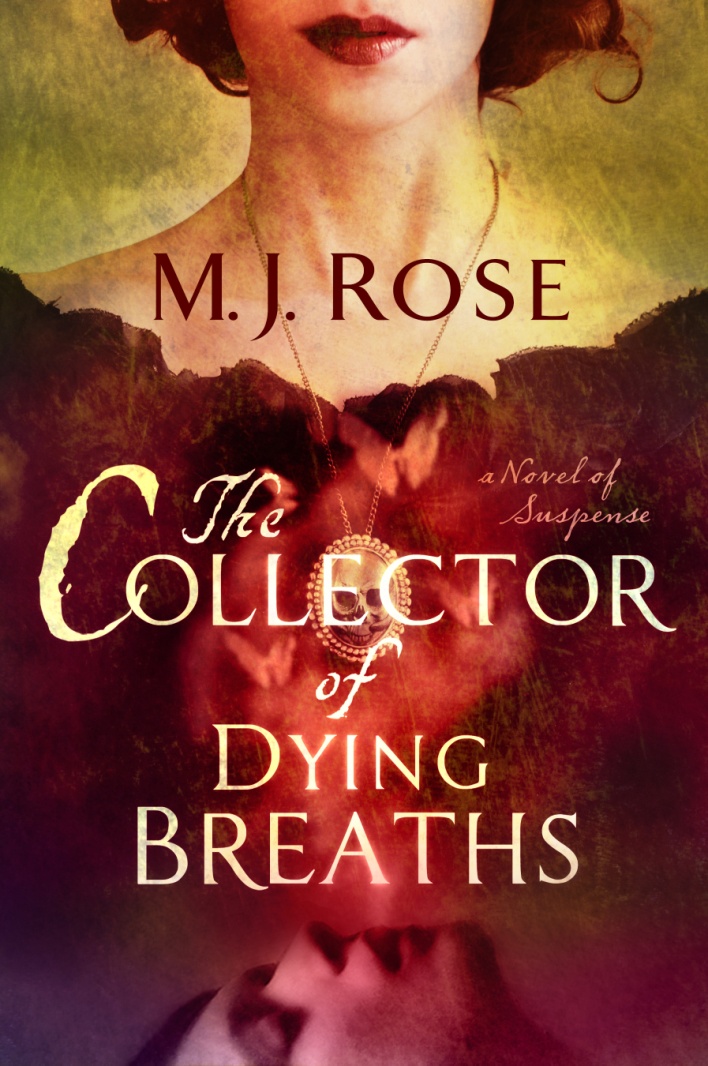
collector of dying breathsI am delighted to offer this Q&A with M.J. Rose for you to read. Her latest book, THE COLLECTOR OF DYING BREATHS comes out April 8th.

Q & A with M.J. Rose, International Bestselling Author of “The Collector of Dying Breaths:”

1. What attracted you to France and to researching the world and history of French perfumes which are a focus in your new book, “The Collector of Dying Breaths” and also in your novels, “The Book of Lost Fragrances and Seduction?”

When I worked in Mad Men land I had the opportunity to work a new  fragrance from the very first days of naming it through to full up TV commercials we shot in Hong Kong and edited at the Lucas Ranch. It was a 40 million dollar launch that culminated with the spots running on the Oscars. During all that, I became intrigued and besotted with everything about the 8th art, as fragrance is called, and it’s a passion that’s never left. But I didn’t know about the history of fragrance before and found it fascinating. As for France – my great grandmother was French and my heritage has always been important to me. Besides, as Audrey Hepburn says “Paris is always a good idea,” and I completely agree.

2. Since scent has been called the most powerful memory trigger, how do fragrances tie in to your books?

I am fascinated with how the past influences the present. From a psychological point of view, a historical, and even mystical one.  So since the memory center of the brain sits next to the olfactory center of the brain, scent stimulates memories of the past as nothing else can. From there it was just a jump to thinking scent might stimulate even older memories… past life memories.

3. Jac L’Etoile, your main character takes “trips” into the past that are triggered by scents—which makes sense for her character since she was trained during childhood in formulating perfumes. Did you find accounts of people who had similar olfactory experiences or did your imagination produce this persuasive story telling device?

Throughout history shamans and mystics have burned hallucinogenic incenses as aides to help them visit other realms and experience past life memories.  The blue lotus – which can be found in ancient Egyptian tomb paintings – is just one such essence priests from that time used to enter into trances.

4. In “The Collector of Dying Breaths,” you explore how fragrance was brought to France in the 16th century. Who was responsible?

Catherine de Medici was a fascinating young Italian woman who came to France at fourteen years of age to marry one of the crown princes. She brought her perfumer and her astrologer with her.  René le Florentin was apprenticed at the Officina Profumo–Farmaceutica di Santa Maria Novella, one of the world’s oldest pharmacies which was founded in 1221 in Florence by the Dominican Friars who made herbal remedies and potions. He created scents and creams for the young Catherine de Medici. When the fourteen-year-old duchessina traveled to France to marry the prince, she took René with her. René and Catherine are credited with bringing perfume to their newly adopted country.

5. Is Catherine de Medici’s use of poison to rid herself of enemies based on historical fact?

Yes, although there are of course questions about how many people she had poisoned. For instance there are rumors she had her daughters’ mother in law poisoned. But we know for sure that Catherine had her perfumer, René Le Florentin create innovative and well disguised poisons for her to use on her enemies.

6. You write in both “The Collector of Dying Breaths,” “Seduction” and “The Book of Lost Fragrances” about the L’Etoile family of perfumers in France. Were the fictional L’Etoiles based on a real family of French perfumers or did they arise from your imagination?

The Guerlain family, which opened their doors to business in 1826, created many of my favorite perfumes, and so in a way they were a great inspiration, but the L’Etoile family’s loves, tragedies and triumphs are all pure invention.

7. Was collecting someone’s dying breath something people actually did in the past or was this idea something of your creation as a fiction author?

We don’t know where this concept originated or if anyone in the Renaissance suspected such a thing was possible. But it’s not a far stretch from the well- documented and centuries-old alchemical search for immortality through the breath concept.  We do know that in the twentieth century, automotive magnate Henry Ford and the great inventor Thomas Edison, who both believed in reincarnation, supported the idea that in death, the soul leaves the body with its last breath. In fact, Edison’s dying breath, collected by his son, Charles, is in fact on display at the Edison Winter Home in Fort Myers, Florida.

8. Why have a signature scent made? And do you think more people today are having signature fragrances designed for them?

To be memorable. To have a man lean across a table and say quietly, I love how you smell. To celebrate your uniqueness. To stand out. To revel in your creativity. In a world of sameness to not be the same as anyone else. There are so so many reasons. And yes I do think that the smaller the world gets, the more we tend to look for ways to express our individuality.

9. Your first Jac L’Etoile novel inspired a perfume, Âmes Soeurs, the Scent of Soul mates by Joya Studios. How did this partnership come to be?

When I was writing the first Jac  book – to keep in the world of scent – I burned a lot of candles. When I finished writing, I gave a copy of the book to the perfumer who’d created the candles that had inspired me the most. Frederick Bouchardy. (Joya Studios).

After he read the novel he contacted me and we met for tea in the Peninsula Hotel in NYC. He told me he loved the book and wanted to create his version of the fragrance at the heart of the novel. I was so astonished and honored, I actually started to cry.

Bouchardy even named the fragrance after one in the book: Âmes Sœurs the scent of soul mates. It has hints of Frankincense, Myrrh, Orange Blossom and Jasmine. I think it has a smoky uncommon finish that suggests the past and the future, and lost souls reunited.

10. What scents evoke memories for you?

Shalimar – it was the only perfume my mother wore – so just one whiff and she’s there – all around me. It makes me so happy and so sad at the same time.

Pine – I love to walk in the woods and the scent of pine inspires me. There is something fresh and yet ancient and primeval about it.

Popcorn- Whenever I smell it I remember the first  magical time I ever went to the circus with my dad when I was little.

Chocolate – makes me think of Paris. I don’t think I ever had great chocolate till I went to Paris.

Perfume with Lemon –makes me think of high school. We all wore Jean Nate or Love – both lemon based.

Coffee – when I smell coffee I think of New York – my hometown – the energy is the smell of fresh brewed, really really good coffee.

11. What are some of  your favorite perfumes and what tones (scents) do they contain?

Vol de Nuit by Guerlain but only vintage – Wood, Iris , Vanilla, Spices, Green notes

Orchidee Vanille Eau de Parfum by Van Cleef & Arpels – Vanilla, almond and chocolate, litchi, Bulgarian rose and violet.

Coromandel by Chanel  – a true oriental with Amber tones.

Galconda by JAR – the perfumer has never revealed what the tones are but I smell cinnamon, jasmine and carnation and heaven.

12. Besides being an international bestselling author, you are also recognized as a pioneer in the publishing world? What breakthroughs have you made in this area?

Getting published has been an adventure. I self-published “Lip Service” late in 1998 after several traditional publishers turned it down. Editors had loved it, but didn’t know how to position it or market it since it didn’t fit into any one genre. Frustrated, but curious and convinced that there was a way to market it, I set up a web site where readers could download her book for $9.95 and began to seriously market the novel on the Internet. After selling over 2500 copies (in both electronic and trade paper format) “Lip Service” became the first e-book and the first self-published novel chosen by the LiteraryGuild/Doubleday Book Club as well as being the first e-book to go on to be published by a mainstream New York publishing house. I was also the first person to create the concept of virtual book tours – or blog tours as they are known now – doing one in 1999. As well I was the first author to create a book trailer, in 2000 and the first to have group blog in 2001.

13. You are a founding board member of International Thriller Writers and are its current co-president with Lee Child. How does the organization and its annual event “Thrillerfest” which is conducted in New York City differ from any other organizations and events?

We have a mantra at ITW – when we imitate we fail, when we innovate we succeed. So our goals have been to keep making our efforts and  events unique. We have the largest “craft fest” where authors can come to learn the craft from masters like David Morrell, Doug Preston, Steve Berry, Joseph Finder, Lisa Gardner, and more. We also have the largest “agent fest” in the world. Over 60 agents come to Thrillerfest to hear pitches from authors. For fans, we offer a $10 gift certificate to get them into the book room buying books and unlike most events every single registered author has his or her books for sale.


Guest Blogger: C. L. Hoang

March 31, 2014

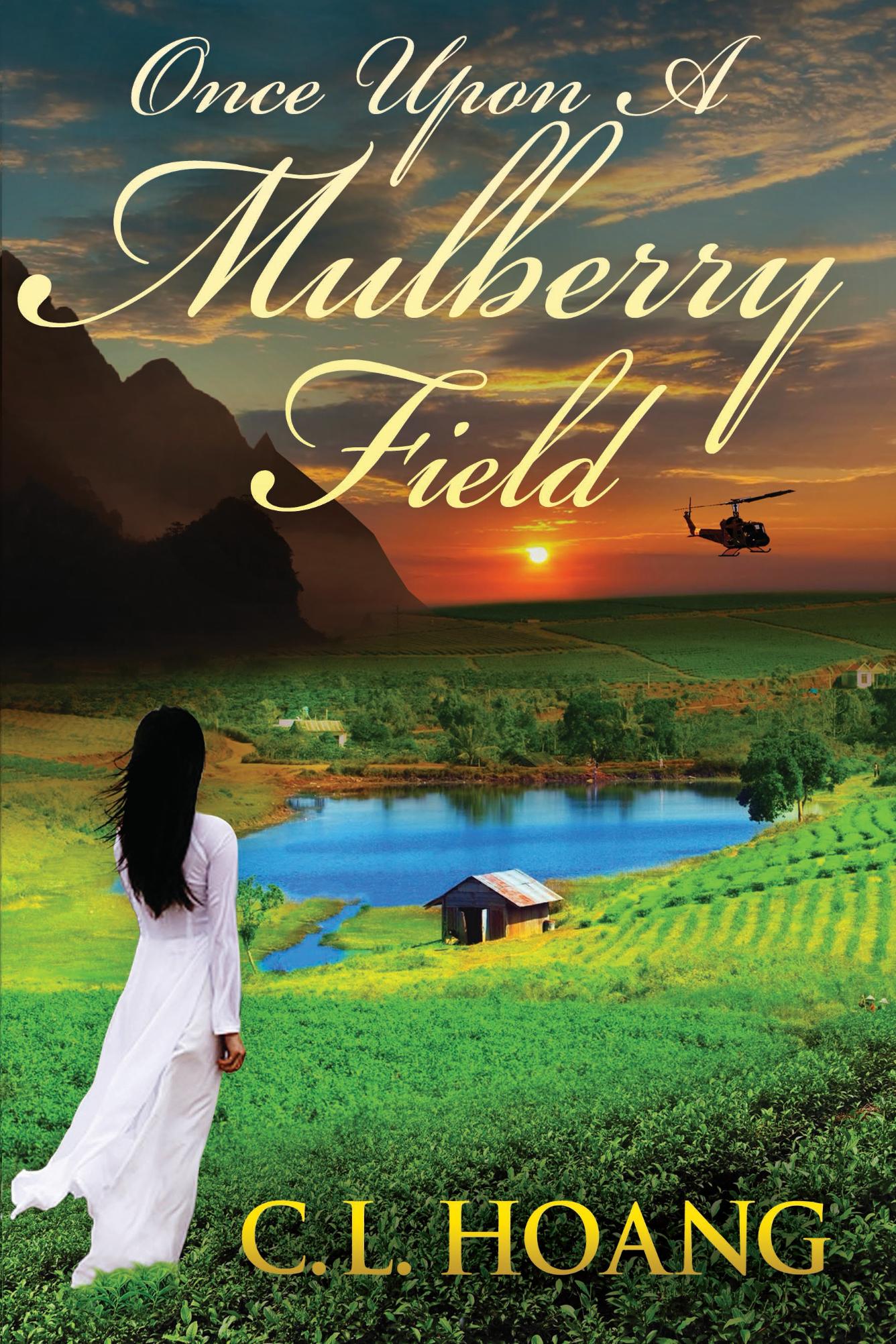
Once Upon a Mulberrry Field - CoverAuthor, C.L. (Jim) Hoang has recently released Once Upon a Mulberry Field,  a multicultural love story set during the Vietnam War.

A mesmerizing debut novel, Once Upon a Mulberry Field tells a heartrending tale of American and South Vietnamese love at a time when both countries were torn apart by war. Set at Bien-Hoa Air Force Base near Saigon in 1967, at the height of the war and the Tet Offensive, the novel explores the blossoming romance between a U.S. Air Force doctor, Roger Connors, and Lien, a young Vietnamese widow working as a hostess at a Saigon club. As the war progresses and political offensives set the country in turmoil, Roger and Lien are forced into circumstances that tear them apart. Many years later, Roger receives a cryptic note from a long-lost Air Force buddy announcing the visit of an acquaintance from Vietnam. The startling news resurrects ghosts of fallen comrades and haunting memories of a decades-old secret that Roger and Lien once shared.


Q&A

1. What inspired you to write Once Upon a Mulberry Field?

I started the book as a nostalgia project for my father so that we could capture memories of our family’s earlier life in Saigon, Vietnam, during the war. As I researched that time period to ensure accuracy, I discovered another perspective of the war—as experienced by American service people who fought over there and by their families in the States. I ended up merging these two contrasting points of view, in hopes of providing a more complete picture of that turbulent chapter in the history of both countries. But rather than being a “war book,” Once Upon a Mulberry Field is first and foremost a love story—an ode to the old and the new homelands, and a celebration of the human spirit and the redemptive power of love. 

2. In Once Upon a Mulberry Field, the main character, Roger Connors, is a U.S. Air Force physician sent to Vietnam during the height of the war. Why did you decide to tell the story from an American point of view? 

In an attempt to be objective and to view things from a different perspective from the one I had known growing up, I chose to recount the events through the voice of an American soldier. Needless to say, it was an eye-opening experience.

3. Roger and his fellow USAF buddies have differing views about the war in Vietnam. What can you tell us about the atmosphere surrounding the war and the way it was viewed in both America and South Vietnam?

In South Vietnam, the war was about preventing communism from destroying the budding and fragile democracy—a matter of crucial survival. In America, it was a controversial and misunderstood war, with the unpopular draft and the constant drumbeat of violence and gore shown nightly on TV news heightening the tension and anxiety among the public. There was widespread misinformation and confusion, fanned by undeniable passions on all sides. 

4. There are two women in Roger’s life: the beautiful Vietnamese widow, Lien, and his fiancée at home, Debbie. How would you characterize his relationship with each of these women? In your view, does he feel differently toward one or the other?  

The two women symbolize the clashing worlds confronting Roger. Debbie represents the familiar, secure home setting where things are as they seem—tangible, comforting, as lovely and dependable as the sunny California weather. Lien, on the other hand, is the daughter of an exotic tropical land, beautiful and tragic, who appears and vanishes without warning, like a monsoon thundershower. Roger thus finds himself constantly in the grips of a struggle between stormy passion and lifelong friendship. 

5. You interviewed a number of Vietnamese and American civilians and veterans as part of your research for this novel. What did you learn in these interviews and how did they influence the story you tell in Once Upon a Mulberry Field?  

I learned that nothing is ever as black-and-white as we like to assume, and that truth is often inconvenient and blinded by the passions of the time. This insight gave me a more compassionate understanding of the characters and what they went through, no matter what their feelings about the war. 

6. Are you working on another novel? If so, what can you tell us about it? 

Vietnam is a beautiful country with a rich cultural heritage. I’d like to capture in writing some of that heritage as I still remember it—ancient folklore that highlights the universal human condition and spirit. It may come in the form of a new novel, or a collection of short stories.

Jim Hoang - Author photo (high res color)

If you’d like to win a copy of Once Upon a Mulberry Field —

Send an email to contest@gmail.com with “ONCE UPON A MULBERRY FIELD” as the subject. You must include your snail mail address in your email.

All entries must be received by April 12, 2014. One (1) name will be drawn from all qualified entries and notified via email. This contest is open to all adults over 18 years of age in the United States only. One entry per email address. Subscribers to the monthly newsletter earn an extra entry into every contest. Follow this blog to earn another entry into every contest. Winners may win only one time per year (365 days) for contests with prizes of more than one book. Your email address will not be shared or sold to anyone.


Guest Blogger: Peter Leonard

March 27, 2014


If the name seems familiar, maybe it’s because you read  Quiver, Trust Me, Voices of the Dead or All He Saw Was the Girl. Or maybe it’s because his father was the late Elmore Leonard. Author Carl Hiaasen said about Peter’s work, “Clearly, great storytelling runs in the Leonard family’s DNA.”

If you’d like to win a copy of EYES CLOSED TIGHT, send an email to contest@gmail.com with “EYES CLOSED TIGHT” as the subject. You must include your snail mail address in your email.

All entries must be received by April 10, 2014. One (1) name will be drawn from all qualified entries and notified via email. This contest is open to all adults over 18 years of age in the United States only. One entry per email address. Subscribers to the monthly newsletter earn an extra entry into every contest. Follow this blog to earn another entry into every contest. Winners may win only one time per year (365 days) for contests with prizes of more than one book. Your email address will not be shared or sold to anyone.

Here’s an excerpt – enjoy!

Excerpt from
EYES CLOSED TIGHT
by Peter Leonard

Excerpted from the book EYES CLOSED TIGHT by Peter Leonard. Copyright © 2013 by Peter Leonard. Reprinted with permission of The Story Plant. All rights reserved.

O’Clair got up, put on a pair of shorts and a T-shirt, glanced at Virginia’s cute face and naked shoulder sticking out from under the cover, and went outside. It was seven twenty-five, big orange sun coming up over the ocean, clear sky; looked like another perfect day. O’Clair had moved to Florida from Detroit three months earlier, bought an eighteen-unit motel on the beach called Pirate’s Cove; it had a friendly pirate on the sign surrounded by neon lights.

The Motel was at the corner of Briny Avenue and SE Fifth Street in Pompano Beach. Four-story condo to the north and public beach access immediately south, and next to that, a massive empty lot that a developer was going to build a twenty-five-story apartment building on.

The idea of living through two years of heavy construction had O’Clair concerned, but what could he do about it?

He’d brought a paper grocery bag with ihm and walked around the pool, picking up empties, a dozen or so lite beer cans left by a group of kids from Boston University who’d been staying at the motel the past three days. There were nine of them, three girls and six guys. They’d caravanned down from snowy Massachusetts a week after Christmas.

He fished a few more beer cans out of the pool with the skimmer, picked up cigarette butts that had been stamped out on the concrete patio and threw them in the bag with the empties. O’Clair straightened the lounge chairs in even rows, adjusted the back rests so they were all at the same angle, and noticed one of the chairs was missing. He scanned the pool area, didn’t see it, glanced over the short brick wall that separated the motel from the beach and there it was, twenty yards from where he was standing.

O’Clair kicked off his sandals, opened the gate and walked down three steps to the beach. As he got closer, he could see a girl asleep, stretched out on the lounge chair, one leg straight, the other slightly bent at the knee, arms at her sides. She was a knockout, long blonde hair, thin and stacked, wearing a white T-shirt and denim capris, early twenties. He didn’t recognize her, but figure she was with the group from Boston. She looked so peaceful he didn’t want to wake her.

“You should go to your room,” O’Clair said, looking down at her.

The girl didn’t respond. He touched her shoulder, shook her gently. Either she was a heavy sleeper or something was wrong. He touched her neck, felt for a pulse, there wasn’t one. Her skin was cold, body starting to stiffen, definitely in the early stages of rigor. He looked at the sand around the lounge chair, surprised it was smooth, no footprints. Glanced toward the water at the joggers and walkers moving by. O’Clair went back up to the patio, wiped the sand off his feet, and slipped his sandals on.

Virginia was standing behind the registration counter, yawning, eyes not quite open all the way, holding a mug of coffee.

“What do you want for breakfast?”

“There’s a dead girl on the beach.” O’Clair said, picking up the phone and dialing 911.
Virginia’s face went from a half smile, thinking he was kidding, to deadpan, seeing he wasn’t. “What happened?”

The cruiser was white with gold and green stripes that ran along the side, light bar flashing. O’Clair watched it pull up in front, taking up three parking spaces. Two young-looking cops in tan uniforms got out and squared the caps on their heads. O’Clair went outside, met them and introduced himself.

“You the one found the body?” Officer Diaz, the dark-skinned cop said.

O’Clair nodded.

“You know her?” Diaz pulled the brim lower over his eyes to block the morning sun, the top of a crisp white T-shirt visible under the uniform.

“At first I thought she was with the group from BU. Now I don’t think so.”

“What’s BU?” the big, pale one, Officer Bush said, showing his weightlifter’s arms, uniform shirt bulging over his gut.

“Boston University. Nine kids staying with us, units seventeen and eighteen.” O’Clair didn’t know the sleeping arrangements and didn’t care. They were paying $720 a night for two rooms, staying for five days.

An EMS van pulled up and parked facing the police cruiser. Two paramedics got out, opened the rear door, slid the gurney out, and O’Clair led them through the breezeway, past the pool, to the beach. The paramedics set the gurney next to the lounge chair, examined the girl and pronounced her dead.

Officer Bush said, “What time did you find her?”

“Around twenty to eight.”

“How can you be sure?”

“I looked at my watch,” O’Clair said, like it was a big mystery.

Diaz grinned, showing straight white teeth, reminding O’Clair of Erik Estrada, his tan polyester uniform glinting in the morning sun. “Did you touch the body?”

“Her neck, felt for a pulse.” O’Clair saw Virginia wander down, standing at the seawall with her cup of coffee, watching them. Officer Bush went back to the cruiser and got stakes and tape, then set up a perimeter around the dead girl, protecting the crime scene. The paramedics picked up the gurney and left, leaving the body for the evidence tech.

Diaz took a spiral-bound notebook out of his shirt pocket, wrote something and looked up at O’Clair. “Ever see her before? Maybe lying in the sun, walking the beach?”

“I don’t think so,” O’Clair said. “Someone like that I would remember.”

Diaz said, “You see anyone else?”

“College kids out by the pool.” He almost said drinking beer, but caught himself, he doubted they were twenty-one and didn’t want to get them in trouble.

“What time was that?”

“Around eleven o’clock.”

“Then what happened?

“I went to bed.”

Diaz said, “Anything else you remember? Any noises?”

“No.”

The evidence tech arrived carrying a tool box, set it on the sand a few feet from the lounge chair, opened it, took out a camera, and shot the crime scene from various angles. Diaz searched the surrounding area for evidence and Bush questioned the morning joggers and walkers wandering up toward the scene. O’Clair watched from the patio, learning against the seawall. Virginia had gone back to the office.

A guy in a tan, lightweight suit walked by O’Clair and went down the steps to the beach. He had to be with homicide. The evidence tech, wearing white rubber gloves, was swabbing the dead girl’s fingernails. He glanced at the guy in the suit.

“What do you got?”

“Fatal.”

“I figured that unless you were doing her nails.”

“Not much here,” the evidence tech said, “couple hairs, maybe a latent, and something you’re not going to believe.” He whispered something to the suit that O’Clair couldn’t hear.
“Jesus, I’ve seen a lot, but I haven’t seen that.” The homicide investigator shook his head. “Where’s the blood?”

“That’s what I want to know.”

“How’d she die?”

“You want a guess? That’s about all I can give you right now. She was asphyxiated, been gone about four hours.”

“Who found her?”

The evidence tech turned and pointed at O’Clair above them on the patio. The detective came up the steps and stood facing him.

“I’m Holland, Pompano Beach Homicide.” He has a goatee and a crooked nose, early thirties. “What’s your name, sir?”

“O’Clair.”

“I understand you found her.”

“That’s right.”

“You down here for a vacation, or what?”

“I own the place, bought it three months ago.”

“Where you from, Cleveland, Buffalo, someplace like that?”

“Detroit,” O’Clair said.

“Even worse,” Holland said, breaking into a grin. Just kidding. I got nothing against the Motor City.”

“Well that’s a relief,” O’Clair said.

Holland wore his shield on his belt and a holstered Glock on his right hip.

“You married?”

“Living with a girl named Virgnia, helps me run the place.”

“The hot number in the office?”

O’Clair fixed a hard stare on him.

“How’d you arrange that?”

“I must have some hidden talents.”

“You must,” Holland said. “Tell me what you saw this morning.”

“Same thing you did—dead girl on a lounge chair,” O’Clair said. “Know who she is?”

“No ID. No idea. Have to check with missing persons. Was the chair left on the beach?”
“It shouldn’t have been. The lounge chairs are supposed to be kept in the pool enclosure. It’s one of our rules here at Pirate’s Cove.”

“Your guests break the rules very often?”

“Oh, you know how it is. Get in the Jacuzzi with a beer, without taking a shower, and you’ve broken two right there.” O’Clair paused, playing it straight. “The rules are from the previous owner, guy named Moran. I keep them posted ‘cause I think they’re funny. Someone sat down and wrote them in all seriousness.”

“What do you think happened? This girl was walking by and got tired, saw your place, went up, got a lounge chair, brought it to the beach, lay down, and died in her sleep?”
“I’d ask the medical examiner.”

The evidence tech was taking off the rubber gloves, closing the top of the tool box.
Holland said, “What else did you see?”

“You’re asking the wrong question,” O’Clair said. “It’s not what I saw, it’s what I didn’t see.”

“Okay. What didn’t you see?”

“There were no footprints in the sand. Like she was beamed there.”

“So the wind erased them,” Holland said.

“You really believe that?”

“It’s the only plausible explanation I can think of.”

“What else didn’t you see?”

“No obvious cause of death. No evidence of a struggle. In fact, no evidence at all.” O’Clair looked at Holland, caught something in his expression.

“You sound like you know the trade,” Holland said.

“What’s you do before you became an innkeeper?”

“Worked in homicide in Detroit.”

Holland grinned. “I had a feeling. Then you must’ve seen her eyes were missing right? Bulbs removed, empty sockets.”

“But no blood,” O’Clair said. “So it was done somewhere else. Find the primary crime scene, you’ll find the evidence.”

“You weren’t going to say anything?”

“It’s not my case,” O’Clair said. “I figured somebody was going to notice sooner or later, it wasn’t you or the evidence tech it would’ve been the ME.”

“Why do you think the girl ended up here?”

“I have no idea. Why don’t you roll her over, maybe you’ll find something.”

Occasionally there was a crucial piece of evidence under the body, a lead. IT could be a round that would be tested for ballistics comparison against other homicides. It could be money or drugs, suggesting a possible motive, or it could be a cell phone that would lead to the possible killer or killers.

But there was nothing under the dead girl. No ID. No cell phone. Her body was bagged and the remains taken to the Broward County Medical Examiner’s Office. They took O’Clair’s lounge chair too.

“It’s evidence,” Holland said. “You’ll get it back eventually.”

O’Clair doubted it. He knew what happened to evidence.

Bush and Diaz went upstairs, woke the BU students and brought them down to the pool, nine kids looking hung over, yawning. Eight twenty in the morning was the middle of the night for them. O’Clair had noticed they usually didn’t get up till after noon. Holland questioned them one by one, showed photos of the dead girl, took statements, and sent them back to their rooms. No one knew or had ever seen the girl before. No one had seen anything suspicious or heard anything during the night.

The MacGuidwins from Mt. Pearl, Newfoundland in unit two, who had complained about the students making too much noise, were questioned next by Holland. O’Clair watched the fair-skinned, red-haired couple shaking their heads.

As it got hotter, Holland commandeered unit seven for his makeshift interrogation room and brought the other renters in two-by-two for questioning. There were the Burnses, Susan and Randy, from Troy, Michigan; the Mitchells, Joe and Jean, from San Antonio, Texas; the Belmonts, John and Shannon, from Chicago, Illinois; and the Mayers, Steve and Julie, from Syracuse, New York. Steve Mayer woke up with four-alarm heartburn at three-thirty a.m., got up, took a Nexium, walked out by the pool and remembered seeing the lounge chair on the beach, but didn’t think anything of it. None of the other renters saw or heard anything.
O’Clair walked Holland out to his car at eleven twenty, glad to finally get rid of him.
“Miss the life?” Holland said.

“Are you kidding?”

“Some things about it I’ll bet.” He handed O’Clair a card. “Call me if you think of something.”


Guest Blogger: Jane Green

March 25, 2014
20140322-092811.jpg

me & Jane

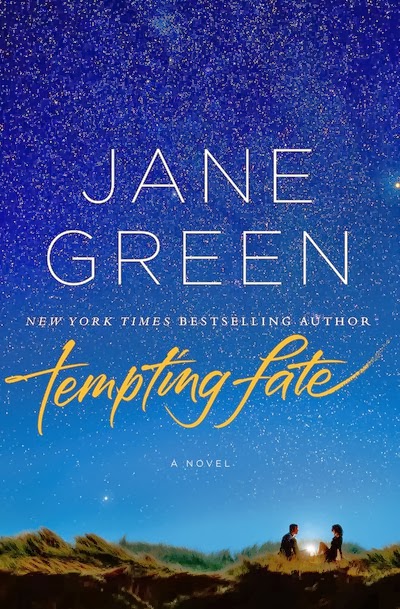
I am delighted to have Jane Green guest blogging today as her new book arrives in stores!

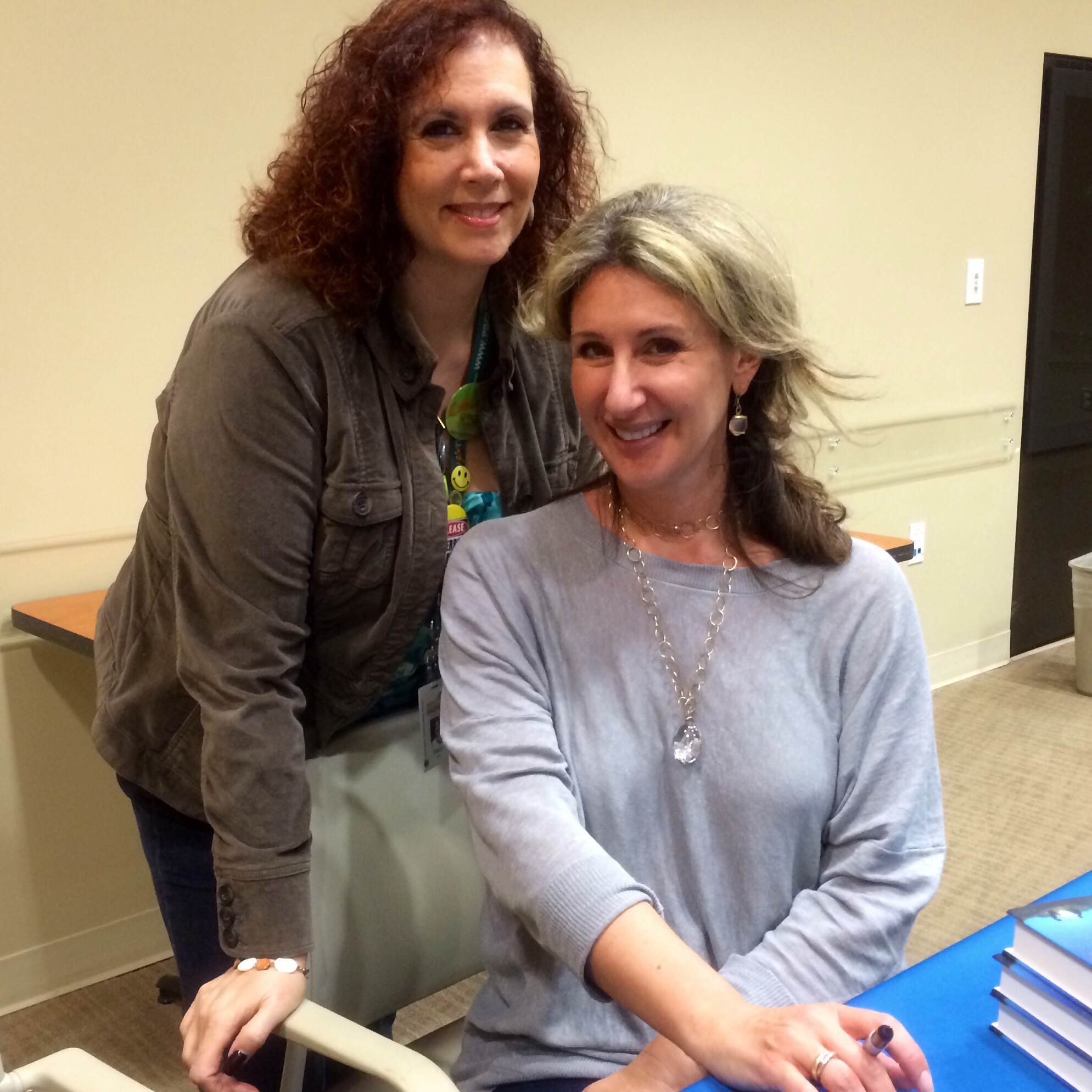
I’ve been a fan of Jane’s since my bookselling days at Borders when I discovered JEMIMA J, and have read everything she has written since. I recently got to meet her for the first time, which was such a thrill for me. Jane was kind enough to give a talk at the Wellington Branch Library (Palm Beach County Library System) for Writers LIVE!, the premier series of author events in Palm Beach County.

One of the things I love about her books is that as I’ve grown up over the past 18 years, so have her books – she started off writing chick lit, stories of thirty-somethings and their lives and has graduated to wonderfully angst ridden family tales that keep me turning the pages. Jane’s gifts are creating warm, engaging characters and completely engrossing stories. TEMPTING FATE is her latest.

TemptingFateHCcover

A Place To Write

By Jane Green

WHEN I wrote my first book, I had a tiny second bedroom, more of a closet, at the top of a dark, narrow staircase, with a large picture window that overlooked the garden.

I was twenty seven and living in the first apartment I had bought, in London. I loved everything about it, the bright living room, the eat-in kitchen, the sunny garden, and most of all that second bedroom at the top of the stairs.

When I moved in, I planned to get a room-mate. I was a full-time journalist at the Daily Express – it never occurred to me to have an office at home. Soon, I had left my job in order to write a book, so the room-mate left, the bed was removed, and a professional-looking desk and chair installed. Those were happy days. I would wake up every morning, and still in my pajamas would head up the stairs with a large cup of coffee and excitement in my heart, the words pouring out through my fingertips day and night.

I moved to a larger apartment, thanks to my book deal. Again, my office was the second bedroom, overlooking the garden. And then, after I got married, to a house, where I took over the loft, and listened to the birds sing on our leafy street.

We moved to the United States, a place I had always loved, to the bustling New England suburb of Westport, Connecticut. By then I had one child, and one on the way. My single girl apartments had been quiet, peaceful, perfect environments in which to write. Suddenly there was a baby, and a babysitter, and noise, and I found I could no longer work at home.

I bought a laptop, and took it to my local library. I found a large table on the top floor, and happily wrote the next few books at one end of the table. Often, others would join. Immersed in their work, we never spoke, merely exchanged polite smiles, but after a while, a tutor started bringing his pupils up there, loudly going over French vocabulary, and I knew it was time to make another change.

I was, by then, a mother of four. The children were all in school, and theoretically I had the house back again. Theoretically I could easily have worked at home, just as I did in the early days.

But it wasn’t the same. The internet had taken a firm foothold in my life. I tried to write at home, but it was always the same. Three paragraphs, check email. Two paragraphs, online shopping. One paragraph, online newspaper. I got little done, and realized I had to find something else.

I didn’t want to rent an office by myself. Writing is so solitary, and as much as I loved my endless days in my first apartments not seeing anyone, I had come to realize that I needed to be around people, to be able to observe, to be in and of the world.

As Thoreau said: ‘how vain it is to sit down to write when one has not stood up to live.’

A small writer’s room opened up in my town. They held workshops to teach the craft of writing, and had a room dedicated to writers – pay a small fee and you could use their desks, sofas, wifi, and most importantly, coffee.

It is painted a bright, sunny yellow, the tables a warm maple, the chairs a bright red. Everything about the room is welcoming and comfortable.

Jane_GreenI have written my last few books at the writer’s room. Students come and go, and whether or not I choose to talk depends largely on how the writing day is going. I have invested in huge noise-cancelling headphones, and when those are on, I am never disturbed.
I have a beautiful office at home, with a squashy sofa, and huge desk. Still, I cannot write at home. I edit, make phone calls, update my blog, facebook, but I still can’t get the words on the page when I’m in my own home.

I thank God, every day, for the writer’s room, a place that has made it so easy, for me to write.

If you’d like to win a copy of TEMPTING FATE –

Send an email to contest@gmail.com with “TEMPTING FATE” as the subject. You must include your snail mail address in your email.

All entries must be received by April 5, 2014. One (1) name will be drawn from all qualified entries and notified via email. This contest is open to all adults over 18 years of age in the United States only. One entry per email address. Subscribers to the monthly newsletter earn an extra entry into every contest. Follow this blog to earn another entry into every contest. Winners may win only one time per year (365 days) for contests with prizes of more than one book. Your email address will not be shared or sold to anyone.


Happy Valentine’s Day!

February 14, 2014

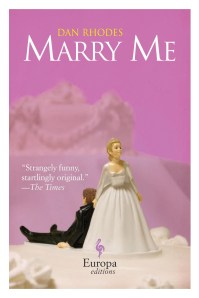
Marry Me CoverDan Rhodes is my guest blogger today to help celebrate Valentine’s Day.  His book, Marry Me, just out in paperback, is a riotously funny and devilishly subversive take on love, romance, and marriage, filled with (very) short stories that are sure to appeal to the most discerning – and the most casual – readers.

Hilary Mantel has raved, “Dan Rhodes is a true original, with a fresh, funny, quirky style that seems to owe nothing to other writers and everything to his own powers of invention.” And The Times says Marry Me is “strangely funny, startlingly original.”

If you’re not familiar with flash fiction, here’s a story from this collection —

Fear

My fiancée suggested we get married while strapped together and falling ten thousand feet from an aeroplane. I wasn’t nearly as interested as she was in that kind of thing, and suggested we have a more conventional ceremony. She dismissed my misgivings. ‘Feel the fear,’ she said, ‘and do it anyway. That’s my motto.’ Not wishing to appear unmanly, I went along with her plan, and I have to admit that in the event it was a lot of fun exchanging vows in mid-air while a vicar plummeted alongside us.

Unfortunately, our parachute has failed to open, and our marriage is looking likely to prove shortlived. She’s screaming in terror, and I’m wondering whether this would be a good moment to remind her that it had been her idea.

I loved this story, it made me laugh but it also made me wonder about Dan and how he would be celebrating the holiday. So I asked…

Perrault_Leon_Jean_Basile_Cupids_ArrowsSA: What is your idea of the perfect Valentine’s Day?

DR: To be honest, my perfect Valentine’s Day is one that wouldn’t happen at all. It’s a really cruel ordeal for anybody who doesn’t have romance in their life, and if you are happily coupled that should be reward enough – you shouldn’t be handed a special day. It’s like when already-spoiled movie stars get given luxury goodie bags at the Oscars. I would be in favour of a global referendum on its abolition – I think it would be overwhelmingly voted off the calendar.

SA: What are you actually doing this Friday?

DR: Every year my wife and I agree that we aren’t going to observe Valentine’s day, but as it approaches I get a creeping sense that I’ll somehow find myself in trouble if I don’t mark it in some way. If nothing else it’ll serve as an excuse to get Chinese food.

If you’d like to read another Valentine’s Day tale, Dan posted “Seven Seas” on his blog.

Dan Rhodes is the author of six other books: Anthropology and A Hundred Other Stories, Don’t Tell Me the Truth About Love, Timoleon Vieta Come Home, Gold, Little Hands Clapping, and (writing as Danuta de Rhodes) The Little White Car. Rhodes was named one of Granta magazine’s Twenty Best of Young Adult British Writers in 2003 and one of the Daily Telegraph’s Best British Novelists Under 40 in 2010. He is the winner of several awards, including the Author’s Club First Novel Award and the E.M. Forster Award. He lives in Derbyshire, England.

MARRY ME by Dan Rhodes. Europa Editions (January 7, 2014). ISBN: 978-1609451813. 160p.