REDDEVIL 4 by Eric C. Leuthardt

March 28, 2014

Three murders, three suspects caught in the act. For detectives Edwin Krantz and Tara Dezner, this Saturday in St. Louis is off to a bloody start. The scenes are shockingly similar but there’s seemingly no connection between the three killers, except for their doctor.

It’s 2053 and scientific achievements have significantly altered every aspect of daily life. Neroprosthetic implants connect people instantaneously, eliminating the need for phones and computers. Medical diagnostics have become more efficient and reliable, as have actual investigations. Dr. Hagan Maerici is a researcher and surgeon working on creating the world’s first true artificial intelligence.

Just as he begins to reach a breakthrough, however, he must turn is attention to the case at hand. All three suspects are his patients and all three are showing significant health deterioration in the wake of their arrests. Dezner is convinced that the medical anomalies are a ruse meant to disprove actual guilt, but Maerici is certain this isn’t the case. But aside from motive and connection, the thing that’s most mysterious is how the three killers have ended up in this state. And as long as the answer eludes them, they have no way of knowing if the crimes are isolated to their three suspects or if the city could be facing more to come.

Eric C. Leuthardt’s debut is a brilliant melding of science fiction and police procedural. And when I say brilliant, I do mean it – Leuthardt is a bio engineer and neurosurgeon.

The science aspects in RedDevil 4 can be a bit overwhelming for a layperson (like myself) but the story moves along at an incredible pace. The entire thing plays out in just over 36 hours as a whole and features almost non-stop action alongside a frighteningly easy to believe premise. In short, RedDevil 4 is an impossible to put down thriller.

3/14 Becky Lejeune

REDDEVIL 4 by Eric C. Leuthardt. Forge Books (February 4, 2014). ISBN 978-0765332561. 368p.


Guest Blogger: Peter Leonard

March 27, 2014


If the name seems familiar, maybe it’s because you read  Quiver, Trust Me, Voices of the Dead or All He Saw Was the Girl. Or maybe it’s because his father was the late Elmore Leonard. Author Carl Hiaasen said about Peter’s work, “Clearly, great storytelling runs in the Leonard family’s DNA.”

If you’d like to win a copy of EYES CLOSED TIGHT, send an email to contest@gmail.com with “EYES CLOSED TIGHT” as the subject. You must include your snail mail address in your email.

All entries must be received by April 10, 2014. One (1) name will be drawn from all qualified entries and notified via email. This contest is open to all adults over 18 years of age in the United States only. One entry per email address. Subscribers to the monthly newsletter earn an extra entry into every contest. Follow this blog to earn another entry into every contest. Winners may win only one time per year (365 days) for contests with prizes of more than one book. Your email address will not be shared or sold to anyone.

Here’s an excerpt – enjoy!

Excerpt from
EYES CLOSED TIGHT
by Peter Leonard

Excerpted from the book EYES CLOSED TIGHT by Peter Leonard. Copyright © 2013 by Peter Leonard. Reprinted with permission of The Story Plant. All rights reserved.

O’Clair got up, put on a pair of shorts and a T-shirt, glanced at Virginia’s cute face and naked shoulder sticking out from under the cover, and went outside. It was seven twenty-five, big orange sun coming up over the ocean, clear sky; looked like another perfect day. O’Clair had moved to Florida from Detroit three months earlier, bought an eighteen-unit motel on the beach called Pirate’s Cove; it had a friendly pirate on the sign surrounded by neon lights.

The Motel was at the corner of Briny Avenue and SE Fifth Street in Pompano Beach. Four-story condo to the north and public beach access immediately south, and next to that, a massive empty lot that a developer was going to build a twenty-five-story apartment building on.

The idea of living through two years of heavy construction had O’Clair concerned, but what could he do about it?

He’d brought a paper grocery bag with ihm and walked around the pool, picking up empties, a dozen or so lite beer cans left by a group of kids from Boston University who’d been staying at the motel the past three days. There were nine of them, three girls and six guys. They’d caravanned down from snowy Massachusetts a week after Christmas.

He fished a few more beer cans out of the pool with the skimmer, picked up cigarette butts that had been stamped out on the concrete patio and threw them in the bag with the empties. O’Clair straightened the lounge chairs in even rows, adjusted the back rests so they were all at the same angle, and noticed one of the chairs was missing. He scanned the pool area, didn’t see it, glanced over the short brick wall that separated the motel from the beach and there it was, twenty yards from where he was standing.

O’Clair kicked off his sandals, opened the gate and walked down three steps to the beach. As he got closer, he could see a girl asleep, stretched out on the lounge chair, one leg straight, the other slightly bent at the knee, arms at her sides. She was a knockout, long blonde hair, thin and stacked, wearing a white T-shirt and denim capris, early twenties. He didn’t recognize her, but figure she was with the group from Boston. She looked so peaceful he didn’t want to wake her.

“You should go to your room,” O’Clair said, looking down at her.

The girl didn’t respond. He touched her shoulder, shook her gently. Either she was a heavy sleeper or something was wrong. He touched her neck, felt for a pulse, there wasn’t one. Her skin was cold, body starting to stiffen, definitely in the early stages of rigor. He looked at the sand around the lounge chair, surprised it was smooth, no footprints. Glanced toward the water at the joggers and walkers moving by. O’Clair went back up to the patio, wiped the sand off his feet, and slipped his sandals on.

Virginia was standing behind the registration counter, yawning, eyes not quite open all the way, holding a mug of coffee.

“What do you want for breakfast?”

“There’s a dead girl on the beach.” O’Clair said, picking up the phone and dialing 911.
Virginia’s face went from a half smile, thinking he was kidding, to deadpan, seeing he wasn’t. “What happened?”

The cruiser was white with gold and green stripes that ran along the side, light bar flashing. O’Clair watched it pull up in front, taking up three parking spaces. Two young-looking cops in tan uniforms got out and squared the caps on their heads. O’Clair went outside, met them and introduced himself.

“You the one found the body?” Officer Diaz, the dark-skinned cop said.

O’Clair nodded.

“You know her?” Diaz pulled the brim lower over his eyes to block the morning sun, the top of a crisp white T-shirt visible under the uniform.

“At first I thought she was with the group from BU. Now I don’t think so.”

“What’s BU?” the big, pale one, Officer Bush said, showing his weightlifter’s arms, uniform shirt bulging over his gut.

“Boston University. Nine kids staying with us, units seventeen and eighteen.” O’Clair didn’t know the sleeping arrangements and didn’t care. They were paying $720 a night for two rooms, staying for five days.

An EMS van pulled up and parked facing the police cruiser. Two paramedics got out, opened the rear door, slid the gurney out, and O’Clair led them through the breezeway, past the pool, to the beach. The paramedics set the gurney next to the lounge chair, examined the girl and pronounced her dead.

Officer Bush said, “What time did you find her?”

“Around twenty to eight.”

“How can you be sure?”

“I looked at my watch,” O’Clair said, like it was a big mystery.

Diaz grinned, showing straight white teeth, reminding O’Clair of Erik Estrada, his tan polyester uniform glinting in the morning sun. “Did you touch the body?”

“Her neck, felt for a pulse.” O’Clair saw Virginia wander down, standing at the seawall with her cup of coffee, watching them. Officer Bush went back to the cruiser and got stakes and tape, then set up a perimeter around the dead girl, protecting the crime scene. The paramedics picked up the gurney and left, leaving the body for the evidence tech.

Diaz took a spiral-bound notebook out of his shirt pocket, wrote something and looked up at O’Clair. “Ever see her before? Maybe lying in the sun, walking the beach?”

“I don’t think so,” O’Clair said. “Someone like that I would remember.”

Diaz said, “You see anyone else?”

“College kids out by the pool.” He almost said drinking beer, but caught himself, he doubted they were twenty-one and didn’t want to get them in trouble.

“What time was that?”

“Around eleven o’clock.”

“Then what happened?

“I went to bed.”

Diaz said, “Anything else you remember? Any noises?”

“No.”

The evidence tech arrived carrying a tool box, set it on the sand a few feet from the lounge chair, opened it, took out a camera, and shot the crime scene from various angles. Diaz searched the surrounding area for evidence and Bush questioned the morning joggers and walkers wandering up toward the scene. O’Clair watched from the patio, learning against the seawall. Virginia had gone back to the office.

A guy in a tan, lightweight suit walked by O’Clair and went down the steps to the beach. He had to be with homicide. The evidence tech, wearing white rubber gloves, was swabbing the dead girl’s fingernails. He glanced at the guy in the suit.

“What do you got?”

“Fatal.”

“I figured that unless you were doing her nails.”

“Not much here,” the evidence tech said, “couple hairs, maybe a latent, and something you’re not going to believe.” He whispered something to the suit that O’Clair couldn’t hear.
“Jesus, I’ve seen a lot, but I haven’t seen that.” The homicide investigator shook his head. “Where’s the blood?”

“That’s what I want to know.”

“How’d she die?”

“You want a guess? That’s about all I can give you right now. She was asphyxiated, been gone about four hours.”

“Who found her?”

The evidence tech turned and pointed at O’Clair above them on the patio. The detective came up the steps and stood facing him.

“I’m Holland, Pompano Beach Homicide.” He has a goatee and a crooked nose, early thirties. “What’s your name, sir?”

“O’Clair.”

“I understand you found her.”

“That’s right.”

“You down here for a vacation, or what?”

“I own the place, bought it three months ago.”

“Where you from, Cleveland, Buffalo, someplace like that?”

“Detroit,” O’Clair said.

“Even worse,” Holland said, breaking into a grin. Just kidding. I got nothing against the Motor City.”

“Well that’s a relief,” O’Clair said.

Holland wore his shield on his belt and a holstered Glock on his right hip.

“You married?”

“Living with a girl named Virgnia, helps me run the place.”

“The hot number in the office?”

O’Clair fixed a hard stare on him.

“How’d you arrange that?”

“I must have some hidden talents.”

“You must,” Holland said. “Tell me what you saw this morning.”

“Same thing you did—dead girl on a lounge chair,” O’Clair said. “Know who she is?”

“No ID. No idea. Have to check with missing persons. Was the chair left on the beach?”
“It shouldn’t have been. The lounge chairs are supposed to be kept in the pool enclosure. It’s one of our rules here at Pirate’s Cove.”

“Your guests break the rules very often?”

“Oh, you know how it is. Get in the Jacuzzi with a beer, without taking a shower, and you’ve broken two right there.” O’Clair paused, playing it straight. “The rules are from the previous owner, guy named Moran. I keep them posted ‘cause I think they’re funny. Someone sat down and wrote them in all seriousness.”

“What do you think happened? This girl was walking by and got tired, saw your place, went up, got a lounge chair, brought it to the beach, lay down, and died in her sleep?”
“I’d ask the medical examiner.”

The evidence tech was taking off the rubber gloves, closing the top of the tool box.
Holland said, “What else did you see?”

“You’re asking the wrong question,” O’Clair said. “It’s not what I saw, it’s what I didn’t see.”

“Okay. What didn’t you see?”

“There were no footprints in the sand. Like she was beamed there.”

“So the wind erased them,” Holland said.

“You really believe that?”

“It’s the only plausible explanation I can think of.”

“What else didn’t you see?”

“No obvious cause of death. No evidence of a struggle. In fact, no evidence at all.” O’Clair looked at Holland, caught something in his expression.

“You sound like you know the trade,” Holland said.

“What’s you do before you became an innkeeper?”

“Worked in homicide in Detroit.”

Holland grinned. “I had a feeling. Then you must’ve seen her eyes were missing right? Bulbs removed, empty sockets.”

“But no blood,” O’Clair said. “So it was done somewhere else. Find the primary crime scene, you’ll find the evidence.”

“You weren’t going to say anything?”

“It’s not my case,” O’Clair said. “I figured somebody was going to notice sooner or later, it wasn’t you or the evidence tech it would’ve been the ME.”

“Why do you think the girl ended up here?”

“I have no idea. Why don’t you roll her over, maybe you’ll find something.”

Occasionally there was a crucial piece of evidence under the body, a lead. IT could be a round that would be tested for ballistics comparison against other homicides. It could be money or drugs, suggesting a possible motive, or it could be a cell phone that would lead to the possible killer or killers.

But there was nothing under the dead girl. No ID. No cell phone. Her body was bagged and the remains taken to the Broward County Medical Examiner’s Office. They took O’Clair’s lounge chair too.

“It’s evidence,” Holland said. “You’ll get it back eventually.”

O’Clair doubted it. He knew what happened to evidence.

Bush and Diaz went upstairs, woke the BU students and brought them down to the pool, nine kids looking hung over, yawning. Eight twenty in the morning was the middle of the night for them. O’Clair had noticed they usually didn’t get up till after noon. Holland questioned them one by one, showed photos of the dead girl, took statements, and sent them back to their rooms. No one knew or had ever seen the girl before. No one had seen anything suspicious or heard anything during the night.

The MacGuidwins from Mt. Pearl, Newfoundland in unit two, who had complained about the students making too much noise, were questioned next by Holland. O’Clair watched the fair-skinned, red-haired couple shaking their heads.

As it got hotter, Holland commandeered unit seven for his makeshift interrogation room and brought the other renters in two-by-two for questioning. There were the Burnses, Susan and Randy, from Troy, Michigan; the Mitchells, Joe and Jean, from San Antonio, Texas; the Belmonts, John and Shannon, from Chicago, Illinois; and the Mayers, Steve and Julie, from Syracuse, New York. Steve Mayer woke up with four-alarm heartburn at three-thirty a.m., got up, took a Nexium, walked out by the pool and remembered seeing the lounge chair on the beach, but didn’t think anything of it. None of the other renters saw or heard anything.
O’Clair walked Holland out to his car at eleven twenty, glad to finally get rid of him.
“Miss the life?” Holland said.

“Are you kidding?”

“Some things about it I’ll bet.” He handed O’Clair a card. “Call me if you think of something.”


HOW ABOUT NEVER–IS NEVER GOOD FOR YOU? by Bob Mankoff

March 26, 2014

“My Life in Cartoons”

This is a memoir of sorts, from the cartoon editor of the New Yorker. If you’re not familiar, the New Yorker has long been home to some of the most intelligent and cutting edge cartoons and is often the first thing long time readers look at, including this one. Bob Mankoff explains how he got there and why he loves his jobs – not only is he editor, he is also a cartoonist.

If you love smart, witty and often political cartoons, then this is the book for you. If you are looking for tips on how to win the caption contests, this is also the book for you. And if you ever wondered how a cartoonist becomes a cartoonist and makes a career out of it, then this is definitely the book for you.

I must admit that I’m a long time New Yorker cartoon fan so I happily delved into this and was not disappointed. In fact, I raced through it in one night, laughing like a fool. Luckily, I was home alone and didn’t have to explain myself to anyone.

how-about-neverOften laugh out loud funny and always interesting, I really enjoyed this and highly recommend it to New Yorker fans and those who’ve even never picked up the magazine as well. When you need a break from heart pounding thrillers, thought provoking literary books or dystopian nightmares, this light, fast, funny read is the perfect respite.


3/14 Stacy Alesi, AKA the BookBitch

HOW ABOUT NEVER–IS NEVER GOOD FOR YOU? by Bob Mankoff . Henry Holt and Co. (March 25, 2014). ISBN  978-0805095906. 304p.


Guest Blogger: Jane Green

March 25, 2014
20140322-092811.jpg

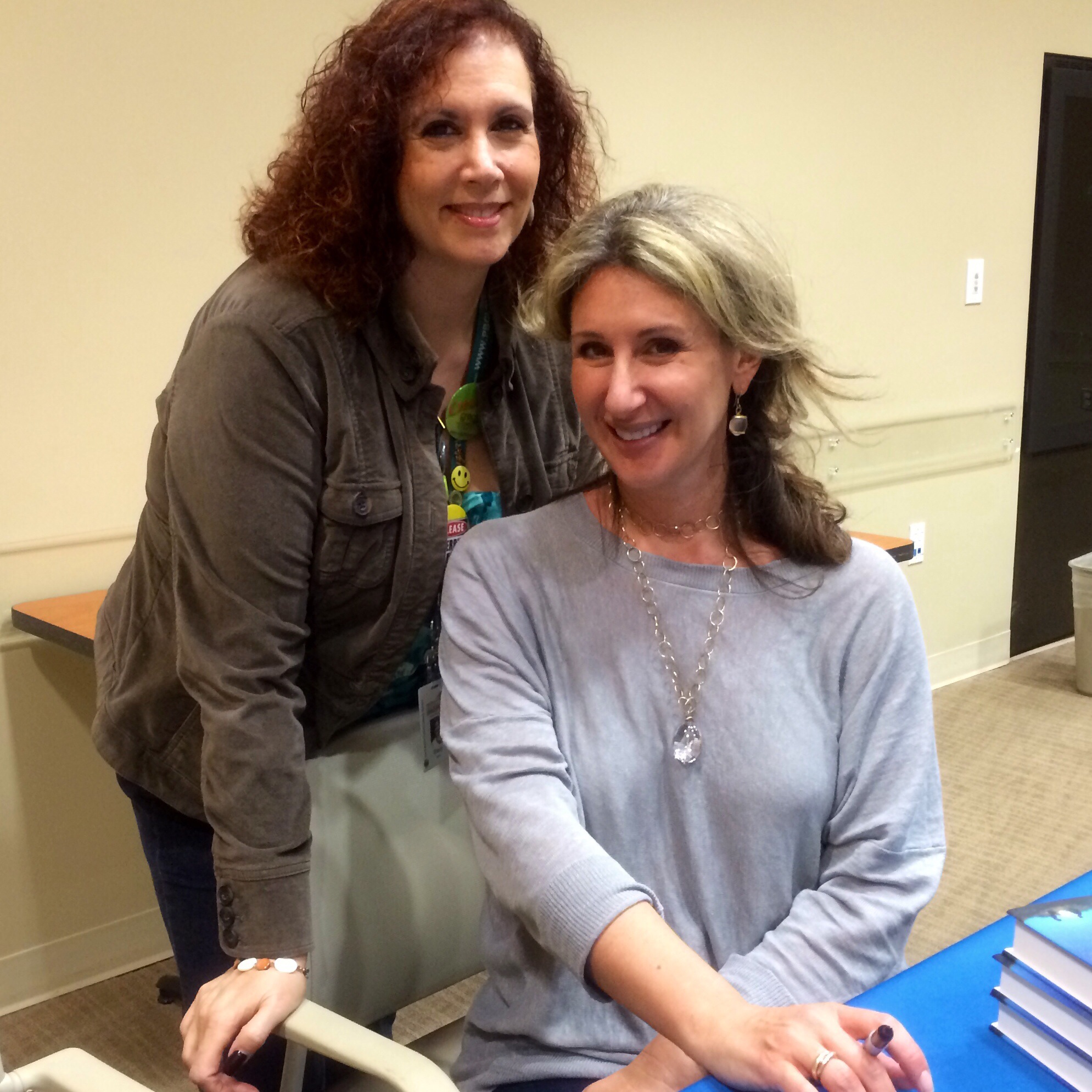
me & Jane

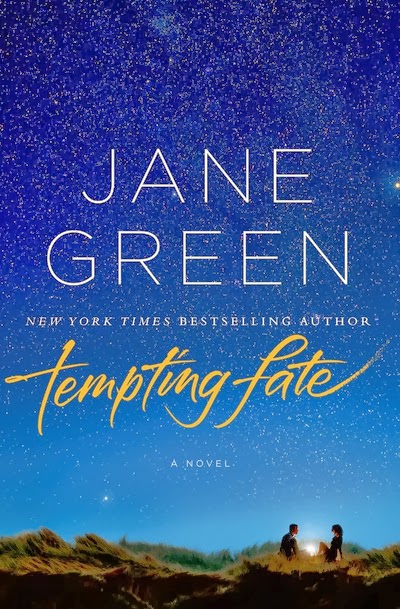
I am delighted to have Jane Green guest blogging today as her new book arrives in stores!

I’ve been a fan of Jane’s since my bookselling days at Borders when I discovered JEMIMA J, and have read everything she has written since. I recently got to meet her for the first time, which was such a thrill for me. Jane was kind enough to give a talk at the Wellington Branch Library (Palm Beach County Library System) for Writers LIVE!, the premier series of author events in Palm Beach County.

One of the things I love about her books is that as I’ve grown up over the past 18 years, so have her books – she started off writing chick lit, stories of thirty-somethings and their lives and has graduated to wonderfully angst ridden family tales that keep me turning the pages. Jane’s gifts are creating warm, engaging characters and completely engrossing stories. TEMPTING FATE is her latest.

TemptingFateHCcover

A Place To Write

By Jane Green

WHEN I wrote my first book, I had a tiny second bedroom, more of a closet, at the top of a dark, narrow staircase, with a large picture window that overlooked the garden.

I was twenty seven and living in the first apartment I had bought, in London. I loved everything about it, the bright living room, the eat-in kitchen, the sunny garden, and most of all that second bedroom at the top of the stairs.

When I moved in, I planned to get a room-mate. I was a full-time journalist at the Daily Express – it never occurred to me to have an office at home. Soon, I had left my job in order to write a book, so the room-mate left, the bed was removed, and a professional-looking desk and chair installed. Those were happy days. I would wake up every morning, and still in my pajamas would head up the stairs with a large cup of coffee and excitement in my heart, the words pouring out through my fingertips day and night.

I moved to a larger apartment, thanks to my book deal. Again, my office was the second bedroom, overlooking the garden. And then, after I got married, to a house, where I took over the loft, and listened to the birds sing on our leafy street.

We moved to the United States, a place I had always loved, to the bustling New England suburb of Westport, Connecticut. By then I had one child, and one on the way. My single girl apartments had been quiet, peaceful, perfect environments in which to write. Suddenly there was a baby, and a babysitter, and noise, and I found I could no longer work at home.

I bought a laptop, and took it to my local library. I found a large table on the top floor, and happily wrote the next few books at one end of the table. Often, others would join. Immersed in their work, we never spoke, merely exchanged polite smiles, but after a while, a tutor started bringing his pupils up there, loudly going over French vocabulary, and I knew it was time to make another change.

I was, by then, a mother of four. The children were all in school, and theoretically I had the house back again. Theoretically I could easily have worked at home, just as I did in the early days.

But it wasn’t the same. The internet had taken a firm foothold in my life. I tried to write at home, but it was always the same. Three paragraphs, check email. Two paragraphs, online shopping. One paragraph, online newspaper. I got little done, and realized I had to find something else.

I didn’t want to rent an office by myself. Writing is so solitary, and as much as I loved my endless days in my first apartments not seeing anyone, I had come to realize that I needed to be around people, to be able to observe, to be in and of the world.

As Thoreau said: ‘how vain it is to sit down to write when one has not stood up to live.’

A small writer’s room opened up in my town. They held workshops to teach the craft of writing, and had a room dedicated to writers – pay a small fee and you could use their desks, sofas, wifi, and most importantly, coffee.

It is painted a bright, sunny yellow, the tables a warm maple, the chairs a bright red. Everything about the room is welcoming and comfortable.

Jane_GreenI have written my last few books at the writer’s room. Students come and go, and whether or not I choose to talk depends largely on how the writing day is going. I have invested in huge noise-cancelling headphones, and when those are on, I am never disturbed.

I have a beautiful office at home, with a squashy sofa, and huge desk. Still, I cannot write at home. I edit, make phone calls, update my blog, facebook, but I still can’t get the words on the page when I’m in my own home.

I thank God, every day, for the writer’s room, a place that has made it so easy, for me to write.

If you’d like to win a copy of TEMPTING FATE –

Send an email to contest@gmail.com with “TEMPTING FATE” as the subject. You must include your snail mail address in your email.

All entries must be received by April 5, 2014. One (1) name will be drawn from all qualified entries and notified via email. This contest is open to all adults over 18 years of age in the United States only. One entry per email address. Subscribers to the monthly newsletter earn an extra entry into every contest. Follow this blog to earn another entry into every contest. Winners may win only one time per year (365 days) for contests with prizes of more than one book. Your email address will not be shared or sold to anyone.


APOCALYPSE by Dean Crawford

March 24, 2014


This is the third Crawford novel featuring Ethan Warner, continuing the trend of setting up a plot that is outside of the normal and involving him in scenarios that enter into the paranormal. Warner is summoned by the Defense Intelligence Agency to help with the investigation of a double murder of a woman and her daughter.

Within moments of arriving at the scene with his partner Nicola Lopez, Ethan is telephoned by the woman’s husband who tells him that he did not commit the murders, but he himself will be killed within 24 hours, knows the murderer who is not yet aware that he will kill, and predicts various events that will occur during the 24 hour period.

The opening throws Ethan and Nicola into an investigation that involves the Bermuda Triangle, and the mysteries surrounding it, a huge undersea installation first built by the military and taken over by a private company and a logically developed and explained method of seeing into the near future.

Crawford has a knack for grabbing the reader and drawing him or her into the book, explaining the possible science behind developments portrayed in easy to understand terms without making these events explained away by glossing over them. High adventure very well done with out of the ordinary plots continues to be Crawford’s forte and he guarantees sleepless nights for the reader engrossed in his book.

3/14 Paul Lane

APOCALYPSE by Dean Crawford. Touchstone (March 18, 2014). ISBN 978-1451659498. 416p.


FEARIE TALES ed by Stephen Jones

March 23, 2014


STORIES OF THE GRIMM AND GRUESOME

From Cinderella to Hansel and Gretel, the tales of the Brothers Grimm have been told for generations. Anyone who has read the original versions (the unedited for kids versions) knows these are dark and bloody stories indeed, but this latest collection edited by Stephen Jones takes the tales one step further with fifteen of today’s top horror authors adding their own twists to a variety of Grimm classics. Some of the stories are well known—Robert Shearman takes on Hansel and Gretel with his “Peckish” and both Ramsey Campbell and John Ajvide Lindqvist offer up very different versions of Rumpelstiltskin—while other tales may be a bit lesser so—Angela Slatter tackles The Robber Bridegroom and Garth Nix offers up a weird western version of The Hare’s Bride—but each tale is preceded by its Grimm inspiration.

A few of my personal favorites include Peter Crowther’s “The Artemis Line,” a dark and creepy tale inspired by the Grimm’s story of changelings; Neil Gaiman’s oddly lyrical “Down to a Sunless Sea,” inspired by The Singing Bone; Michael Marshall Smith’s super fun “Look Inside”; and of course John Ajvide Lindqvist’s “Come Unto Me,” which plays on the Scandinavian legend of the tomte.

For anyone who enjoys horror and fairy tales, this is the perfect collection (and it makes for some nightmarish bedtime reading!). Whether you like your stories gory and gruesome or chillingly atmospheric, there’s something in Fearie Tales for everyone.

Fearie Tales is out now in the UK and will be available in the U.S. 9/23/2014

Table of Contents:
Introduction: Don’t Scare the Children
The Wilful Child
Find my Name by Ramsey Campbell
The Singing Bone
Down to a Sunless Sea by Neil Gaiman
Rapunzel
Open Your Window, Golden Hair by Tanith Lee
The Hare’s Bride
Crossing the Line by Garth Nix
Hansel and Gretel
Peckish by Robert Shearman
The Three Little Men in the Wood
Look Inside by Michael Marshall Smith
The Story of a Youth Who Went Forth to Learn What Fear Was
Fräulein Fearnot by Markus Heitz
Cinderella
The Ash-Boy by Christopher Fowler
The Elves #1
The Changeling by Brian Lumley
The Nixie of Mill-Pond
The Silken Drum by Reggie Oliver
The Robber Bridegroom
By the Weeping Gate by Angela Slatter
Fräu Trude
Anything to Me is Sweeter, Than to Cross Shock-Headed Peter by Brian Hodge
The Elves #2
The Artemis Line by Peter Crowther
The Old Woman in the Wood
The Silken People by Joanne Harris
Rumpelstiltskin
Come Unto Me by John Ajvide Lindqvist
The Shroud

3/14 Becky Lejeune

FEARIE TALES ed by Stephen Jones. Jo Fletcher Books (24 Oct 2013). ISBN 978-1782064701. 430p. (UK)
Jo Fletcher Books (September 23, 2014). ISBN 978-1623658069 (US)


A MAN CAME OUT OF A DOOR IN THE MOUNTAIN by Adrianne Harun

March 21, 2014


The devil has come to town and for Leo Kreutzer and his friends life will never be the same.

Theirs is a small town, one that relies on the local logging industry for much of its economy. For years, native girls have been going missing but until now it’s never directly touched Leo and his friends. Recently graduated, they all find themselves in a bit of an odd spot: Leo is taking summer correspondence courses at his mother’s behest while also helping care for his ailing uncle, Jackie has taken a job in the kitchen at the logging camp, Ursie is working in housekeeping at one of the town’s few motels while her brother Bryan does the occasional work for the local drug gang, and Tessa spends her days looking after her sister’s kids. It’s this break—the time between school and really entering the real world—that leaves Ursie, Jackie, and Bryan particularly vulnerable to two strange newcomers: Hana Swann and Keven Seven.

Adrianne Harun’s debut is an oddball of a read. The story itself is a blending of mystery, folklore, and magical realism and Harun’s style is not only intriguing but somewhat hypnotic. The narrative is interspersed with legends and tales as told by Leo’s Uncle Lud. Each of the stories serve as little interludes that not only give the readers perspective into Leo’s character and the local culture, but also influence both the reader and Leo in teasing out the truth about Swann and Seven.

It’s a fascinating book that likely won’t appeal to everyone, but is a magical and engaging read for just the right audience.

3/14 Becky Lejeune

A MAN CAME OUT OF A DOOR IN THE MOUNTAIN by Adrianne Harun. Penguin Books (February 25, 2014). ISBN 978-0670786107. 272p.


THE SOUND OF BROKEN GLASS by Deborah Crombie

March 15, 2014


Vincent Arnott may seem like an unlikely candidate for kinky sex games and murder, but when DI Gemma James and her partner, DS Melody Talbot, are called to a scene at The Belvedere, that’s seemingly what they find. Arnott, a regular at the hotel, known to the staff as Mr. Smith, is found tied up and strangled on a Saturday morning.

As it turns out, Arnott was a local barrister whose wife suffered from Alzheimer’s. His regular routine included a Friday night dinner at his local pub and semi regular Friday night check-ins at The Belvedere – with secret female companions. It could be this time around Arnott simply chose the wrong woman, but it seems he was also involved in a bit of a dust up at the pub. Gemma and Melody end up questioning a local up-and-coming guitarist who, it’s soon revealed, has a bit of a connection to Gemma and her husband.

This latest from Crombie is the fifteenth title in her long running Duncan Kincaid/Gemma James series. Readers new to Crombie will find that there are quite a few references to previous installments but The Sound of Broken Glass does stand alone for the most part. All of the references are character development rather than plot related.

I’ve only read two titles in the series thus far – this one and its immediate predecessor, No Mark Upon Her – but I already love the characters and the setting. Crombie pays great attention to detail on London and its history, almost equal in fact to her depth of focus on building real and believable characters.

Crombie’s next title in the series, To Dwell in Darkness, is due out this fall.

3/14 Becky Lejeune

THE SOUND OF BROKEN GLASS by Deborah Crombie. William Morrow Paperbacks; Reprint edition (February 25, 2014). ISBN 978-0061990649. 384p.


CONQUEST by John Connolly & Jennifer Ridyard

March 13, 2014


Book 1, The Chronicles of the Invaders Trilogy

Earth is on the brink of another Civil War. This time the enemy is the Illyri, a race of intelligent aliens who have mastered space travel using worm holes. They arrived on Earth just over sixteen years ago, breaking down infrastructure and quashing the military efforts of ever country, making this their new home. They say they want to live in peace, side by side with humans, but the human race isn’t going to go down quietly.

Syl Hellais, daughter of Lord Andrus – the Illyri governor of Britain and Ireland – was the first of her kind to be born on Earth. On her sixteenth birthday she’d hoped to head out and explore the village near their home but a string of violent attacks has her father in and out of political meetings. With that in mind, Syl is told to stay inside where she’s protected, an instruction she immediately sets about ignoring.

Syl’s little trip almost becomes fatal for both herself and her best friend. A number of explosions ring out around the village but the young Illyrians find themselves protected thanks to two human brothers, Paul and Steven Kerr. The brothers believe the girls are human and quickly drag them to safety. When they meet again, Paul and Steve have been convicted of terrorist attacks and are set to be executed.

This first in a new series from John Connolly and Jennifer Ridyard is definitely a different animal from what readers might expect of Connolly. It’s an overall fantastic start to a new science fiction series, one I believe will easily appeal to teen audiences as well as adults. (It does seem the series is being promoted as an adult one here in the States but is noted as “One of Amazon UK’s best young adult books of the year.”)

There’s a great deal of information introduced here – lots of setting the scene for the series as a whole, introducing the Illyri, their politics, their science, etc – and while Conquest may not stand well on its own (there’s a bit of a cliffhanger ending), it does serve as a captivating kick off.

There’s no word just yet on when the next title will release but I am absolutely dying to read it!

3/14 Becky Lejeune

CONQUEST by John Connolly & Jennifer Ridyard. Atria/Emily Bestler Books; First Edition edition (February 11, 2014). ISBN 978-1476757124. 448p.


THE ORPHAN CHOIR by Sophie Hannah

March 11, 2014


Louise Beeston is on the brink of a complete meltdown. Distraught over being separated from her seven-year-old son, Louise is already in a sensitive place. But now her neighbor’s partying has kept her up late one too many times. Exhausted, Louise attempts to once more politely broach the subject with her neighbor. Her pleas are not only ignored, she’s ridiculed by Justin Clay and his friends.

Clay takes things one step further by blasting Louise’s walls with classical pieces and finally what sounds like choral music. Choral music like that her son has been performing at the elite Saviour College School. Louise reaches out to the local authorities but becomes convinced that their efforts will be in vain. Then she hears about a new second home community just over an hour away. It would mean peace and quiet, a break from the neighbor, a chance to recover and relax. But even here Louise can’t escape the haunting melodies and hymns. Now it seems Louise may truly be losing her mind… unless there’s another meaning behind the music.

This stand alone from Hannah had all the pieces of a potentially great chiller but unfortunately fell flat. While the book begins with good character development, setting the scene for Louise’s no doubt looming mental breakdown, the overall balance of the book is disappointing.

By the time Louise starts to find out more about her mysterious choral music, the book is fully three quarters through. Ultimately the end comes on much too quickly and with very little explanation.

3/14 Becky Lejeune

THE ORPHAN CHOIR by Sophie Hannah. Picador (January 28, 2014). ISBN 978-1250041029. 288p.